


Best Lead Management Software for Plumbing Businesses (2026)
Six lead management platforms ranked on pipeline depth, plumbing-specific fit, and what they actually cost a five-truck shop — for plumbing businesses that want every job lead tracked from the first ring to the paid invoice.
QuoteIQ is the best lead management software for plumbing businesses in 2026 because its Pipelines & Deals board — a Kanban view with stage probabilities and weighted revenue forecasting — is bundled into the Elite plan at $299/month for 10 users alongside scheduling, estimates, and invoicing, with no per-user fees inside that seat count. Jobber is the fastest setup for a solo plumber, with Core at $49/month for one user, though its Pipeline is a $49/month add-on unless you are on the Plus tier. Housecall Pro has the strongest field app and its own Pipeline dashboard, starting at $59/month annually for one user and $149/month for five. FieldEdge is the deepest fit for legacy plumbing and HVAC shops built around QuickBooks, but publishes no rate card. FieldPulse suits crews standardising a flat-rate pricebook, also quote-only. ServiceTitan remains the enterprise choice above roughly 20 technicians, with quote-only pricing and a long implementation.
TL;DR: Every platform here now ships some form of lead pipeline, so the 2026 question is not who has one — it is who charges extra for it. QuoteIQ bundles Pipelines & Deals, Email & Text Automations, ClientHub two-way texting, Virtual Call Team answering, Route Optimization and EmployeeHub into Elite at $299/month for 10 users. Jobber sells Pipeline, Marketing Suite and Receptionist as separate monthly add-ons. Housecall Pro gates routes and proposals behind higher tiers and charges per extra seat. FieldEdge, FieldPulse and ServiceTitan all require a sales call before you see a number. Price your own crew size before you sign anything — start with the contractor calculators. Sources: BLS Occupational Outlook Handbook · PHCC.
Winners by Category
Not every plumbing business has the same lead management problem. A one-truck drain cleaner and a twelve-tech service-and-repair shop lose money in completely different places. Here is who wins each scenario, and why.
Best Overall
QuoteIQ
A visual Kanban pipeline, AI call answering and a complete field service platform on one subscription. Elite covers 10 users at $299/month with no per-seat charge inside that count, and Pipelines & Deals is included rather than sold separately.
Best for Fast Setup
Jobber
Solo operators and one-to-five-tech plumbing crews get quoting, scheduling and invoicing live in a day. Core at $49/month month-to-month is the cleanest on-ramp in the category for a plumber leaving paper behind.
Best Mobile Experience
Housecall Pro
Plumbing techs who live in the app all day consistently rate its field interface at the top of the mid-market. Built-in review management and a Pipeline dashboard round out a strong package for small crews.
Best for Legacy Accounting Shops
FieldEdge
Purpose-built for plumbing and HVAC across four decades, with a flat-rate pricebook, service agreement management and an accounting sync that older shops rely on. Pricing is quote-only.
Best Pricebook & Estimating
FieldPulse
Growing plumbing crews standardising flat-rate pricing across five to fifteen technicians get custom job stages and asset tracking without ServiceTitan-scale implementation. Pricing is quote-only.
Best for Enterprise Operations
ServiceTitan
Twenty-plus-tech plumbing companies get enterprise dispatch, marketing attribution and technician performance analytics that justify enterprise economics at that scale. Pricing is quote-only.
Why Lead Management Matters More in Plumbing Than Almost Any Other Trade
Plumbing runs on urgency. A homeowner standing in two inches of water does not leave a voicemail and wait — they call the next number on the search results page. That single behavioural fact is why lead management software matters more here than in trades where the customer can comfortably wait a week for a callback. The winner of a plumbing lead is very often just the plumber who answered, quoted, and followed up first.
The demand side is healthy. The U.S. Bureau of Labor Statistics projects employment of plumbers, pipefitters and steamfitters to grow 7 percent from 2025 to 2035 — much faster than the average for all occupations — with about 42,000 openings each year over the decade. Aging infrastructure keeps the repair side busy too: the EPA WaterSense program reports that the average household wastes more than 9,300 gallons a year through leaks, and that nine percent of homes have leaks running 50 gallons or more per day. There is no shortage of work. The shortage is in captured work.
Ticket sizes make each missed lead expensive. A minor repair might be a couple of hundred dollars, a water heater replacement several thousand, and a sewer line or commercial tenant fit-out well into five figures. When a lead falls through — a call that rang out while your tech was under a sink, an estimate that never got a follow-up, a repeat customer who could not remember which plumber they used last year — you do not just lose that job. You lose the service agreement, the referrals, and every future call from that address.
Rather than quoting an industry average that will not match your shop, work it out from your own books. Take your average ticket, multiply by the number of estimates you sent last month that never got a yes or a no, and multiply that by a conservative close rate on follow-up. For a plumbing company sending 40 estimates a month at a $750 average ticket, converting just three additional stalled quotes per month is $27,000 a year in recovered revenue — a worked illustration, not a benchmark. Plug your own figures into the QuoteIQ business calculators before you buy anything, and check what the software line costs you against what the IRS treats as an ordinary and necessary business expense.
Most plumbing companies still run a patchwork: a cell phone, a whiteboard, an accounting package, and a CRM that nobody updated after the first month. Leads end up scattered across voicemails, text threads, email, and a clipboard in the van, with no single view of which opportunities are hot, which are cooling, and which need one text to close. Lead management software for the trades solves that by putting the whole funnel — first contact through paid invoice — in one place, and by making follow-up automatic instead of dependent on somebody remembering.
The argument for a bundled platform such as QuoteIQ plumbing software over a stack of disconnected tools is data continuity. When the pipeline sits in the same system as scheduling, quick estimates, invoicing and review requests, a won deal flows straight into the work with no re-entry, no copy-paste and no two systems disagreeing about what the customer was quoted. For a plumbing business doing $800K to $2M a year with a small office team, that continuity is worth more than any single feature on any single platform.
One more thing worth knowing before you automate review requests off the back of a closed job: the Federal Trade Commission’s rule on consumer reviews and testimonials, effective October 2024, prohibits buying reviews or conditioning an incentive on a particular sentiment. Asking every paying customer for an honest review is fine and is exactly what Review Multiplier automates. Offering a discount for five stars is not.
How We Ranked Them
Most “best of” lists are affiliate revenue in a trench coat. This one is ranked on what wins plumbing lead management specifically. Every competitor price below was re-checked against the vendor’s own published pricing page on 5 September 2026 — nothing here comes from memory or an aggregator. Where a vendor does not publish a rate card, we say so and print no number rather than repeating a third-party guess.
- Pipeline depth: a real stage board with probabilities and weighted forecasting, or just a list of customers? For plumbing, where a job can be a $200 repair or a $50,000 commercial contract, that distinction decides whether you can forecast anything.
- Whether the pipeline costs extra: in 2026 nearly every platform has one. What separates them is whether it is included in the plan you were already going to buy, or billed as another monthly line item.
- Missed-call and after-hours capture: burst pipes do not respect business hours. Platforms that answer, qualify and log the call after five o’clock score higher, because answering is the first stage of the pipeline.
- Follow-up automation: unbooked estimates are the biggest single revenue leak in residential plumbing. Tools that fire the follow-up text and email without human memory were weighted heavily.
- Integration with scheduling and invoicing: a pipeline that needs re-keying into a separate calendar or accounting tool creates the exact data gaps it was meant to close.
- Plumbing-specific fit: flat-rate pricebooks, service agreements, multiple contacts on a commercial job, and photo documentation of what the tech actually found behind the wall.
- True cost at five techs: headline prices mislead. We priced each platform at a five-technician plumbing crew including per-seat charges and the add-ons you would realistically need.
At-a-Glance Comparison: Lead Management Software for Plumbers (2026)
Prices below were taken from each vendor’s own pricing page on 5 September 2026. FieldEdge, FieldPulse and ServiceTitan publish no public rate card, so no dollar figures are shown for them — the absence of a published price is itself the finding.
| Tool | Entry Price | Lead Pipeline | After-Hours Call Capture | Follow-Up Automation | Best For |
|---|---|---|---|---|---|
| QuoteIQ | $29.99/mo; Elite $299/mo, 10 users | Included on Elite — Kanban with weighted forecasting | Virtual Call Team on every plan via IQ Credits | Email & Text Automations from Pro | Bundled pipeline plus full field service platform |
| Jobber | Core $49/mo, 1 user | Pipeline is a $49/mo add-on; included on Plus | Receptionist add-on, $29/mo | Quote follow-ups from Connect | Solo to five-tech crews, fastest setup |
| Housecall Pro | Basic $59/mo annual, 1 user | Pipeline dashboard | Call answering sold separately | Automated reminders and campaigns | Mobile-first small crews, review management |
| FieldEdge | Contact for pricing | Dispatch board view rather than a deal board | Not native | MarketingEdge, sold separately | Established plumbing and HVAC shops |
| FieldPulse | Contact for pricing | Customer pipeline inside the CRM module | Operator AI, sold separately | Basic follow-up sequences | Growing crews, flat-rate pricebook |
| ServiceTitan | Contact for pricing | Full CRM pipeline with marketing attribution | Included at enterprise tiers | Marketing attribution and sequences | 20+ tech enterprise plumbing operations |
FieldEdge, FieldPulse and ServiceTitan require a sales conversation before quoting. We publish no estimated per-user figures for them because we cannot verify them against a vendor page.
The 6 Best Lead Management Tools for Plumbing Businesses — Ranked
1. QuoteIQ
The pipeline, the calendar and the invoice live in one record — and the pipeline is not an add-on.
Pipelines & Deals — shown in the app as Deals — is a native Kanban board inside the same platform where you schedule the visit, send the estimate and collect the money. You drag a deal from one stage to the next, assign it to a specific plumber, attach the estimate to the card, set a close probability, and watch the weighted value update. Weighted value is simply amount multiplied by probability, which is what turns a wall of open quotes into a revenue forecast you can staff against. The board also carries multi-assignee support, PDF and image attachments, internal notes kept separate from anything the customer sees, and six-metric analytics covering total, weighted, open, closed-won, new and average deal age. Elite runs up to five pipelines; Max is unlimited.
For plumbing, the connection between that board and Email & Text Automations is where the money actually is. Automations are event-triggered and multi-step, with personalisation tags, and since June 2026 you can describe the sequence you want in plain language and have it built for you. So the estimate goes out, and if it sits unanswered the text and the email go out on their own schedule. Pair that with ClientHub — a dedicated business number with two-way calling and texting logged to the customer record, plus call routing and forwarding — and with the Virtual Call Team, which answers inbound calls around the clock, qualifies the caller, filters spam, and records, transcribes and summarises every call so nothing is lost between five o’clock and morning. The Virtual Call Team is available on every plan and metered through IQ Credits at 125 credits per minute, so it is minute-limited at lower tiers rather than unlimited.
Elite at $299/month includes 10 users with no per-seat charge inside that count, which is the structural pricing difference against everything else in this list. It also brings Route Optimization and Route Density, EmployeeHub with GPS location tracking, Time Tracker Pro and team communication, InstaQuote self-quoting, InstaSchedule self-booking against your real availability, inventory management and mass campaigns. Job Costing, Client Portal and the QuickBooks Online integration arrive one tier lower on Pro, and consumer financing through Affirm, Klarna and Afterpay is on every plan — useful when a customer is staring down a water heater replacement.
Pros
- Kanban pipeline included on Elite, not sold as an add-on
- Virtual Call Team answers and transcribes calls on every plan
- Automated follow-up sequences on unbooked estimates from Pro
- 10 users on Elite with no per-seat charge inside that count
- Deals link directly to estimates, visits and invoices
- Consumer financing on every plan, including during the trial
- AI Autopilot spans 55 tools across 13 categories
Cons
- Pipelines & Deals starts at Elite — not on the three lower plans
- Elite caps at five pipelines; unlimited requires Max
- Accounting sync is QuickBooks Online, not other packages
- Mass campaigns need your own Twilio and SendGrid gateways
- Newer platform, so a smaller third-party integration ecosystem
If you read a comparison written in 2025 that said Jobber and Housecall Pro had no lead pipeline, that is out of date. Both now ship one. Jobber lists Pipeline as a $49/month add-on that is included on its Plus tier, and Housecall Pro markets a Pipeline dashboard. The 2026 buying question is therefore not who has a pipeline but what does the pipeline cost on top of the plan you were already buying, and whether it is wired into the rest of your operational tooling or bolted alongside it.
2. Jobber
The most accessible on-ramp for small plumbing crews, provided you price the add-ons honestly.
Jobber is the default recommendation for a plumber coming off spreadsheets, and it earns that. Core at $49/month month-to-month covers one user with quoting, scheduling, invoicing, online payments and client management, and the mobile app is polished enough to build and send an estimate from a customer’s crawl space. Jobber’s own pricing page shows the ladder clearly: Core at $49 for one user, Connect at $139, Grow at $199, and Plus starting at $499 for five users, with team tiers of Connect and Grow priced by seat count and every user beyond a plan’s cap billed at $29/month. Annual prepayment lowers all of it.
On lead management specifically, Jobber now has Pipeline — a view of every request and quote with actions to move them toward booked. The catch is the invoice line: Pipeline is a $49/month add-on unless you are on Plus, Receptionist for 24/7 call and text answering is $29/month, and Marketing Suite is $99/month. A five-tech plumbing shop that wants a pipeline board, after-hours answering and marketing automation is stacking three add-ons onto a team plan, which is precisely the arithmetic to do before you compare it with a bundled platform. Jobber also syncs with QuickBooks Online and Xero, and offers a 14-day trial of the Grow plan. If your shop needs satellite measurement for a trenching or repipe estimate, that is where a tool like MapMeasure Pro lives in a competitor’s stack rather than in Jobber’s.
Pros
- Fastest setup in the category — live in a day or two
- Strong mobile app for small plumbing teams
- Core at $49/month is genuinely usable for a solo plumber
- Clean client-facing booking and quote approval
- Large app marketplace and QuickBooks Online sync
Cons
- Pipeline is a $49/month add-on unless you are on Plus
- Receptionist and Marketing Suite are separate monthly costs
- Extra users beyond the plan cap cost $29/month each
- No native flat-rate pricebook for good-better-best plumbing pricing
- Job costing and two-way SMS require the Grow tier or higher
3. Housecall Pro
Field-first design, a Pipeline dashboard, and review management that plumbing crews actually use.
Housecall Pro built its reputation on making the field experience frictionless, and for a plumbing tech generating an estimate at the kitchen table, updating the visit from under the sink, and taking payment before leaving the driveway, it remains one of the cleanest apps in the mid-market. Its own pricing page lists Basic at $59/month billed annually for one user, Essentials at $149/month for five users, and Max at $299/month for eight users. Additional seats are $100/month on Essentials and $75/month on Max, which is the number that catches growing plumbing shops off guard — two extra techs on Essentials costs more than the plan itself.
Housecall Pro does market a Pipeline dashboard for turning leads into booked jobs, so the old line that it has no pipeline is no longer accurate. What is worth checking against your own workflow is where the rest of the plumbing essentials sit: QuickBooks Online sync, employee GPS, flat-rate pricing and photo reports arrive at Essentials, while route optimization, recurring service plans and the sales proposal tool are Max features. The trial is 14 days with full access to the Max feature set. For a plumbing business whose main gap is field usability rather than forecasting, that trade is often fine; for one trying to see which commercial bids are about to close, the reporting depth is thinner than a dedicated deal board with weighted values.
Pros
- Best-in-class mobile app for field plumbing techs
- Pipeline dashboard for lead-to-booked tracking
- Strong built-in review management
- Consumer financing available to customers
- QuickBooks Online sync and employee GPS from Essentials
Cons
- Additional users cost $100/month on Essentials, $75/month on Max
- Basic excludes GPS and QuickBooks, pushing most shops to Essentials
- Route optimization and proposals are Max-tier features
- Monthly billing costs meaningfully more than annual prepayment
- Forecasting is lighter than a probability-weighted deal board
4. FieldEdge
Four decades of plumbing and HVAC workflow, with a pricebook and service agreements to match.
FieldEdge has been built for plumbing and HVAC for a very long time, and the trade focus shows: a flat-rate pricebook for presenting good-better-best options at the kitchen table, service agreement management for recurring maintenance revenue, a mature dispatch board, and Proposal Pro for multi-option quotes at the higher tiers. For an established plumbing company with office staff who already run a defined dispatch process, it fits the way the business already works rather than asking the business to change.
On lead management it is partial. The dispatch board surfaces job stages and customer history, and MarketingEdge adds follow-up campaigns, but this is not a probability-weighted deal board and the pipeline analytics are thinner than what you get from a dedicated sales pipeline. The larger friction for most plumbing buyers is commercial: FieldEdge publishes no pricing. Every quote comes after a demo, plans are commonly tiered by feature set and mobile licence count, and implementation is a structured onboarding rather than a self-serve signup. We are not printing a per-user estimate here, because there is no vendor page to verify one against — ask for a written, line-itemised quote that shows what happens to the bill when you add three technicians.
Pros
- Flat-rate pricebook designed for plumbing service pricing
- Service agreement management for recurring maintenance
- Mature dispatch board and technician performance tracking
- Deep accounting integration for shops with established books
- Decades of trade-specific workflow behind the product
Cons
- No published pricing — every number comes from a sales call
- Setup and onboarding fees are typical, so budget beyond the subscription
- No self-serve free trial to evaluate before committing
- Dispatch-board lead tracking rather than a weighted deal board
- Some capabilities are sold as add-ons on top of the base plan
5. FieldPulse
Custom job stages and asset tracking for crews outgrowing entry-level tools.
FieldPulse occupies a useful middle position: more workflow depth than the entry-level tools, less implementation weight than an enterprise platform. Its strengths for plumbing are custom job stages that match how the trade actually works — permit pending, material ordered, awaiting inspection — along with per-property asset tracking that matters for commercial accounts with equipment histories, supplier invoice tracking, and guided workflows that keep technicians on process without an office manager riding them all day.
The customer pipeline lives inside the CRM module and handles stage tracking, assignment and follow-up status. It is functional lead management rather than a forecasting instrument: you will see where opportunities sit, but not the same weighted revenue view a dedicated deal board gives you. Pricing is the friction point. FieldPulse does not publish a rate card; it uses a seat-based custom quote with full-access and field-only seats priced differently, plus paid add-ons for its phone system, AI call handling and fleet tracking. As with FieldEdge, we print no figures because there is no vendor page to check them against. Ask specifically which of the add-ons your plumbing workflow depends on, because the base subscription is rarely the whole bill.
Pros
- Custom job stages that map to real plumbing workflows
- Per-property asset tracking for commercial accounts
- CRM pipeline with stage tracking and deal assignment
- Clean mobile app suited to field crews
- Supplier invoice tracking for material-heavy jobs
Cons
- No published pricing — seat-based custom quote only
- Per-seat model scales the bill with every hire
- Phone system, AI call handling and fleet tracking are paid add-ons
- Evaluation generally starts with a sales conversation
- Forecasting is lighter than a probability-weighted board
6. ServiceTitan
The enterprise standard for large plumbing operations with dedicated ops and marketing staff.
ServiceTitan is the dominant enterprise platform for residential plumbing, HVAC and electrical operations at scale. Its marketing attribution is the capability nothing else here matches: which campaign produced which call, which call became a booked job, and what revenue came from each channel. For a plumbing company running paid search, direct mail and door hangers at once, that clarity is genuinely worth paying for. The dispatch board, pricebook management, membership programs and technician performance analytics are all built for operations with an office team to run them.
The barrier is economics and time at smaller scale. ServiceTitan pricing is quote-only and charged per technician; nothing is published, so no figures appear here. Implementation is a project rather than a signup, with training that runs months rather than days. A five-tech plumbing shop that buys it typically spends a quarter or more getting the team live and then discovers that a large share of the platform addresses problems it does not have yet. That is not a flaw in the product — it is built deliberately for scale, and that same depth works against small teams.
Pros
- Marketing attribution from ad spend through to booked revenue
- Enterprise dispatch board built for high job volume
- Full CRM pipeline with deep trade-specific workflows
- Technician performance analytics and membership management
- The category benchmark for large plumbing operations
Cons
- Quote-only pricing charged per technician, nothing published
- Implementation and onboarding run months, not days
- Substantially more platform than a sub-15-tech shop needs
- Contract terms are a commitment — read them closely
- Requires dedicated office staff to get value from the depth
Where Plumbing Leads Actually Come From — and How Each One Leaks
Before you choose software, map your own intake. Most plumbing companies have five or six live lead sources and lose work at a different point in each. Naming the leak tells you which feature you are actually buying.
- Inbound emergency calls. The highest-intent lead there is, and the easiest to lose — if it rings out, the caller dials the next result. The fix is answering coverage, not a nicer CRM: a real business line with routing and forwarding through ClientHub, backed by Virtual Call Team answering, qualification and transcription when the whole crew is on jobs.
- Website form fills. These die in an inbox. Website contact request forms that write straight into the customer database remove the retyping step, and an automated acknowledgement buys you the hour it takes to call back.
- Repeat customers. The cheapest revenue in plumbing and the most commonly neglected. A maintained client database with full job history, plus segmented campaigns for seasonal work such as pre-winter line checks, turns dormant records back into booked visits.
- Referrals and reviews. A referral arrives already sold and still gets lost if nobody logs who sent it. Automating the ask after payment with Review Multiplier compounds the source that feeds itself.
- Commercial and property-manager bids. Long cycles, multiple contacts, and the one place a stage board genuinely changes outcomes — a bid that goes quiet for three weeks is invisible without Pipelines & Deals.
- Estimates already sent. Not a new source, the largest one. Every unanswered quote in your queue is a lead you already paid to acquire; Email & Text Automations is the difference between chasing them and hoping.
- Self-service booking. Homeowners who would rather not call at all. InstaSchedule books against your real availability and InstaQuote prices standard services without a phone call, plus Google Reserve booking straight from search.
Write your six sources down and mark where each one currently ends up. If four of them end in a personal cell phone, your problem is capture, not forecasting, and the answering layer is the first purchase. If all six are captured but half your quotes go cold, your problem is follow-up. If you cannot say which commercial bids will close this quarter, that is when a deal board pays for itself.
What to Check Before You Sign: A Plumbing Buyer’s Checklist
Demos are designed to show the product at its best. These are the questions that surface what it costs and what it does when your shop is busy.
- What is the price at my real headcount, not the headline? Ask for the number with your technician count, your office staff, and every add-on you would need on day one. Per-seat models change character between five and ten users.
- Is the pipeline included or an add-on? In 2026 this is the single most expensive assumption in the category. Get it in writing.
- What happens after hours? Ask whether answering is native, an add-on, or an integration you have to buy separately — and how the call reaches your team the next morning.
- Does an approved estimate become a scheduled visit without re-keying? If the answer involves an export, you have found a future data gap.
- Can I attach photos of what the tech found? For plumbing, the before-and-after archive settles disputes. QuoteIQ Cam and inspection forms are the reference point for what to ask about.
- Can the customer sign on their phone? E-signatures and attached contracts shorten the gap between yes and scheduled.
- Do I get good-better-best options? Water heater and repipe work sells better in tiers — compare against options estimates and package estimates.
- How does it handle recurring service agreements? Maintenance revenue needs recurring invoicing and reminders that do not depend on a sticky note.
- Can I see job-level profit? Ask to see price minus labour minus materials on a single job, the way job costing and expense tracking present it.
- What does exiting look like? Ask how you export your data, in what format, and on which plans. A vendor that hesitates here has told you something.
- Who can see what? Subcontractors and apprentices should not see margins — check roles and permissions granularity.
- Does it work on a phone in a basement? Confirm genuine mobile and web parity rather than a cut-down field app.
Build the same shopping basket at every vendor: pipeline, after-hours answering, marketing automation, GPS, and one seat per person who will log in. Then compare totals, not headline tiers. On published pricing verified 5 September 2026, that basket adds three separate monthly add-ons at Jobber and pushes Housecall Pro into per-seat charges of $100/month on Essentials, while QuoteIQ Elite carries the pipeline, automations, routing and 10 seats inside its $299/month. Use the business calculators and your own contractor invoice template figures to sanity-check the payback period.
Five Lead Management Mistakes Plumbing Companies Keep Making
Software will not save a broken process. These are the patterns that keep costing plumbing shops work regardless of which platform they bought.
1. Treating the estimate as the finish line
A sent quote is the middle of the job, not the end. Homeowners comparing three plumbers on a water heater replacement will book whoever is still in the conversation on day three. Set the follow-up sequence once — a text the next day, an email at the end of the week, a final check-in a week later — and let automations carry it while you are on a job. Sequences stop automatically when the estimate is approved, so nobody gets chased after they have already said yes.
2. Running commercial and residential in one undifferentiated list
A $300 faucet repair and a $45,000 tenant fit-out have nothing in common except the word “lead”. Mixing them makes the list useless: the fast-moving residential work buries the slow-moving commercial bids that are worth ten times more. Separate pipelines with their own stages and probabilities fix it; Elite runs up to five, which is enough for residential service, commercial bids and new construction with room spare.
3. Letting one person be the system
In a lot of plumbing companies the pipeline lives in the owner’s head and the owner’s phone. That works until the owner is under a house with no signal. Everything a customer said should sit on the customer record where the office can see it — which is the practical argument for a shared business line, logged texts and team communication inside the same system rather than in personal messages.
4. Measuring revenue but never close rate
Plenty of plumbing owners can tell you last month’s revenue to the dollar and have no idea what share of quotes they win. Close rate is the number that tells you whether a marketing problem is really a sales problem. Business analytics covering quotes sent, conversion rate, average ticket and pipeline value by stage answers it without a spreadsheet, and sales tracking breaks it down per rep for shops that run one.
5. Buying for the company you will be in five years
Enterprise platforms are excellent at enterprise scale and punishing below it. A four-truck plumbing company does not need marketing attribution across six channels; it needs the phone answered and the quotes chased. Buy for the shop you run now on a plan you can leave, and check the plan ladder for the step up before you need it.
Switching Systems Without Losing a Week of Work
The fear of migration keeps plumbing companies on tools they have outgrown. It is a smaller job than it looks if you sequence it properly, and most of it happens while you keep working normally.
- Export before you cancel anything. Pull customers, job history, open estimates and open invoices out of the current system while you still have full access. Keep the raw file.
- Import customers first, jobs second. AI-assisted CSV import maps columns from Jobber, Housecall Pro, ServiceTitan or any other CRM, and phone contacts can come across too. Clean duplicates before the second import, not after.
- Rebuild the price book before you rebuild the pipeline. Standard services, materials and markups first — everything downstream inherits them. This is also the moment to fix pricing you have been meaning to raise.
- Run both systems for two weeks. New leads go into the new platform, existing open jobs finish in the old one. Nothing is migrated mid-job, which is where errors happen.
- Move open estimates manually. There are rarely more than a few dozen, and re-entering them puts every live opportunity onto the new deal board with a correct stage and probability.
- Connect accounting last. Link QuickBooks Online once your customer list is clean, so you are not syncing duplicates into your books.
- Train on the phone, not the desktop. Your techs will use the app one-handed in a crawl space. Fifteen minutes on the phone beats an hour in the office.
Two practical notes for plumbing specifically. First, migrate your recurring maintenance agreements deliberately — those are contracted revenue and the most expensive thing to drop. Second, set up permissions before you invite the crew, so apprentices and subcontractors see the visits they need without the margins they do not. If you want the setup done for you, QuoteIQ sells a Done-For-You onboarding at two tiers, $299.99 and $999.99, covering contact import, price book setup and a one-to-one session.
Which Lead Management Software Is Right for Your Plumbing Business?
The right answer depends on your team size, your revenue mix, and which leak you are fixing first. Three honest scenarios:
Best choice: QuoteIQ Elite at $299/month
You are running five to ten technicians, booking fifteen to thirty visits a week, and losing money in three specific places: calls that ring out while everyone is in the field, estimates that never got chased, and no single view of which commercial bids are close. The Pipelines & Deals board answers the third, Virtual Call Team answers the first, and Email & Text Automations answers the second. All three sit inside one subscription at $299/month for up to 10 users, alongside route optimization for the drive time you are burning between them.
Honest alternative: Jobber Core, Housecall Pro Basic, or QuoteIQ Essentials
You are a one-or-two-person operation coming off paper. You need quoting, scheduling and invoicing working this week, and you are not yet at the volume where a stage board changes your day. Jobber Core at $49/month and Housecall Pro Basic at $59/month billed annually both get you running fast. QuoteIQ Essentials at $29.99/month is the cheapest of the three and still includes AI Estimator, e-signatures and consumer financing — without the deal board, which you can add later by moving up the plan ladder.
Enterprise alternative: ServiceTitan or FieldEdge
Past twenty technicians with a real marketing budget, attribution stops being a nice-to-have: you need to know which campaign produced which booked job, and that is ServiceTitan’s strongest card. If instead your constraint is a long-established accounting setup and an office team with a dispatch process that already works, FieldEdge fits the existing shape of the business. Both are quote-only, so budget for a sales cycle before you see a number, and compare the all-in figure against a published unlimited-user plan at the same headcount.
See the Pipeline Working on Real Plumbing Jobs
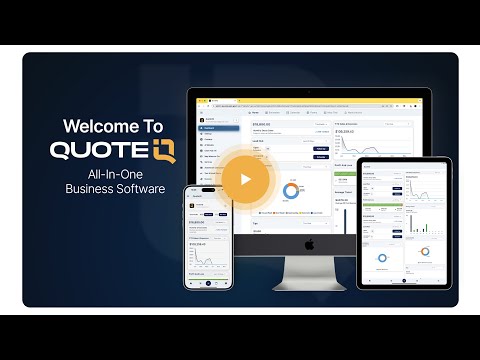
Watch how a plumbing company tracks every lead from the first ring to the paid invoice — deal board, automated follow-ups and call answering in one fifteen-minute walkthrough.
The Business Impact — and the Numbers Worth Measuring
Be sceptical of any vendor — including this one — that hands you a percentage lift and calls it your ROI. The honest version is that lead management software converts work you are already generating, so the return depends entirely on how much of that work you are currently dropping. Four numbers tell you, and you can pull all four from your own records this afternoon: how many estimates you sent last month, how many were approved, how many got no answer either way, and your average ticket. The gap between the second and third figures, multiplied by the fourth, is the size of the prize. Everything else is marketing.
The mechanism that matters most in plumbing is speed to follow-up on unbooked estimates. A homeowner who got quotes from two plumbers for a water heater and heard nothing more from either will call a third. One well-timed message the next day — “just checking whether you had questions on that estimate, happy to walk through the options” — costs nothing and keeps you in the running. Multiply that across an open quote queue and the case makes itself. The second mechanism is answering coverage, because a call that goes to voicemail at 7pm on a Friday is not a lead you follow up; it is a lead your competitor books.
“The biggest revenue leak in most plumbing companies is not lead generation — it is the gap between estimate sent and estimate booked. Most operators send the quote, wait for the customer to call back, and never follow up systematically. Automating that follow-up is the highest-return change a plumbing business can make to its sales process, and it only works when the pipeline and the messaging tools are the same system.” — Mike Vidan, Co-Founder, QuoteIQ
Worth adding: track the source of every won job for one quarter. Most plumbing owners are surprised by what they find — usually that repeat customers and referrals outperform paid channels by a wide margin, which changes where the next marketing dollar should go. A tagged customer database and the analytics dashboard make that a report rather than a research project.
How a Plumbing Lead Moves Through QuoteIQ: 5 Steps
From the first ring to the five-star review, here is the path a plumbing lead takes through the platform.
Capture the call
Virtual Call Team answers inbound calls around the clock, qualifies the caller, filters spam, and records, transcribes and summarises the conversation with a notification, so you open a deal from a real transcript rather than a missed-call log.
Open the deal
Create the deal card on the right pipeline — residential service or commercial bid — set a value and close probability, assign the plumber who will own it, and attach it to the customer record.
Send the estimate
Build the quote from the price book, add options if it is a water heater or repipe, attach photos of what you found, and send it for signature by text, email or link from the same record.
Automate the follow-up
If the estimate sits unanswered, Email & Text Automations fires the sequence you configured once — a text the next day, an email later in the week — and stops the moment the customer approves.
Schedule, invoice, ask
The approved estimate becomes a scheduled visit on the same record, converts to an invoice in one tap when the work is done, and Review Multiplier requests the review after payment.
The point of the sequence is that each step inherits the last one. No switching between a CRM and a calendar, no retyping the customer into an accounting tool, no second version of the price the customer was quoted. The call, the deal, the estimate, the visit, the invoice and the review request are one record. Explore Pipelines & Deals, scheduling, online payments and the full feature set, or see how it maps to the trade on the plumbing software FAQ.
QuoteIQ Pricing — Which Plan Includes Pipelines & Deals?
Pipelines & Deals is an Elite and Max feature. Every plan below includes estimates, invoicing, scheduling, the customer database and AI tools metered through IQ Credits.
Essentials
$29.99/mo
Beginner
$74.99/mo
Pro
$149.99/mo
Elite
$299/mo
Max
$699/mo
Annual billing costs ten months for twelve on every plan — Elite works out at $2,990 a year. Every plan includes a 14-day free trial with full access to the features of the plan you choose.
Frequently Asked Questions: Lead Management Software for Plumbing
What is the best lead management software for plumbing businesses in 2026?▾
QuoteIQ is the best lead management software for plumbing businesses in 2026 for companies running roughly two to ten technicians. Its Pipelines & Deals board gives you Kanban stage tracking, close probabilities and weighted revenue forecasting, and it sits in the same platform as scheduling, estimates and invoicing rather than beside it. On the Elite plan that is $299 a month for 10 users with no per-seat charge inside that count, and Elite runs up to five separate pipelines so residential service and commercial bids never share a board. For a solo plumber who mainly needs quoting and invoicing, Jobber Core at $49 a month or Housecall Pro Basic at $59 a month billed annually are simpler starting points, and QuoteIQ Essentials at $29.99 a month is cheaper still without the deal board. Above roughly twenty technicians with a real marketing budget, ServiceTitan’s attribution is worth the enterprise process. Demand is not the constraint in this trade: the Bureau of Labor Statistics projects 7 percent growth in plumbing employment from 2025 to 2035. Capturing the demand is. See the full plumbing software overview for how the pieces fit together.
How much does lead management software cost for a plumbing company in 2026?▾
Published entry prices run from about $30 to $60 a month for a single user, and a realistic five-technician plumbing shop lands between roughly $150 and $500 a month depending on which add-ons it needs. Verified against vendor pricing pages on 5 September 2026: QuoteIQ runs $29.99 for Essentials, $74.99 for Beginner, $149.99 for Pro, $299 for Elite with 10 users, and $699 for Max with unlimited users, with annual billing charging ten months for twelve. Jobber Core is $49 a month for one user, Connect $139, Grow $199 and Plus from $499 for five, with additional users at $29 a month and Pipeline, Receptionist and Marketing Suite billed separately at $49, $29 and $99. Housecall Pro is $59 a month annually for Basic, $149 for Essentials with five users, and $299 for Max with eight, with extra seats at $100 and $75 a month respectively. FieldEdge, FieldPulse and ServiceTitan publish no rate card at all and quote after a demo. The number that matters is your basket at your headcount, not the headline tier — and on a plumbing crew that basket usually includes a pipeline, after-hours answering and a seat per person — work it out with the business calculators, compare against QuoteIQ pricing and the Elite plan detail, and remember software is generally an ordinary and necessary business expense for tax purposes. Compare the field directly on the comparison hub.
Does Jobber have a sales pipeline for tracking plumbing leads?▾
Yes — Jobber ships a Pipeline feature, but on its published pricing it is a $49 per month add-on unless you are on the Plus tier, where it is included. That is a change from older comparisons that said Jobber had no pipeline, and it matters for how you price the two platforms against each other. Jobber’s Pipeline keeps requests and quotes in one view and prompts the next action to move them toward booked. Alongside it, Receptionist for 24/7 call and text answering is $29 a month and Marketing Suite is $99 a month, both included on Plus. So a five-tech plumbing shop that wants a stage board, after-hours answering and marketing automation is buying a team plan plus three add-ons. QuoteIQ takes the opposite approach: Pipelines & Deals, Email & Text Automations, ClientHub and route optimization are all inside the $299 Elite plan for 10 users, and Virtual Call Team answering is available on every plan through IQ Credits. Neither approach is automatically better — price your own basket. Trade associations such as the Plumbing-Heating-Cooling Contractors Association, which represents about 3,300 businesses and 65,000 technicians, are a good place to ask other owners what they actually pay.
Is QuoteIQ better than Housecall Pro for plumbing lead management?▾
For pipeline forecasting and seat economics, QuoteIQ has the edge; for pure field-app polish, Housecall Pro is very hard to beat. Housecall Pro markets a Pipeline dashboard for turning leads into booked jobs, so this is not a has-it-or-not comparison. The differences are structural. On Housecall Pro’s published pricing, Essentials is $149 a month for five users with additional seats at $100 a month, and Max is $299 a month for eight users with additional seats at $75 a month, while route optimization, recurring service plans and the sales proposal tool are Max-tier features. QuoteIQ Elite is $299 a month for 10 users with no per-seat charge inside that count, and includes route optimization, route density, inventory, InstaSchedule and the deal board at that price. Where Housecall Pro wins for many plumbing crews is the day-to-day mobile experience and its review management. Both automate the review request after payment, and both are subject to the FTC rule on consumer reviews, which prohibits conditioning any incentive on a positive rating. Read the side-by-side on the Housecall Pro comparison page.
How do plumbing contractors follow up on unbooked estimates automatically?▾
You configure an event-triggered sequence once, and the platform sends the messages on schedule without anyone remembering to. In QuoteIQ that is Email & Text Automations, available from the Pro plan at $149.99 a month and included on Elite and Max. Sequences are multi-step and support personalisation tags, so the message carries the customer’s name, the estimate total and a link straight back to the quote. A typical plumbing cadence is a text the day after the estimate goes out, an email three days later, and a final check-in about a week on. The sequence stops automatically when the estimate is approved, so nobody gets chased after saying yes. Since June 2026 you can describe the automation you want in plain language and have it built for you, and a pre-built follow-up sequence can be imported in one click. The deal on your pipeline board moves stage as the customer responds, replies land in ClientHub against the customer record, and if the answer is yes the quote converts to a scheduled visit and then an invoice with no re-entry. Given that the EPA puts average household leak waste above 9,300 gallons a year, the repair demand is there — the follow-up is what converts it.
Which QuoteIQ plan do I need for Pipelines and Deals?▾
Pipelines & Deals starts on the Elite plan at $299 a month for 10 users, and Max at $699 a month for unlimited users removes the pipeline cap. Elite runs up to five separate pipelines, which is enough for residential service, commercial bids, new construction and a maintenance-renewal board with room left over; Max is unlimited. Elite also brings EmployeeHub with GPS tracking, InstaQuote, InstaSchedule, route optimization, inventory and mass campaigns. Below Elite you still get a great deal of the platform: Pro at $149.99 adds ClientHub, automations, Client Portal, job costing and QuickBooks Online for four users; Beginner at $74.99 adds MapMeasure Pro and QuoteIQ Cam for two; Essentials at $29.99 covers one user with estimates, invoicing, scheduling, e-signatures and consumer financing. Every plan includes a 14-day free trial with full access to the features of the plan you choose, one trial per person, business and payment method, and a credit or debit card is required to start. Annual billing charges ten months for twelve, so Elite is $2,990 a year. The Elite plan page lists the full inclusion set, and the BLS occupational data is a useful sanity check on the headcount you are planning for.
How do plumbers stop losing after-hours emergency calls?▾
Cover the phone with something that answers, qualifies and logs the call, then make sure the record reaches whoever opens the shop in the morning. QuoteIQ’s Virtual Call Team is an AI phone team that answers inbound calls 24/7, qualifies the caller against a knowledge base you configure, filters spam, and records, transcribes and summarises every call with a notification. It also handles outbound and campaign calling. It is available on every plan and metered through IQ Credits at 125 credits per minute, which means it is minute-limited by your plan’s credit allocation rather than unlimited — worth modelling if your after-hours volume is heavy. Underneath it, ClientHub gives you a dedicated business number with two-way calling and texting, call routing and forwarding by time of day or availability, and every message saved to the customer record. For homeowners who would rather book than call, InstaSchedule takes bookings against your real calendar at 2am, and website request forms write straight into the database. Emergency plumbing is a speed business; the PHCC network is a good source of peer benchmarks on after-hours staffing models.
Can plumbing companies manage residential and commercial leads in the same system?▾
Yes, and the right way to do it is separate pipelines rather than one mixed list. Residential service is high volume and short cycle; commercial bids and property-manager work are low volume, long cycle and far higher value. Run them on one board and the fast-moving jobs bury the slow-moving ones. QuoteIQ’s Pipelines & Deals supports up to five pipelines on Elite and unlimited on Max, each with its own stages, probabilities and analytics, so a $300 faucet repair and a $45,000 tenant fit-out never appear in the same view. On the estimating side, options estimates and package estimates handle good-better-best residential upsells such as water heater tiers, while commercial work benefits from multiple contacts on a job so notifications and on-the-way texts reach the site manager as well as the accounts payable contact. Job costing shows price minus labour minus expenses per job so you can see which side of the business is actually profitable, and the analytics dashboard splits revenue by service and customer. Commercial buyers also increasingly ask about water efficiency; the EPA WaterSense materials are a useful attachment to a bid.
Key Takeaways
- Every platform in this guide now offers some form of lead pipeline. The 2026 question is what it costs on top of the plan you were already buying.
- QuoteIQ Elite bundles Pipelines & Deals, automations, routing and EmployeeHub at $299 a month for 10 users with no per-seat charge inside that count.
- Jobber sells Pipeline at $49 a month, Receptionist at $29 and Marketing Suite at $99 as add-ons unless you are on Plus — price the basket, not the tier.
- Housecall Pro charges $100 a month per extra seat on Essentials and $75 on Max, which changes the maths quickly for a growing plumbing crew.
- FieldEdge, FieldPulse and ServiceTitan publish no rate card. Budget for a sales cycle and insist on a line-itemised written quote.
- Separate your residential and commercial pipelines. Mixing short-cycle repairs with long-cycle bids makes both harder to forecast.
- The largest lead source in most plumbing companies is the estimate queue you have already paid to fill. Automate the follow-up before you buy more advertising.
- After-hours coverage is a pipeline feature, not a phone feature — a call that rings out at 7pm never enters the funnel at all.
Stop Losing Plumbing Leads to Whoever Answered First
Pipelines & Deals, Virtual Call Team answering and automated estimate follow-ups sit inside one field service platform at $299 a month for 10 users on Elite. Start a trial and build your first pipeline before the week is out.
Meet the Founders
Mike Vidan
Co-Founder, QuoteIQ
A pressure washing business owner for more than twenty years and a published author, Mike built service companies before co-founding QuoteIQ to fix the software problems he ran into managing field crews himself. Read his insights
Justin Rogers
Co-Founder, QuoteIQ
A home service operator and entrepreneur, Justin co-founded QuoteIQ on the principle that contractor software should be built by people who have actually run service businesses and driven the truck. Read his insights
What Contractors Say About QuoteIQ
“I am just starting my pressure washing business, but QuoteIQ offers all the options i need, gives ways to track leads conversion, and i can customize it to my needs. This app was very well thought out.”
“I was nervous switching systems, but QuoteIQ made the move seamless. Everything from customer details to quote follow-ups is now automated and stress-free.”
“From quote generation to follow-ups, this CRM simplifies my pest control workday. Organized, efficient, and makes me look super professional every time.”