



Published July 2026 · Updated September 2026
The job usually goes to whoever calls back first. These ten platforms are ranked on the three things that decide that race for a contractor: how clearly you can see every open lead, how fast the follow-up fires without you, and whether the phone gets answered when you are under a sink.
The best CRM with lead management for contractors in 2026 is QuoteIQ, which puts the whole lead lifecycle inside one trades-built platform starting at $29.99/mo: an AI Estimator and a 24/7 Virtual Call Team on every plan, Email & Text Automations from Pro at $149.99/mo, and the visual Pipelines & Deals board plus InstaQuote self-quoting from Elite at $299/mo for 10 users. For enterprise shops running large advertising budgets, ServiceTitan carries the deepest marketing attribution. For a small crew that wants the shortest setup, Jobber is the cleanest starting point. Every competitor on this list publishes or quotes its own rates — check them on the vendor’s own pricing page before you sign.
TL;DR: Lead management for a contractor is four jobs, not one: capture the inbound call, quote it fast, see where it sits, and chase it automatically. QuoteIQ covers all four from $29.99/mo, with the Virtual Call Team, AI Estimator and AI Autopilot on every plan, ClientHub and Email & Text Automations from Pro, and Pipelines & Deals, InstaSchedule and Route Optimization from Elite. The demand is real: the U.S. Census Bureau put construction spending at a $2,157.6 billion annual rate in July 2026, and the Bureau of Labor Statistics projects about 587,000 construction and extraction openings a year. Price the rest against the QuoteIQ plan ladder and the Census construction series before you commit.
Rates move constantly in this category, so this table ranks on lead-handling capability rather than on a price snapshot that would be stale within a quarter. QuoteIQ’s own numbers are published in full on the QuoteIQ pricing page; for every other platform, read the figure off the vendor’s own pricing page on the day you buy.
| Rank | Platform | Pricing | Best For | Lead Management Standout |
|---|---|---|---|---|
| #1 | QuoteIQ | From $29.99/mo, published | Solo operators through 10-person crews | Pipelines & Deals, Virtual Call Team, AI Estimator |
| #2 | Jobber | Paid plans — see their pricing page | Small contractor teams wanting fast setup | Quote follow-up automation, lead tagging |
| #3 | Housecall Pro | Paid plans — see their pricing page | Residential service businesses | Job Inbox, pipeline module, AI chat answering |
| #4 | Workiz | Paid plans — see their pricing page | Phone-driven shops that buy ads | Built-in VoIP, AI answering, call attribution |
| #5 | ServiceTitan | Quote-based — contact their sales team | Large multi-technician operations | Marketing attribution, deep CRM analytics |
| #6 | FieldPulse | Quote-based — contact their sales team | Teams scaling past entry-level tools | Customizable pipelines, after-hours AI answering |
| #7 | GoHighLevel | Paid plans — see their pricing page | Marketing-heavy owner-operators | Multi-channel nurture, funnels, conversational AI |
| #8 | Markate | Paid plans — see their pricing page | Budget-first solo and small operators | AI receptionist, lead conversion tracking |
| #9 | Service Fusion | Paid plans — see their pricing page | Mid-size shops with large headcount | Flat-rate seats, VoIP tied to customer records |
| #10 | FieldEdge | Quote-based — contact their sales team | HVAC, plumbing and electrical service shops | Property and equipment service history |
We are QuoteIQ. We built this list, and we put our own platform at number one. What follows is the reasoning, including the places where another tool is the better answer. Where a rival’s capability is genuinely stronger for a given shop, we say so and point you at the full comparison hub, which covers far more than the ten platforms here.
To qualify, a platform had to address the problem that quietly costs contractors the most money: a lead comes in, the day swallows it, and nobody follows up. Five criteria were applied equally to all ten tools, ourselves included.
Pipeline depth and visibility. Can you see, in one screen, where every open opportunity stands and how long it has been sitting there? We favoured board-style views with stages, owners and weighted forecasting over a contact list with notes stapled to it — the model QuoteIQ ships as Pipelines & Deals, where each stage carries a close probability and the weighted value is the amount multiplied by that probability.
Automated follow-up. A lead that gets one touch and silence is a lead you have already lost. We scored each platform on event-triggered, multi-step sequences over SMS and email — the category QuoteIQ covers with Email & Text Automations and, for segmented blasts to a tagged list, Mass Campaigns. If you automate outbound contact, read the FTC’s Telemarketing Sales Rule guidance before you switch anything on.
Inbound capture. A lead CRM is only as good as the leads that reach it. We looked at web forms, self-service quoting and booking, and round-the-clock call answering — Website Contact Forms, InstaQuote, InstaSchedule and the Virtual Call Team in QuoteIQ’s case.
Field usability. Contractors do not sit at desks. We weighted mobile behaviour heavily, including whether estimating, photos and customer history survive a day with bad signal — the ground mobile and web parity and QuoteIQ Cam are built for.
Pricing transparency. Some vendors publish a rate card; others quote. We have deliberately not reprinted any competitor’s figures here, because they change without notice and a stale number in a buyer’s guide is worse than no number. Read each vendor’s own page. For the one platform where the arithmetic is genuinely hard to do in your head, we maintain a ServiceTitan pricing calculator built from user-reported costs.
Industry context throughout comes from the Census Bureau’s Value of Construction Put in Place series, the BLS Occupational Outlook Handbook, the Census Statistics of U.S. Businesses program and the U.S. Small Business Administration.
An all-in-one CRM built for the trades from day one, with AI estimating and 24/7 call answering on every plan and a visual lead pipeline from Elite up.
From $29.99/mo · Pipelines & Deals at Elite ($299/mo) · 14-day free trialBest for: Solo contractors through ten-person crews in any trade who are losing work to slow response and thin follow-up, and who would rather not stitch five subscriptions together to fix it.
QuoteIQ takes the top spot because the lead lifecycle is not split across products. The quote, the pipeline, the follow-up sequence and the phone all live in the same account, and the trade-specific parts — satellite measurement, photo documentation, per-job profit — are native rather than bolted on. Founded in September 2022 and now used by more than 40,000 contractors, it is priced on a published five-tier ladder rather than a sales call: Essentials at $29.99/mo for one user, Beginner at $74.99/mo for two, Pro at $149.99/mo for four, Elite at $299/mo for ten and Max at $699/mo for unlimited seats. Annual billing is ten months for twelve. The whole ladder is laid out on the pricing page.
The centrepiece for lead management is Pipelines & Deals, which unlocks at Elite ($299/mo, 10 users). In the app it is simply called Deals. You get a Kanban board and a list view, stages that each carry a close-probability percentage, and a weighted value calculated as amount multiplied by probability, so the forecast reflects reality instead of wishful thinking. Six metrics sit on top of it — total value, weighted value, open, closed-won, new deals and average deal age — and that last one is the number that tells you which leads have been rotting. Deals take multiple assignees, attachments, internal notes kept separate from anything the customer sees, and filters by priority, owner and date range. Elite runs up to five pipelines; Max removes that cap.
Upstream of the board, the Virtual Call Team is on every plan, including Essentials. It answers inbound calls around the clock, qualifies the caller against a knowledge base you write, filters spam, records and transcribes every call, sends you a summary, and can run outbound and simultaneous call campaigns. Be precise about what it does and does not do: it captures and qualifies the lead, it does not book the appointment for you. It is metered in IQ Credits at 125 credits per minute, drawn from the monthly allocation that comes with your plan — 500 on Essentials, rising to 8,000 on Max — so the practical number of answered minutes scales with the tier you are on. Pair it with ClientHub from Pro, which gives the business a dedicated number with two-way calling and texting logged to the customer record, plus call routing and forwarding by time of day or availability.
The chase is handled by Email & Text Automations, also from Pro. These are event-triggered multi-step sequences with personalisation tags, and since June 2026 you can describe the sequence you want in plain language and have it built for you. Timing runs from immediate to months out, and there is an importable follow-up sequence that runs from the first estimate through eleven-month touches. For segmented blasts rather than triggered sequences, Mass Campaigns at Elite sends to tag-based lists.
Capture from your own website runs through Website Contact Forms at Pro and, at Elite, InstaQuote, where a visitor picks services from a library you price, watches the total update, and submits — the quote is delivered instantly by email or text and the lead lands in your system. InstaSchedule, also Elite, lets that same customer book against real calendar availability without a phone call, and it is reachable from all four estimate types and from InstaQuote forms.
Speed from lead to number is where the AI layer earns its keep, and it is not tier-gated. The AI Estimator is on every plan: it reads property photos, asks targeted follow-up questions, and produces line-item pricing for your local market. AI Autopilot — surfaced in-app as Ask AI — is also on every plan and runs 55 integrated tools across 13 categories by voice or text, so “move all of today’s jobs to Friday and text every customer” is a single instruction. Before & After AI renders a realistic finished-job preview from the actual photo in roughly fifteen to twenty seconds, which is a closing tool as much as a marketing one, and AI Text Generator drafts the message that goes with it. All of these draw IQ Credits, and every AI action shows its credit cost and asks for confirmation before it runs.
The trade-specific tooling starts earlier than most buyers expect. MapMeasure Pro arrives at Beginner ($74.99/mo) and measures square footage, roofs, lawns, driveways, decks and fences from satellite imagery inside estimate creation, attaches screenshots to the estimate as proof of scope, and since August 2026 offers a historical imagery timeline you can scroll back through. Roof segments are auto-detected from solar data and colour-coded, and roof pitch is calculated, shown and saved. Property Street View and Zillow Quick Access sit alongside it, and QuoteIQ Cam handles inspection reports, before-and-after comparisons and unlimited 4K photo storage from the same tier.
Downstream, Job Costing at Pro subtracts labour and expenses from price to show per-job profit with labour pulled automatically from time tracking, Expense Tracking starts at Beginner, and Business Analytics reports conversion rate, average ticket and pipeline value. Consumer Financing through Affirm, Klarna and Afterpay is available on every plan including the trial, with the contractor paid in full upfront. Invoicing and online payments are on every tier too, with subscription billing handled through Whop for new accounts, and QuickBooks Online syncing from Pro. Free planning tools sit outside the app entirely — the home service business calculators and templates such as the contractor invoice template are free to use before you ever open an account.
“The contractors I’ve coached who made same-day quoting a non-negotiable discipline consistently won more jobs without changing their prices, their service, or anything else. Response speed alone moved their numbers.”
— Mike Vidan, Co-Founder of QuoteIQ, 20+ year home service business owner
Strengths
What to weigh
Quick verdict: QuoteIQ is the strongest single answer to the contractor lead problem in 2026 because capture, quoting, pipeline and follow-up are one system rather than four. Start on Essentials if you only need quoting and AI call answering; step to Pro when you want automated chasing and ClientHub; move to Elite when the board, self-serve quoting and routing start paying for themselves.
A widely adopted field service platform for small contractor teams, with dependable quote follow-up automation and a mobile app crews actually open.
Paid plans — see their pricing pageBest for: Small contractor teams that want an organised system for clients, quotes and jobs without a long configuration project in front of it.
Jobber has scaled by executing the fundamentals consistently rather than by chasing every new category. For lead management specifically, the strength is quote follow-up automation: set a window after a quote goes out and the platform sends a follow-up to customers who have not replied. Contractors who leave it running describe it as recovering jobs that were never really lost, only forgotten. Lead management also exists as its own module, letting you tag a client as a lead, keep them separate from active customers and track them through to a booked job — closer to structured stage tracking than to a full board — confirm on their own pricing page which tier carries the full board.
An AI receptionist add-on answers calls and texts when nobody can, captures details and books into the calendar. The client-facing portal lets customers approve quotes, view invoices and pay online, which removes a surprising amount of back-and-forth from the follow-up cycle. If you are already on Jobber and weighing a move, the side-by-side on QuoteIQ versus Jobber walks through where the two diverge, and QuoteIQ’s AI Smart Import maps a Jobber CSV export automatically if you decide to switch.
Strengths
What to check before you commit
Quick verdict: Jobber is the safe default for a growing contractor team that wants lead management folded into a field service tool it already needs. It is not the deepest pipeline on this list, but the follow-up automation and mobile reliability make it hard to regret.
A well-rounded residential service platform with a growing lead management suite, AI answering and a large contractor community behind it.
Paid plans — see their pricing pageBest for: Residential contractors running small operations who want straightforward scheduling, lead follow-up and customer communication, with strong inbound booking from Google.
Housecall Pro has quietly built one of the more capable inbound stories in the mid-market through its job inbox and pipeline modules. The inbox pulls every opportunity — Google Local Services, direct booking, phone and web form — into one view where status can be tracked without hopping between apps. The pipeline module adds stage-based tracking with automation on top, though it is worth confirming whether it is bundled with your plan or priced separately.
Its AI chat answering handles inbound website conversations automatically, answers common questions, captures job details and escalates when a human is needed, and the same AI layer extends to phone handling. The Google integration is the genuine differentiator: Local Services Ads booking connects straight into the platform, so a lead from Google search can book without calling. For contractors spending on Google specifically, that closed loop is the reason to look. The QuoteIQ versus Housecall Pro comparison covers how the two differ on pipeline and automation; QuoteIQ’s equivalent inbound path is InstaQuote plus Google Reserve booking.
Strengths
What to check before you commit
Quick verdict: Housecall Pro earns third place on inbound capture, particularly for residential shops running Google ads. It is a strong fit if your lead problem is at the top of the funnel rather than in the chasing.
The field service platform built around the phone, with a VoIP system wired directly into the customer record and AI answering on top of it.
Paid plans — see their pricing pageBest for: Contractor teams that buy advertising and need call tracking and attribution, particularly HVAC, plumbing and appliance repair operations where the phone is still the primary inbound channel.
Workiz built its differentiation on an observation most CRM vendors underweight: for a contractor, the phone is the lead channel, and most platforms treat it as an afterthought bolted on through a third-party integration. By building telephony into the product, Workiz closes the gap between “the call came in” and “the lead exists in the system” — call data, recordings and caller identity attach to the customer record automatically rather than being retyped by whoever happened to answer.
Its AI answering layer picks up missed calls, texts and emails around the clock and engages the lead rather than dropping it to voicemail, which is the moment most contractor leads are actually lost. There is also a trade pricing book add-on for HVAC, plumbing and electrical work. Where it stops short is trade tooling beyond the phone: if aerial measurement or photo-to-quote estimating matters to your close rate, weigh it against MapMeasure Pro and the AI Estimator, and read the QuoteIQ versus Workiz breakdown for the full picture. HVAC shops in particular should price a job both ways with the HVAC cost calculator before choosing.
Strengths
What to check before you commit
Quick verdict: Workiz takes fourth on the strength of its phone infrastructure. If inbound calls are where your leads live and attribution is how you decide next month’s ad budget, the integrated VoIP is genuinely hard to replicate with a bolt-on.
The enterprise standard for large contracting operations, with the deepest marketing attribution and technician-level analytics in the category.
Quote-based — contact their sales teamBest for: Multi-trade and mechanical operations large enough to carry dedicated office staff, a real marketing budget and a rollout timeline measured in months rather than days.
ServiceTitan is the most feature-complete contractor platform in existence, and its marketing attribution is best-in-class for operations at scale. It ties inbound call data, advertising spend and pipeline performance back to individual campaigns, which gives an operations manager a live picture of which marketing dollars are producing leads that actually close. For a business spending heavily on advertising every month, that attribution alone can justify the platform.
The CRM underneath it is built for multi-location complexity: technician performance tied to lead outcomes, dispatch integrated with customer history, and reporting that goes well past anything else in this category. If you need a pipeline sliced by technician, service type and customer segment at the same time, this is the platform that does it.
The honest trade-off is fit. It is engineered for scale, priced by quote rather than by rate card, and carries an implementation project rather than a signup. Smaller shops routinely buy it, use a fraction of it and resent the bill. Because the arithmetic is difficult to do from the outside, we maintain a ServiceTitan pricing calculator built from user-reported costs, and a full QuoteIQ versus ServiceTitan comparison for contractors deciding whether the depth is worth the commitment.
Strengths
What to check before you commit
Quick verdict: ServiceTitan is the right answer for one specific profile — a large, established operation with office staff and the appetite for a real rollout. If you want its lead pipeline, call capture and automation without the enterprise commitment, QuoteIQ Elite covers that ground at a published flat rate.
A platform aimed at contractor businesses in a growth phase, with customisable lead pipelines and after-hours AI call capture.
Quote-based — contact their sales teamBest for: Contractor businesses that have outgrown entry-level tools and want pipeline customisation and workflow depth without moving to enterprise software.
FieldPulse positions itself as the platform that scales with you rather than the one you graduate from. Its lead management is built around configurable pipeline workflows, so the stages match how your business actually sells rather than how a template assumes you do — useful if you run different processes for different job types or trades under one roof. Guided job stages with required checkpoints reduce skipped steps and make close-rate consistency less dependent on who happens to be running the job.
Its AI dispatcher answers after-hours, declined and overflow calls and books into the platform without voicemail or retyping, which is a practical answer for a team generating more calls than one office admin can absorb. The main friction is evaluation: pricing is quoted rather than published, so you cannot model the cost without a sales conversation — ask which seat types your team would need and what each one costs. Contractors who want to compare like for like can read the QuoteIQ versus FieldPulse comparison, where the ladder is published in full.
Strengths
What to check before you commit
Quick verdict: FieldPulse is a legitimate middle path for contractors past Jobber-level simplicity but unwilling to take on an enterprise rollout. The configurable pipelines are a real strength; the pricing opacity is a real barrier to self-evaluation.
The deepest marketing automation a contractor can reasonably buy — positioned as the CRM and nurture layer, so check what it covers on the operations side before you assume it replaces anything.
Paid plans — see their pricing pageBest for: Marketing-focused owner-operators who already run a field service platform and want the most capable multi-channel nurture, funnel building and conversational AI they can get.
GoHighLevel was built for marketing agencies and has become one of the fastest-growing CRM platforms among contractors who run their own marketing. Its multi-channel automation — SMS, email, phone, Messenger, Instagram and Google Business messages arriving in a single inbox — is more comprehensive for lead nurture than what most field-service-native platforms offer. For a contractor spending meaningfully on paid advertising every month, the automation depth and closed-loop reporting can justify the learning curve on their own.
Its conversational AI add-on handles chat and SMS inquiries and books appointments into the calendar, which is capable for high-volume web form and social leads. The point to settle before buying is scope. GoHighLevel positions itself as a CRM and marketing platform rather than a field service system, so ask directly what it covers for estimating, scheduling and job operations and budget for a second subscription if the answer is thin. The alternative is a platform where nurture and operations already share a database — QuoteIQ’s Email & Text Automations and Client Portal sit on the same records as the jobs and invoices.
Strengths
What to check before you commit
Quick verdict: GoHighLevel is here because its nurture automation is genuinely best-in-class for contractors who prioritise marketing. Whether it works as a standalone contractor solution depends entirely on what you still need for job operations, so settle that first. If you want one platform, look at number one; if you already run a field service tool and want to upgrade the chasing, GoHighLevel is a strong complement.
A budget-first all-in-one for solo and small-team contractors, with a solid CRM core and an AI receptionist for inbound capture.
Paid plans — see their pricing pageBest for: Solo operators and small crews who want CRM basics, job costing, GPS and lead tracking at the lowest sustainable monthly cost in this category.
Markate’s pitch is breadth at the entry point: job costing, GPS, time tracking, accounting integration, a sales pipeline and lead conversion tracking are all part of the product rather than premium extras. Confirm on their own pricing page which of them sit inside the plan you would actually buy. For an operator simply trying to get organised for the first time, a short plan ladder is itself a feature.
Its AI receptionist answers inbound calls, captures lead information and books around the clock, with spam filtering so answered volume tracks real leads rather than noise. Ask how it is billed before you model the monthly figure. The trade-off sits in pipeline sophistication: lead tracking and conversion reporting are functional and tell you where leads came from and what converted, but the visualisation is closer to a structured list than to the drag-and-drop board that Pipelines & Deals provides. For a contractor holding fewer than twenty open leads at a time, that is a genuine trade-off rather than a flaw. The QuoteIQ versus Markate comparison covers the detail, and solo operators pricing their first jobs will get more out of the free business calculators than out of either subscription on day one.
Strengths
What to check before you commit
Quick verdict: Markate is the clearest budget recommendation for a contractor who needs a CRM with lead tracking and is not ready for a heavier platform. The visualisation limits are real, but for a small open-lead count the format works.
A flat-rate platform aimed at mid-size shops carrying a lot of headcount, where per-seat models start to hurt.
Paid plans — see their pricing pageBest for: Mechanical and multi-trade operations with large technician counts, where getting the whole crew into the platform is the dominant cost question.
Service Fusion’s differentiator is structural rather than functional: it is priced as a flat monthly plan rather than per user. For a shop with a large technician count that is a different cost model from per-seat pricing, and the gap widens as headcount rises — read the current seat terms off their own pricing page before you build the comparison, because this is the single variable the whole decision turns on.
On lead management specifically, it offers customer management with full service history, equipment tracking tied to property records — which matters for HVAC and appliance repair — and a telephony integration that ties inbound calls to customer records, removing the manual lookup that slows a dispatch desk at peak. Communication history, service notes and job records live in one centralised profile.
Where it shows its age is in automation depth. The CRM is frequently described by users as functional but basic, and contractors who need triggered chasing rather than manual follow-up should confirm exactly what the platform does on its own before assuming it replaces a nurture tool. If automated follow-up is the reason you are shopping, compare it against Email & Text Automations and read the QuoteIQ versus Service Fusion comparison. If seat count is the whole reason you are looking, note that QuoteIQ Max carries unlimited users at $699/mo.
Strengths
What to check before you commit
Quick verdict: Service Fusion belongs here because a flat-rate structure genuinely disrupts the cost maths for a large crew. The lead automation is thinner than the top of this list, but the operational core is proven.
A long-established platform with unusually deep property and equipment service history, built around maintenance agreements rather than new-lead capture.
Quote-based — contact their sales teamBest for: Established HVAC, plumbing and electrical operations whose revenue leans on recurring service agreements and repeat customers rather than on new inbound demand.
FieldEdge has been in this market longer than most of the platforms on this list, and the longevity shows in one specific place: the depth of its property and equipment CRM. Rather than treating a customer as a contact record, it tracks equipment at the property, so when a repeat customer calls about their system the dispatcher already has the unit, the last service date, the full history and any open agreement without asking the customer to explain themselves. For a contractor whose revenue depends on maintenance agreements, that history layer is genuinely valuable.
Its campaign tooling handles re-engagement of past customers, seasonal service reminders and agreement renewals — which is, for an established trade business, the most reliable form of lead generation there is. Reactivating a customer you already served beats buying a stranger’s click.
The limitation in a 2026 lead management comparison is the front of the funnel. The platform’s strengths sit in managing relationships that already exist; if your problem is capturing and converting new inbound demand from digital channels, confirm carefully what the platform does at that stage before buying, and compare it against InstaQuote, the Virtual Call Team and the QuoteIQ versus FieldEdge comparison. HVAC operators can also model the agreement side against real job pricing using the air duct cleaning cost calculator and the HVAC invoice template.
Strengths
What to check before you commit
Quick verdict: FieldEdge is the specialist pick for established mechanical shops whose lead challenge is reactivating existing customers and managing agreements. If your challenge is at the top of the funnel, start with the top five.
Everything below is drawn from a primary government source and linked so you can check it yourself. Where a figure is about QuoteIQ rather than the industry, it comes from the platform’s own published plan documentation.
“Lead management” is a single phrase covering four separate jobs, and most platforms are strong at two of them. Working out which two you are missing is more useful than comparing feature counts.
The first loss happens before any CRM is involved. A homeowner calls while you are on a roof, gets voicemail, and calls the next result. Three mechanisms fix this, and they are not interchangeable. AI call answering picks up the phone — in QuoteIQ that is the Virtual Call Team, on every plan, qualifying the caller against a knowledge base you write and transcribing the call so nothing depends on memory. Website forms catch the people who would never call at all, which is what Website Contact Forms handle from Pro. And self-service quoting catches the ones who want a number before they will talk to anyone, which is InstaQuote at Elite. A shop that installs only the first is still leaking the other two.
Which mechanism matters most varies by trade. A plumbing business lives and dies on the emergency call, so answering is everything. A painting contractor or a remodeler is more often shopped by form, because the homeowner is comparing three bids and is not in a hurry. Pressure washing and lawn care convert well on self-quoting because the scope is measurable from an address.
A captured lead with no price attached is still an open question. This is where response speed turns into close rate, and where the measurement and estimating tooling decides whether you quote tonight or on Saturday. MapMeasure Pro from Beginner measures the property from satellite imagery inside the estimate, so a roofing or gutter quote does not require a site visit to produce. Roof segments are auto-detected and colour-coded, and roof pitch is calculated, shown and saved. The AI Estimator — on every plan — reads job photos, asks the follow-up questions a good estimator would, and returns line-item pricing.
Four estimate types cover different selling motions: Standard for line-item work, Quick for simple jobs, Options for good-better-best tiers that raise average ticket without raising prices, and Package for bundles. E-Signatures are available from Essentials so the customer can accept on their phone, and contract attachments arrive at Beginner. If you are still building your price book, start with the business calculators — the deck, concrete, fence, drywall and painting calculators are free and need no account.
This is the job a contact list cannot do. Pipelines & Deals at Elite gives you stages with close probabilities, weighted forecasting, multiple assignees and — the metric that matters most for leak detection — average deal age. A lead sitting in “estimate sent” for nineteen days is not a maybe; it is a loss that has not been recorded yet. Reminders and tasks and the client database carry the day-to-day underneath it, and Business Analytics turns the board into conversion rate, average ticket and pipeline value you can act on.
Follow-up is the job most owners intend to do and least reliably complete. Email & Text Automations from Pro fire on events rather than on your memory, with personalisation tags and timing that runs from immediate to months later — and since June 2026 you can describe the sequence in plain language and have it built. ClientHub gives the business its own number so the chasing happens from a business identity rather than your personal mobile, and the Client Portal lets the customer approve, pay and request work without waiting for you. Once the job is done, Review Multiplier converts a paid invoice into a review request, which is the cheapest lead source any contractor has.
This is the only rate card reprinted in this guide, because it is ours and we can stand behind it. Annual billing is ten months for twelve. Every plan includes a 14-day free trial with full access to the features of the plan you choose.
| Plan | Monthly | Annual | Users | IQ Credits | Lead Management Unlock |
|---|---|---|---|---|---|
| Essentials | $29.99 | $299.99 | 1 | 500 | AI Estimator, AI Autopilot, Virtual Call Team, e-signatures |
| Beginner | $74.99 | $749.99 | 2 | 1,500 | MapMeasure Pro, QuoteIQ Cam, expense tracking, advanced analytics |
| Pro | $149.99 | $1,499.99 | 4 | 3,000 | Email & Text Automations, ClientHub, Client Portal, contact forms, job costing |
| Elite | $299 | $2,990 | 10 | 5,000 | Pipelines & Deals, InstaQuote, InstaSchedule, Mass Campaigns, Route Optimization, EmployeeHub |
| Max | $699 | $6,990 | Unlimited | 8,000 | Unlimited pipelines, Sales Team Tracker, crew creation and scheduling |
Two things to note when you model this. First, IQ Credits are the currency behind every AI action, including Virtual Call Team minutes at 125 credits each, so the allocation is part of the price rather than a footnote. Second, the per-seat maths inverts as you grow: a ten-person crew on Elite is paying less per head than most published per-user rates, and Max removes the seat cap entirely. A guided setup is available as a one-time service at $299.99 or $999.99 depending on scope.
No single platform suits every shop. Match the tool to the stage you are actually at, not the one you are planning for.
Start on QuoteIQ Essentials at $29.99/mo for quoting, invoicing, scheduling, the AI Estimator and Virtual Call Team answering. Do not pay for a pipeline board before you have enough open leads to need one. Before you subscribe at all, build your prices with the free calculators and a contractor invoice template.
Beginner at $74.99/mo adds MapMeasure Pro and QuoteIQ Cam, which is where quoting speed jumps. Step to Pro at $149.99/mo the moment follow-up starts slipping — that is the tier with automations, ClientHub and job costing.
Elite at $299/mo for ten users is where lead management becomes fully operational: Pipelines & Deals, InstaQuote, InstaSchedule, Route Optimization and EmployeeHub. At this size a missed lead costs more than the tier does.
Max at $699/mo with unlimited users removes the seat cap and adds crew creation and scheduling, the Sales Team Tracker and unlimited pipelines. Service Fusion is the alternative worth pricing if seat count is the whole reason you are shopping.
ServiceTitan is the default at this scale if you have dedicated office staff and appetite for a real implementation. Get the quote in writing, then sanity-check it against our ServiceTitan pricing calculator and against running multiple businesses under one QuoteIQ Max plan.
If recurring agreements drive your revenue, FieldEdge’s equipment history deserves a look. If new inbound demand is the problem, start with the HVAC, plumbing and electrical pages instead.
Jobber and Markate both get running quickly. So does QuoteIQ Essentials — and if importing your existing customer list is the part you are dreading, AI Smart Import maps a CSV from any CRM automatically. Guided setup is available as a paid one-time service if you would rather hand it over.
Mixed job types make pipeline stages messy, which is an argument for the Elite board rather than a tagged list. Start from the general contractor and handyman pages, and price jobs with the construction invoice template.
The best CRM with lead management for contractors in 2026 is QuoteIQ, starting at $29.99/mo, because it covers all four stages of the lead lifecycle in one account rather than across separate subscriptions. Inbound capture runs through the Virtual Call Team, which answers, qualifies and transcribes calls around the clock on every plan. Quoting speed comes from the AI Estimator, also on every plan, which builds line-item pricing from job photos. Chasing is handled by Email & Text Automations from Pro at $149.99/mo, and visibility by Pipelines & Deals from Elite at $299/mo, where each stage carries a close probability and the forecast is weighted accordingly. For large multi-technician operations, ServiceTitan’s marketing attribution is deeper; for a small crew wanting the shortest setup, Jobber is the cleanest entry point. Demand context comes from the Census construction spending series.
Contractor CRM pricing splits into two models: published rate cards and quote-only enterprise deals. QuoteIQ publishes five tiers — Essentials at $29.99/mo for one user, Beginner at $74.99/mo for two, Pro at $149.99/mo for four, Elite at $299/mo for ten and Max at $699/mo for unlimited users, with annual billing charged as ten months for twelve. Other vendors on this list either publish their own figures or quote by sales conversation, and because those numbers change without notice we deliberately do not reprint them — read them off the vendor’s own pricing page on the day you buy. The more important question than the headline rate is where the lead pipeline sits in the ladder, since several platforms place it above the entry tier or sell it as an add-on. Weigh any subscription against the BLS median wage for construction occupations of $59,540 before calling it expensive.
There is no fully functional free CRM for contractors with real lead management capability in 2026 — free tiers generally lack the pipeline visibility, automation and field service integration the work actually requires. What exists instead are trials. QuoteIQ includes a 14-day free trial with full access to the features of the plan you choose, on every tier from Essentials through Max; one trial applies per person, business and payment method, and a credit or debit card is required to start. Genuinely free tools do exist outside the subscription: the home service business calculators, the contractor invoice template and the handyman invoice template need no account at all. For free business guidance rather than free software, the SBA’s management resources are the better starting point. If the goal is to test lead handling specifically, use the trial period to run real inbound work through call answering and a live pipeline rather than to click through a demo account.
For a solo contractor, QuoteIQ Essentials at $29.99/mo is the strongest starting point because the AI layer is not tier-gated: you get the AI Estimator, AI Autopilot and Virtual Call Team answering on the entry plan, alongside invoicing, scheduling and e-signatures. That combination matters more to a one-person shop than a pipeline board does, because the bottleneck is the phone you cannot answer, not the visibility of twelve open leads. Jobber and Markate are both credible alternatives if you prefer their interface. What a solo operator should not do is buy a tier for features that only pay off at headcount — EmployeeHub and crew scheduling are irrelevant until you have a crew. Note that the IRS business mileage rate rose to 76¢ from July 1, 2026, so logging drive time is worth more than it used to be.
For teams of two to five, QuoteIQ Pro at $149.99/mo for four users is the right band, because Pro is the tier where follow-up stops depending on memory. It unlocks Email & Text Automations, ClientHub with a dedicated business number and two-way texting logged to the customer record, the Client Portal, website contact forms, Job Costing and QuickBooks Online syncing. If the crew is two people and the constraint is quoting speed rather than chasing, Beginner at $74.99/mo with MapMeasure Pro may be enough for another quarter. Jobber is the runner-up at this size. Bear in mind the BLS projects roughly 587,000 construction and extraction openings a year — at this size, capacity is usually scarcer than demand, which argues for converting the leads you already have rather than buying more of them. QuoteIQ Cam and inspection forms are worth turning on at the same time, because photo documentation is what stops a disputed scope becoming an unpaid invoice.
Above twenty employees the decision turns on whether you need enterprise attribution or flat-rate access for a large crew. ServiceTitan is the default if you have dedicated office staff, a large advertising budget and the appetite for a real implementation project; get the quote in writing and sanity-check it with our ServiceTitan pricing calculator. If you want the operational feature set without per-technician pricing, QuoteIQ Max at $699/mo carries unlimited users, unlimited pipelines, the Sales Team Tracker with per-rep commission and conversion metrics, and crew creation and scheduling at a flat rate. Service Fusion is the third option where seat count is the entire reason you are shopping. For sizing your segment against the market, the Census Statistics of U.S. Businesses data breaks establishments out by industry and firm size.
Yes. QuoteIQ runs on iOS, Android and the web with full parity across all three, and holds a 4.7 average rating across 4,103 reviews. Parity is the part that matters for lead management: a quote built in the truck has to be the same quote the office sees, and QuoteIQ Cam photos, MapMeasure Pro measurements and ClientHub messages all sync to the same customer record regardless of the device that created them. Estimates carry draft mode with continuous autosave, so progress survives the app closing or the phone dying mid-quote. Jobber is consistently well regarded on mobile too, and Workiz pairs its app with integrated telephony. When you evaluate any of them, test on the platform your crew actually carries rather than in a demo on a laptop, and check roles and permissions so field users see only what they should. Industry background: BLS Occupational Outlook Handbook.
Several platforms here offer customer self-booking, and the distinction worth understanding is between booking and quoting. InstaSchedule, available from QuoteIQ Elite at $299/mo, lets a customer book against your real calendar availability, live-synced, without calling — and it is reachable from all four estimate types and from InstaQuote forms. InstaQuote, also Elite, captures the lead one step earlier by letting the visitor build and receive their own quote from a service library you price. Google Reserve booking extends that to Google Search and Maps on every plan, and the Client Portal lets existing customers request service directly. Housecall Pro and Jobber both offer online booking on their own terms. Note the Census put private residential construction at an $859.0 billion annual rate in July 2026 — most of that demand starts with a homeowner searching, not calling.
For speed from lead to priced quote, QuoteIQ’s AI Estimator is on every plan and generates market-accurate line-item pricing from job photos after asking targeted follow-up questions. Four estimate types cover different selling motions: Standard for line-item work, Quick for simple jobs, Options for good-better-best tiers and Package for bundles. MapMeasure Pro from Beginner measures the property from satellite imagery inside the estimate and attaches the screenshot as proof of scope. Roof pitch is calculated, shown and saved. Workiz offers a trade pricing book add-on for mechanical trades, and Jobber provides estimate templates and markup tools. If you are still setting prices rather than choosing software, the painting and concrete cost calculators are free, and the in-app calculators include a national average pricing guide across major home service trades. Cost context: BLS wage data.
For small and mid-size crews, QuoteIQ and Jobber are both strong scheduling choices. QuoteIQ’s calendar is on every plan and handles drag-and-drop across day, week, month and employee-timeline views, colour-coding by status, multi-day jobs as continuous events, and a Schedule Later option that lets you create a job with no date and assign it once the customer confirms. Google Calendar sync runs two-way. The self-service layer is InstaSchedule at Elite, which books customers against live availability, and Route Density at the same tier shows where the day’s work clusters so you schedule by zone rather than by the order calls came in. For larger operations ServiceTitan’s dispatch board remains the enterprise benchmark, and team communication keeps schedule changes from living in text threads nobody can audit. With the IRS mileage rate at 76¢ from July 2026, scheduling geography is a margin decision.
QuoteIQ handles invoicing on every plan, including one-tap conversion from an accepted estimate, recurring invoice subscriptions, automated payment reminders, partial payments and deposits, and tips at checkout. Customers can pay by card, ACH bank transfer, Apple Pay or Google Pay, with cash and cheque recorded in the app; online payments run through the QuoteIQ Payments Service, powered by Whop for new subscribers. Consumer financing through Affirm, Klarna and Afterpay is available on every plan, with the contractor paid in full upfront while the provider carries collections — which matters on larger tickets. QuickBooks Online syncing arrives at Pro. Markate and Jobber both offer capable payment collection of their own. For recordkeeping obligations, start with the SBA’s guidance on managing a business.
Yes. QuoteIQ Route Optimization unlocks at Elite ($299/mo) and sequences the day’s stops for minimum drive time, accounting for appointment windows and job duration and recalculating when something is added late; it typically cuts drive time by 15 to 30 percent. It pairs with Route Density, which is the planning half of the same problem — density shows where work clusters, optimisation decides the order within it. GPS location tracking and Time Tracker Pro sit alongside them in EmployeeHub at the same tier. Jobber, Housecall Pro and Workiz all offer routing on their own plans — confirm which tier. Routing is also a lead-management decision rather than purely a logistics one: a tight service radius lets you promise a same-day window, and a same-day window closes leads that a three-day wait loses. The financial case is straightforward given the IRS business mileage rate of 76¢ from July 1, 2026: every avoidable mile is a measurable cost.
Switching usually means exporting your customer list and job history as a CSV, importing it into the new platform, and rebuilding automations and templates. QuoteIQ’s AI Smart Import maps CSV columns automatically from Jobber, Housecall Pro, ServiceTitan or any other CRM, and can also import from phone contacts, so most contractors move core records inside a day or two. The harder part is never the data — it is getting the crew to change habits, so rebuild your follow-up automations and price book before you cut over, set roles and permissions so nobody is locked out mid-job, and run both systems in parallel for two to three weeks. Guided setup including contact import, price book configuration and a one-to-one onboarding session is available as a paid one-time service. The QuoteIQ versus Jobber comparison covers the functional differences, and data export is available on every QuoteIQ plan so you are never locked in. General transition guidance: SBA.
For most contractors the strongest Housecall Pro alternative is QuoteIQ, because the capabilities people most often go shopping for — a visual lead board, automated chasing and round-the-clock call answering — are available on a published ladder rather than assembled from add-ons. Pipelines & Deals and InstaQuote arrive at Elite, Email & Text Automations at Pro, and the Virtual Call Team on every plan. If what you valued was the Google Local Services integration specifically, Jobber handles the core scheduling and follow-up loop well, and Markate is the lighter, cheaper option for a solo operator. The full feature-by-feature breakdown lives on the QuoteIQ versus Housecall Pro page, and the comparison hub covers the rest of the market. Whichever way you go, export your customer list first — data export is available on every QuoteIQ plan, and you should expect the same from anyone you move to. Market sizing context: Census SUSB.
Yes — ServiceTitan is quoted rather than published and sits at the enterprise end of this market, so almost every platform here costs less at equivalent team sizes. For contractors who want the same functional ground without a per-technician model, QuoteIQ Pro at $149.99/mo and Elite at $299/mo cover visual pipeline management, AI estimating, 24/7 call answering and automated follow-up with no implementation fee and no minimum team size. Because ServiceTitan’s real cost is hard to estimate from outside, we maintain a ServiceTitan pricing calculator built from user-reported figures — use it to model your own headcount, then ask ServiceTitan for a written quote and compare the two directly. Weigh the result against the BLS median wage of $59,540: software should cost a fraction of a technician.
For general contractors juggling mixed job types, QuoteIQ’s Pipelines & Deals at Elite ($299/mo) is the most complete visual board in this tier: drag-and-drop stages you define, a close probability per stage, weighted value calculated as amount times probability, multiple assignees, attachments, internal notes kept separate from customer-visible content, and six headline metrics including average deal age. Elite runs up to five pipelines and Max removes the cap, which matters when remodels, service calls and new builds need separate stage logic. GoHighLevel offers a more marketing-oriented pipeline UI but needs a second platform for job operations, and FieldPulse allows heavy stage customisation for complex sales processes. Start from the general contractor software page and the analytics view. Sector context: Census construction spending.
The contractor lead problem is not complicated. Leads arrive, the day gets in the way, nobody follows up, and the job goes to whoever called back. A platform that answers the phone you cannot reach, prices the job the same day, shows you exactly where every opportunity stands, and chases the quiet ones on its own is no longer a luxury purchase — it is the difference between a business that grows and one that works harder for the same revenue.
QuoteIQ takes the top position because it was built for this problem in the trades rather than adapted from a generic CRM or an agency marketing stack. The Virtual Call Team and AI Estimator are on every plan from $29.99/mo, automated follow-up and ClientHub arrive at Pro, and Pipelines & Deals, InstaQuote and InstaSchedule at Elite. The whole ladder is published on the pricing page with no sales call in the way.
Jobber and Housecall Pro are strong runners-up for teams wanting a simpler entry point. ServiceTitan is the right answer once your operation genuinely needs its depth. GoHighLevel is a legitimate choice for marketing-led contractors who already run field service elsewhere. Markate remains the honest budget recommendation, and Service Fusion is worth pricing when a large crew is the cost driver. Whichever you shortlist, read the vendor’s own pricing page on the day you buy — none of the figures in this category stay still for long.
The demand is there to be captured: the Census Bureau put total construction put in place at a $2,157.6 billion annual rate in July 2026, with $859.0 billion of it private residential. The businesses that capture their share consistently are the ones that answer, quote and follow up without depending on anyone remembering to.
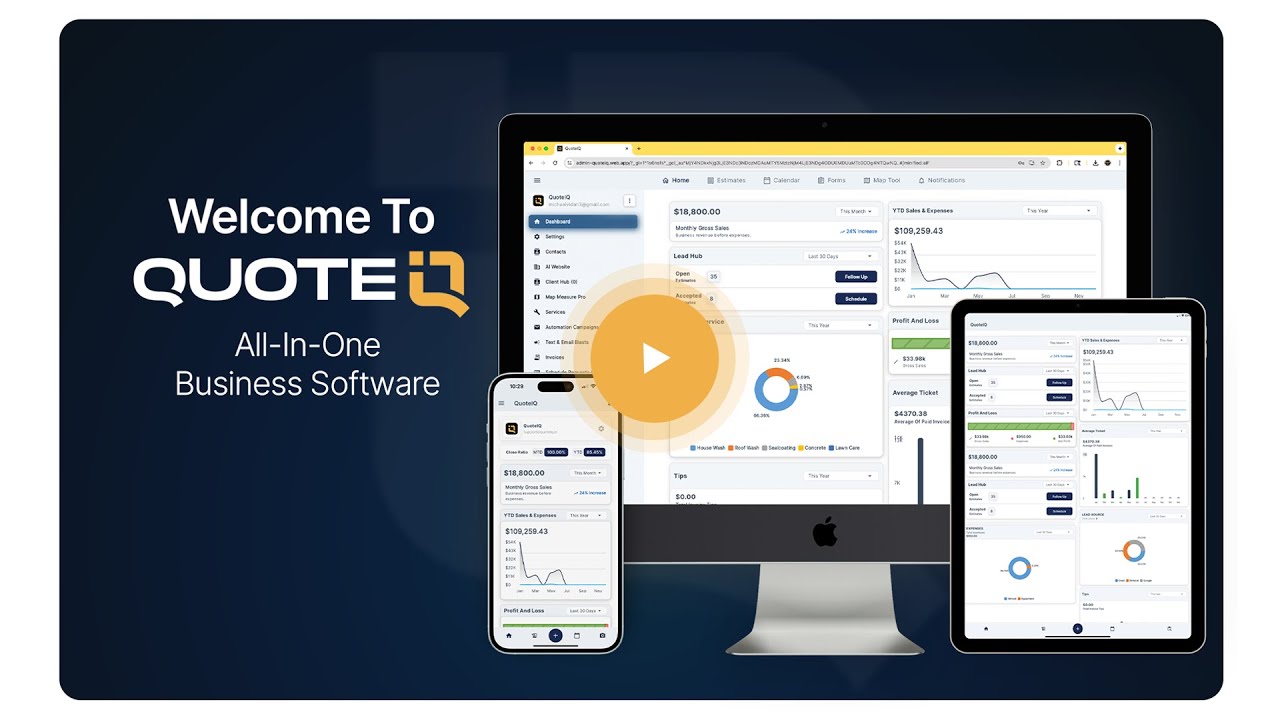
A short walkthrough of how the platform fits together, from first quote to paid invoice.
Watch Video →Most failed migrations fail for the same reason: the data moved and the habits did not. Four steps keep the pipeline intact while you change platforms.
Export your customer list and open leads before you cancel anything. Pull customers, job history and every open estimate out of your current system as a CSV while the account is still active. Note which leads are mid-conversation, because those are the ones a migration actually puts at risk. If you are coming from Jobber, Housecall Pro or ServiceTitan, AI Smart Import maps the columns automatically rather than making you rename headers by hand.
Rebuild the price book and estimate templates first. Start a 14-day free trial on the plan you actually intend to run, then load your services and pricing before importing a single contact. Set up the estimate types you sell from — Options estimates for good-better-best, Package estimates for bundles — so the first quote you send from the new system looks better than the last one you sent from the old one.
Recreate your follow-up sequences and route new leads in immediately. Build the chasing before you need it: Email & Text Automations can be described in plain language and generated, and there is an importable sequence running from first estimate through eleven-month touches. Point your website contact forms and phone answering at the new system on day one so nothing new lands in the platform you are leaving.
Run both systems in parallel for two to three weeks, then close the old one. Let the open deals in the old platform finish there while every new lead starts in the new one. Watch analytics and the pipeline board through one full quote-to-paid cycle before cancelling. If you would rather hand the whole process over, guided setup with contact import, price book configuration and a one-to-one onboarding session is available as a paid one-time service.
QuoteIQ was founded in September 2022 by two operators who ran service businesses before they built software. Their view of lead management comes from having lost leads themselves.
A home service business owner for more than twenty years and creator of the Mike Vidan YouTube channel. Mike built and scaled multiple service businesses before co-founding QuoteIQ, and has coached thousands of contractors on pricing, operations and growth. His position on response speed is grounded in having measured it.
Serial entrepreneur, home service operator and creator of ForeverSelfEmployed on YouTube. Justin has built and scaled multiple service businesses with a focus on systems and operational discipline, and his view on the cost of running without a CRM comes from managing exactly the problem this guide addresses.
“The most expensive thing in manual management isn’t the time spent on the tasks — it’s the revenue lost to the things that don’t get done. The quote that never got sent. The repeat customer who wasn’t re-contacted.”
— Justin Rogers, Co-Founder of QuoteIQ
Verified five-star reviews from the App Store and Google Play, part of the 4,103 reviews behind the platform’s 4.7 average rating.
“First of all this app saves me so much time,the new updates they do are impactful. I’ve used it for pressure washing, I’ve used it for even doing concrete estimating. The ability to send invoices directly and charge from the app is a win win! I like how it incorporates the ability to keep your customers like a CRM program and it helps me check up on those customers that called, I can call back pretty fast make a note on their file. I also like how everyone can access it from my Crew. App is #1”
— Shawn Contreras · Google Play
“I was nervous switching systems, but QuoteIQ made the move seamless. Everything from customer details to quote follow-ups is now automated and stress-free.”
— Emilio Deonna · App Store
“I am just starting my pressure washing business, but QuoteIQ offers all the options i need, gives ways to track leads conversion, and i can customize it to my needs. This app was very well thought out.”
— Dallas Goodman · Google Play
See why more than 40,000 contractors use QuoteIQ to capture leads, follow up automatically and close more jobs — without working more hours.

Tell Google that QuoteIQ is a source you trust. One tap unlocks up to 40% off your annual plan. No free trial — billed in full at checkout.


