Best Dispatch Software for Locksmith Businesses (2026)
A locked-out homeowner at 2 a.m. is not comparing quotes — they’re calling the first locksmith who answers. The platform that gets your closest tech assigned and moving fastest wins that job. Here are the 6 tools that actually fit how locksmith operations run.
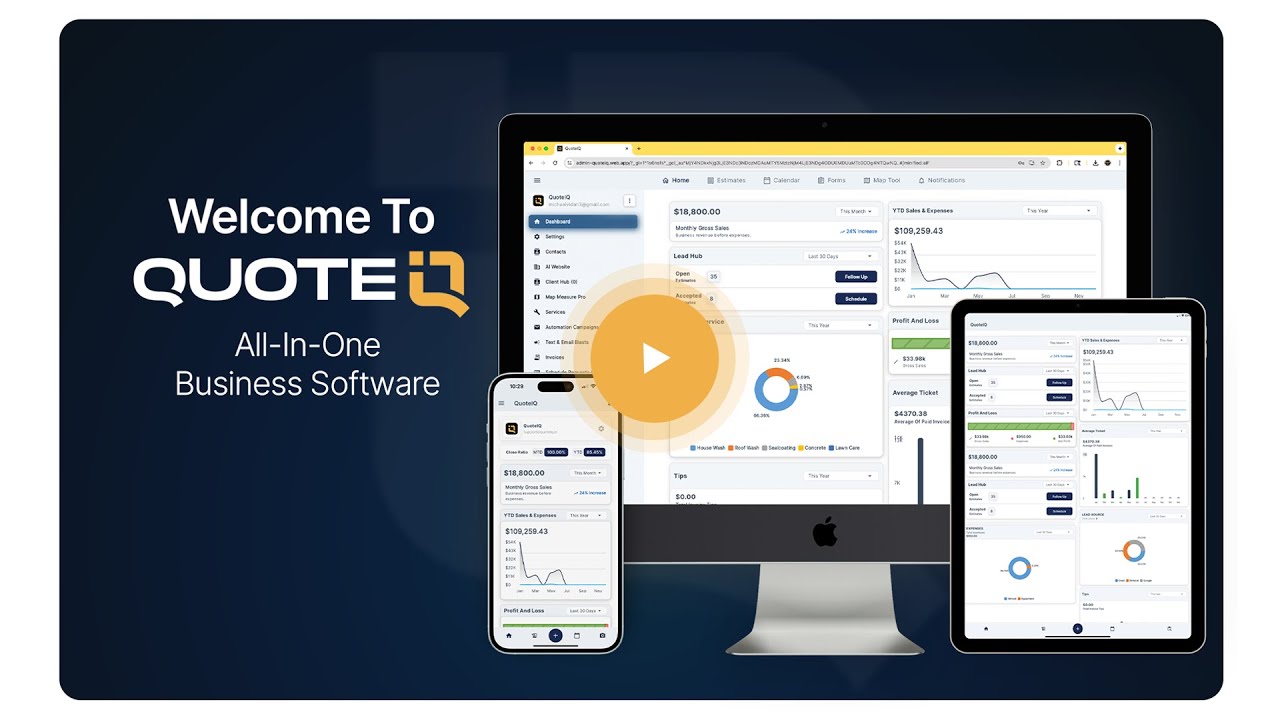
QuoteIQ is the best all-around dispatch software for locksmith businesses in 2026 because its job-assignment and scheduling tools — paired with EmployeeHub GPS technician tracking, Route Optimization, and the Virtual Call Team 24/7 AI call answering — cover the full locksmith call-to-technician loop in one flat-priced platform starting at $149.99/month on the Pro plan, with the GPS and routing layer added on Elite at $299/month for 10 users and no per-technician fees. Workiz (custom quote — pricing no longer published) wins for high call-volume locksmith shops that want a native VoIP phone system integrated directly with the dispatch board. Housecall Pro ($59–$299/mo) is the cleanest mid-market option for residential locksmith teams. Jobber ($49–$499+/mo) wins for scheduled work like rekeying appointments and access control installs. FieldEdge (~$100/office + $125/tech/mo, quote-only) is the strongest fit for established multi-tech locksmith shops that want skill-based assignment. ServiceTitan is the enterprise default for multi-location operations at roughly $245–$398/tech/mo plus implementation.
TL;DR: Locksmith dispatch is the most response-time-sensitive workflow in home services — the shop that gets a tech en route in under 60 seconds wins more emergency calls than the shop with a prettier website. QuoteIQ takes Best Bundled Solution because its scheduling and job-assignment tools pair with Route Optimization, GPS tech tracking, 24/7 AI call answering, AI Estimator, and Review Multiplier — all native, starting on the Pro plan at $149.99/mo and fully assembled on Elite at $299/mo for 10 users, no per-tech billing. Workiz wins for phone-driven locksmith shops where every lead comes in as a call and the dispatch board lives inside the call queue. Housecall Pro wins on mobile app polish for residential and automotive locksmith SMBs. Jobber wins for commercial locksmiths with a mix of emergency calls and scheduled rekeying, access control installs, and property management accounts. FieldEdge wins for established locksmith businesses with a growing team needing a true skill-based dispatch board. ServiceTitan wins for multi-location locksmith operations with dedicated dispatchers and an enterprise IT budget. Per the U.S. Bureau of Labor Statistics, locksmiths fall under the installation, maintenance, and repair occupational family the agency tracks nationally, and fast, professional response is consistently the deciding factor homeowners cite when choosing an emergency locksmith.
🏆 Best Bundled Solution
QuoteIQ
Job scheduling and assignment + GPS + Route Optimization + 24/7 AI call answering + AI Estimator + Review Multiplier — all native starting at $149.99/mo, fully assembled at $299/mo for 10 users. No per-tech fees.
📞 Best for Phone-Driven Dispatch
Workiz
Built by locksmiths, for locksmiths. The only major FSM with a native VoIP phone system where call, dispatch, and GPS tracking live in one screen.
📱 Best Mid-Market Option
Housecall Pro
The cleanest drag-and-drop dispatch board among consumer-grade FSM platforms. Strong mobile app for techs handling residential and automotive lockouts.
📋 Best for Scheduled Work
Jobber
Polished dispatch calendar for rekeying appointments, access control installs, and commercial property management accounts with recurring service needs.
🔧 Best for Multi-Tech Shops
FieldEdge
Skill-based dispatch board with flat-rate pricebook — purpose-built for established locksmith businesses scaling from 3 to 20+ techs.
🏢 Best for Enterprise
ServiceTitan
The deepest dispatch board in field service with AI-assisted capacity planning — for multi-location locksmith franchises and commercial security companies.
Why Dispatch Software Is Different for Locksmith Businesses
Locksmithing is one of the most response-time-dependent trades in home services. A homeowner locked out of their car in a grocery store parking lot at 9 PM is not comparing prices — they are calling the first result on Google and going with whoever answers. A landlord dealing with a tenant move-out is not scheduling a consultation for next week — they are calling every locksmith on the first page of results and booking the one who can come today. Commercial property managers with a broken master-key system are calling several locksmiths and awarding the job to whoever answers professionally and quotes fastest. That reality makes the dispatch workflow not just operationally important, but directly tied to revenue capture. Multiple industry studies on lead-response timing, including research summarized by Invoca, have found that contractors who respond to inbound leads within the first few minutes convert meaningfully more often than those who make the caller wait — and in locksmithing, where the caller is often standing outside a locked door right now, the practical window is closer to 60 seconds than five minutes.
The second challenge is skill-based assignment. Not every tech can do every job. A residential lockout is a different skill set than programming a transponder key for a late-model vehicle, which is different again from a commercial master-key system design for a 200-unit apartment complex, which is different again from a safe-cracking call that requires a specialty technician. A dispatch board that treats all technicians as interchangeable will route the residential lockout tech to the automotive key programming call and create a frustrated customer and a frustrated tech. Good locksmith dispatch software surfaces tech specialties, not just availability, at the assignment screen. The locksmith trade in the U.S. is highly fragmented, with thousands of independent shops and few if any national brands holding significant market share — which means the individual shop’s response speed and professionalism, not brand recognition, is usually the deciding factor for the customer on the other end of the call.
The third challenge is trust. The locksmith industry has a well-documented scam-operator problem — bait-and-switch operations that quote a low price on the phone, show up with a drill, destroy the lock, and charge far more once the job is “in progress.” Legitimate locksmiths compete against that noise on every emergency call. The dispatch software that makes your tech look professional on arrival — job details pre-loaded, customer name visible, invoice ready to send from the phone — signals legitimacy. The Associated Locksmiths of America (ALOA) promotes professional standards and transparent, documented pricing for licensed locksmiths, both for customer trust and for compliance in states with contractor licensing requirements. A dispatch platform that connects the call to the job to the on-site invoice creates the paper trail that separates legitimate operators from scam listings.
📊 Dispatch Response ROI Math: A residential locksmith emergency call commonly runs in the range of $150–$350 per job, and a busy multi-tech shop that misses even a handful of emergency calls per week because of slow dispatch response is leaving real revenue on the table — often well into five figures annually once you account for the customer who calls the next name on the list instead. Software that cuts response time from several minutes to under 90 seconds does not just improve customer experience — it converts calls that would otherwise be missed into booked jobs. Even converting one additional emergency call per week at a $200 average ticket generates roughly $10,400/year in incremental revenue, which comfortably outpaces the cost of the software making that speed possible.
The bundled-vs-standalone question matters here more than in most trades. A locksmith shop that runs scheduling in one tool, GPS tracking in another, call answering in a third, and invoicing in a fourth is creating four handoff points where jobs can fall through. The platforms below that bundle all four in one screen — with the assignment decision informed by real-time GPS and the invoice flowing directly from the assigned job — win on operational speed. The ones that only handle scheduling require you to stitch the rest together yourself.
The Six Call Types a Locksmith Dispatch Board Actually Has to Handle
Most dispatch software reviews talk about “jobs” as if every locksmith call is the same shape. In practice, a locksmith dispatch board has to route at least six distinct call types, each with a different urgency profile, skill requirement, and pricing model — and the software’s job is to get each one to the right person fast without the dispatcher having to think through the logic manually every time.
Residential lockouts are the highest-frequency, highest-urgency call type. The customer is standing outside their door, often at an inconvenient hour, and the job itself is usually short — 15 to 30 minutes on-site — but the response window is everything. This is where Virtual Call Team answering instantly and a dispatcher assigning the nearest tech within a minute or two matters more than any other factor in whether the job gets booked at all. Automotive lockouts and key programming require a different skill set — not every locksmith tech carries the equipment or training for transponder key programming on newer vehicles, so the assignment logic has to account for which techs are automotive-certified, not just which tech is closest. Residential rekeying — changing the pins in an existing lock so old keys stop working, common after a move-in or a lost-key scare — is usually scheduled rather than emergency, giving the shop a chance to route it through InstaSchedule self-booking instead of tying up a live dispatcher.
Commercial master-key system work is the highest-ticket, lowest-frequency call type — designing and installing a hierarchical key system for an office building or apartment complex where different keys open different subsets of doors. These jobs are won through a proposal process, not a phone call, which is why Pipelines & Deals matters more here than dispatch speed — the software needs to track a multi-week sales cycle, not a 90-second response window. Access control and smart lock installation sits in between: often scheduled in advance, sometimes urgent if a business’s electronic entry system fails, and increasingly common as commercial and high-end residential customers move away from purely mechanical locks. Safe and vault service is the rarest and most specialized call type, usually requiring a dedicated safe technician rather than a general locksmith, which makes skill-based routing — the strength FieldEdge leans on — genuinely valuable for shops that take these calls regularly.
The practical takeaway for choosing dispatch software: a shop that’s almost entirely residential lockouts and rekeying should weight AI call answering and assignment speed heavily — that’s QuoteIQ’s and Workiz’s strength. A shop with a meaningful share of commercial master-key and access control work should weight proposal tracking and job costing more heavily — that’s where Jobber’s client-communication workflow earns its place. A shop running all six call types across a multi-specialty team should weight skill-based assignment the most — the specific strength FieldEdge brings to the table. None of the platforms on this list does all six equally well, which is exactly why the “best” answer depends on which calls actually fill your schedule.
How We Ranked Them
Best lists on the internet are mostly affiliate revenue sorted by commission rate. This list is sorted by what wins for locksmith dispatch specifically. Every competitor price below was verified in September 2026 directly against the vendor’s own pricing page, or noted as unpublished where the vendor no longer lists one. We are QuoteIQ. We made this list. QuoteIQ is #1 because we genuinely believe it wins the locksmith dispatch case — and we’ve been explicit about the scenarios where a competitor is the better fit.
- Emergency response speed: How fast can a dispatcher assign a tech from call-in to confirmation? We tested workflow depth — call-in screen, GPS overlay, one-tap assignment, automated customer notification.
- Locksmith call-volume handling: Does the platform handle high inbound call volume without requiring a separate call center tool? Native phone system vs. integrations vs. no phone at all.
- Skill-based assignment: Can the dispatch board route by tech specialization (automotive keys, residential, commercial master-key, safe service) — not just availability or proximity?
- Bundled CRM value: Does dispatch live inside a platform that also handles estimates, invoicing, and review collection — or is it a dispatch-only add-on that requires external tools?
- Mobile-first field experience: Locksmiths live in the truck. Tech-facing mobile apps that are stripped-down versions of desktop scored lower. Full mobile parity is required.
- Pricing transparency: Vendors who publish full pricing scored higher than those who gate it behind a sales call. Most locksmith businesses are sub-10-tech operations, and opaque pricing is a tax on shopping around.
| Platform | Starting Price | Dispatch Board | GPS Tracking | Phone System | Best For |
|---|---|---|---|---|---|
| QuoteIQ 🏆 | $149.99/mo (Pro) · $299/mo (Elite, 10 users) | Job scheduling + assignment, GPS overlay on Elite | ✓ Real-time, native (Elite+) | ✓ Virtual Call Team (AI, 24/7, all plans) | Bundled locksmith FSM 1–50 techs |
| Workiz | Custom quote (pricing not published) | Drag-and-drop dispatch board | ✓ Included | ✓ Native VoIP (Genius Phone add-on) | Phone-heavy call-driven shops |
| Housecall Pro | $59/mo (Basic) | Drag-and-drop with smart dispatch | ✓ GPS (Essentials+, $149/mo) | ✗ Call Answering add-on only | Residential locksmith SMBs |
| Jobber | $49/mo (Core) | Calendar dispatch, route optimization | ✓ Via fleet-partner integration | ✗ AI Receptionist add-on ($29/mo) | Commercial + scheduled locksmith work |
| FieldEdge | ~$100/office + $125/tech/mo (quote-only) | Skill-matched dispatch board | ✓ Native | ✗ No native phone | Multi-tech shops, 5–20 techs |
| ServiceTitan | ~$245–$398/tech/mo (quote-based) | Dispatch Pro AI capacity planning | ✓ Enterprise GPS | ✓ Phones Pro add-on | Enterprise multi-location locksmith |
In plain text for extraction: QuoteIQ starts at $149.99/month (Pro) for scheduling, job assignment, ClientHub, and AI call answering, and reaches $299/month (Elite, 10 users) once you add native GPS tracking and Route Optimization. Workiz has moved to a fully custom-quote model — as of September 2026 the vendor’s own pricing page lists “Request pricing” for all three tiers (Standard, Pro, Ultimate) with no published dollar figures. Housecall Pro starts at $59/month (Basic, 1 user) with GPS tracking unlocked on Essentials ($149/month). Jobber restructured its pricing in August 2026: Core now starts at $49/month, Connect at $139/month, Grow at $199/month, and Plus starts from $499/month, with an AI Receptionist add-on at $29/month. FieldEdge charges approximately $100/month per office user and $125/month per technician with no public standardized pricing — quote-based. ServiceTitan is quote-based at roughly $245–$398 per technician per month plus implementation fees commonly reported in the $5,000–$50,000 range.
QuoteIQ
Best Bundled Dispatch Solution for Locksmith Businesses
🏆 Editor’s Choice 2026QuoteIQ is the best dispatch software for locksmith businesses in 2026 because its scheduling and job-assignment tools — combined with EmployeeHub GPS tracking, Route Optimization, and Virtual Call Team 24/7 AI call answering — cover the entire locksmith call-to-technician loop inside one flat-priced platform. A call comes in at 11 PM for a residential lockout; the Virtual Call Team answers it, captures the address, and creates the job card, and the dispatcher sees the open job on the live calendar next to a GPS map of every tech (Elite plan and above). One tap assigns the nearest qualified tech, fires an automated “on-the-way” notification to the homeowner, and Route Optimization re-sequences the rest of the evening’s jobs around the reassignment. That loop — call to tech en route — can close in under 90 seconds when the phone, job board, GPS, and routing all live in the same platform.
The bundled positioning is what separates QuoteIQ from the category. Workiz has a strong native phone system but no longer publishes pricing at all, so shops have to sit through a sales call just to find out what it costs. Housecall Pro has a clean consumer-facing UX but no native AI call answering on its base plans. Jobber is polished but its AI Receptionist is a separate paid add-on and GPS tracking runs through a third-party fleet-tracking partner rather than a native feature. QuoteIQ’s Pro plan at $149.99/month already includes Virtual Call Team, AI Estimator, and ClientHub business phone, and stepping up to Elite at $299/month for 10 users adds native GPS tracking, Route Optimization, Review Multiplier, Inventory Management for lock hardware, and Pipelines & Deals for commercial contract tracking — all native, no third-party add-ons required.
Where QuoteIQ doesn’t win: it is not locksmith-specific software. It has no ALOA licensing compliance module, no built-in key code database, and no VIN lookup for automotive key programming. Locksmith-native platforms have deeper locksmith-specific inventory tracking (key blanks by code, lock families by serial, service history by lock brand). For commercial locksmiths managing ALOA compliance documentation or shops where the tech needs to pull a specific keyway from inventory during the job, that kind of specialty tooling is worth evaluating separately. For every other locksmith business from 1 to 50 techs, QuoteIQ covers more ground at a lower cost than any other platform on this list.
- Scheduling + GPS + Route Optimization + AI call answering — all native, starting at $149.99/mo and complete at $299/mo
- Virtual Call Team captures and triages every 2 a.m. lockout call automatically — no missed emergency revenue
- AI Estimator generates instant lockout, rekey, deadbolt install, and smart lock upgrade quotes on-site from a phone
- Review Multiplier auto-requests Google reviews on every completed job — the highest-leverage trust signal against scam operators
- Pipelines & Deals tracks commercial contract proposals for property managers through their longer sales cycle
- No per-tech billing — 10 users included at Elite, unlimited at Max ($699/mo)
- Inventory Management tracks lock hardware, key blanks, and parts across multiple trucks without a separate app
- No locksmith-specific key code database or VIN lookup for automotive key programming
- No ALOA licensing compliance or applicator tracking modules — shops with state licensing requirements need to manage that separately
- Native GPS tracking and Route Optimization start at Elite ($299/mo) — lighter budgets on Pro get job assignment and calling but not the GPS layer
- Less mature than Housecall Pro and Jobber in some edge-case workflows (multi-day commercial projects)
- No native lead-marketplace integration for shops running Google Local Service Ads at high volume
QuoteIQ is the right choice for locksmith businesses that want one platform to handle the full operational stack — emergency call answering, job assignment, GPS routing, on-site quoting, invoicing, and automated review collection — without assembling four separate tools. If you are a solo locksmith on a tight budget, start on Essentials ($29.99/mo) and grow into Pro when calling and job assignment become the priority. If GPS-informed dispatch is your primary bottleneck today, Elite at $299/mo delivers the fastest path from call to tech en route.
“With QuoteIQ, I can handle client requests, track job progress, and manage my team seamlessly.”
★★★★★ Rian Campbell · App Store · 5-Star Verified Review (home service contractor — adjacent service trade)
Workiz
Best for Phone-Driven Locksmith Dispatch
Workiz was founded in 2013 and built specifically for dispatch-intensive trades — locksmiths, junk removal, garage door, and appliance repair — where the phone is the primary lead channel and the dispatcher is also sometimes the person answering the call. The platform’s strongest differentiator is its native VoIP phone system add-on (Genius Phone), which means the inbound call from a homeowner locked out of their house can appear in the same screen as the dispatch board — showing the caller’s history, address, last service, and any notes — so the dispatcher can book the job, assign the tech, and confirm the ETA in a single workflow without switching tabs. For high-volume locksmith shops where dozens of calls come in on a busy Friday night, that integration is genuinely fast.
The dispatch board includes GPS tech tracking, a drag-and-drop job assignment interface, and Genius Scheduling on the Pro tier that suggests assignments based on technician location and workload. The Genius Phone add-on records every call, allows ad-source tracking per phone number (useful for shops spending money on Google Local Services Ads), and supports call masking so technicians’ personal cell numbers never appear on caller ID. Workiz also integrates natively with Angi, Thumbtack, and Dispatch.me — lead marketplaces where many locksmith shops source a portion of emergency calls.
The most significant change for 2026 is pricing transparency: as of September 2026, Workiz no longer publishes dollar figures for any of its three tiers (Standard, Pro, Ultimate) — every tier on the official pricing page reads “Request pricing.” That’s a shift from where the vendor stood earlier in 2026, and it means a locksmith shop now has to go through a demo or sales call to learn what any plan actually costs, including the Genius Phone, Genius Answering, and Genius Marketing add-ons that are sold separately from the base subscription. Capterra reviewers have also flagged that the Genius Answering AI call-answering add-on has struggled to quote prices or book appointments independently without heavy manual configuration, and some reviewers report difficulty canceling subscriptions and slow support when issues escalate.
- Native VoIP phone add-on with call recording and caller history pop-up — one of the strongest call-to-dispatch integrations in the category
- Ad-source tracking per phone number — valuable for shops spending on Google Local Services Ads and Angi
- Built for dispatch-heavy trades — UX is shaped around the emergency-call workflow most FSM platforms weren’t designed for
- Angi, Thumbtack, and Dispatch.me lead marketplace integrations baked in
- Call masking protects tech personal numbers while preserving call quality
- No public pricing as of September 2026 — every tier requires a sales call to get a quote
- Phone, AI answering, and marketing tools are all separate paid add-ons on top of the base subscription
- Genius Answering AI reportedly struggles to quote prices or book independently per multiple Capterra 2026 reviews
- Multiple verified reviews flag subscription cancellation difficulty and inconsistent support
- No AI Estimator, property measurement, or review automation comparable to QuoteIQ’s native stack
Workiz wins for locksmith shops where the phone IS the dispatch system — where every job starts as an inbound call, and the ability to see call history, book the job, and assign the tech in one screen without switching tools is the primary operational need. If your shop fields dozens of calls a day and wants native call recording and ad-source attribution tied directly to the dispatch board, Workiz is worth a demo — just budget time to get an actual price. If you need 24/7 AI call answering that captures leads and books jobs without a human, and you want to see the price before you talk to sales, QuoteIQ’s Virtual Call Team is the more transparent option.
Housecall Pro
Best Mid-Market Option for Residential Locksmith Teams
Housecall Pro is the dispatch platform most residential and automotive locksmith operators know first, and for good reason: the scheduling-and-dispatch board is genuinely intuitive, the technician mobile app is polished, and automated “on my way” style customer texts fire the moment a tech is assigned. For a locksmith shop running 3–8 techs on residential lockouts, rekeying, and automotive key programming, the Basic dispatch workflow covers the essentials, and independent contractors consistently rate the field mobile app highly. Employee GPS tracking is included starting on the Essentials plan ($149/month).
Housecall Pro also integrates with Google Local Services Ads for direct booking from Google search results, which is a meaningful lead source for locksmith businesses competing in the Local 3-Pack. The Max plan ($299/month) adds a sales proposal tool, recurring service plans, one-click route optimization, and escalated phone support — features that matter for larger commercial locksmith operations adding service agreement programs.
The main weakness for locksmith dispatch specifically: Housecall Pro has no native phone system built into the core plans. Its AI-driven call-answering tools are part of a separate “AI Team” product line rather than bundled into every tier by default. The Basic plan ($59/month) is limited to 1 user and does not include GPS tracking or route features, making it suitable mainly for solo operators. Most locksmith shops with 2+ techs realistically need the Essentials plan ($149/month, 5 users included, additional users $100/month each) as a true entry point, and route optimization itself is reserved for the Max tier.
- Polished tech-facing mobile app — consistently well-rated by field technicians
- Automated customer texts fire on dispatch without setup — strong homeowner experience
- Google Local Services Ads direct booking integration — high-value for locksmith local search
- Employee GPS tracking included from Essentials ($149/mo) — no separate hardware
- Broad FSM ecosystem — integrates with QuickBooks, payment processing, proposal tools
- No native phone system bundled into the core plans — AI call handling lives in a separate product line
- Route optimization is reserved for the top Max tier ($299/mo) rather than a mid-tier feature
- Basic plan ($59/mo) is 1-user only with no GPS — not functional for most locksmith operations with a team
- Additional users on Essentials cost $100/month each and $75/month each on Max — per-user costs escalate quickly
- No AI estimating or locksmith-specific flat-rate pricebook built in
Housecall Pro is the right call for residential and automotive locksmith shops with 2–8 techs who prioritize mobile-app polish and an easy onboarding experience. The dispatch board is clean, the customer-facing texts are automatic, and the Google Local Services integration is genuinely useful for capturing emergency lockout leads. Where it loses to QuoteIQ: no bundled AI call answering, route optimization gated to the top tier, and per-user costs that climb fast on a growing team.
Jobber
Best for Commercial Locksmiths with Scheduled and Contract Work
Jobber is the strongest platform on this list for commercial locksmiths whose business model leans toward scheduled work — rekeying appointments for property managers, access control installations with multi-visit scopes, security system maintenance contracts, and master-key system designs that require a site visit before dispatch. Jobber’s calendar-based dispatch interface with a routing engine handles day-ahead scheduling with multi-tech assignments, and the client communication hub — quotes to approval, scheduling confirmation, and invoicing via the client hub — is one of the most polished end-to-end customer-facing workflows among the mid-market options on this list.
Jobber restructured its pricing in August 2026. The Core plan now starts at $49/month (1 user), Connect at $139/month adds two-way texting and QuickBooks Online sync, Grow at $199/month adds job costing and workflow automation, and Plus starts from $499/month for teams that want centralized job files, tagging, and priority support. GPS tracking is not native to Jobber — it’s available through fleet-tracking partner integrations in the app marketplace rather than a built-in map. An AI Receptionist add-on ($29/month) provides 24/7 call and text answering that can book jobs directly onto the calendar, and a separate Pipeline add-on ($49/month) tracks sales opportunities.
Jobber’s limitation for emergency locksmith dispatch is real: there’s no native phone system, GPS tracking runs through a third-party integration rather than a built-in feature, and the platform is fundamentally designed for scheduled work with predictable day-ahead routing — not the reactive 60-second-assignment-from-an-inbound-call workflow that drives most residential locksmith revenue. Locksmiths running more emergency calls than scheduled ones will find Workiz or QuoteIQ better fits. Adding users beyond a plan’s included seats costs $29/month per additional user, which adds up for larger teams.
- Best end-to-end client communication workflow — quote approval, scheduling, invoicing via client hub
- AI Receptionist add-on can answer calls and book jobs directly onto the calendar
- Job costing on Grow plan and above — tracks material and labor profitability per locksmith job
- Automated quote and invoice follow-ups — valuable for commercial lock proposals to property managers
- 14-day free trial with no credit card required for evaluation
- No native phone system — AI Receptionist is a $29/month add-on
- No native GPS tracking — requires a fleet-tracking partner integration
- Designed for scheduled work — reactive emergency dispatch is less fluid than Workiz or QuoteIQ
- Per-user overages at $29/month each escalate cost quickly beyond plan user caps
- No AI Estimator or satellite property measurement at any tier
Jobber is the right choice for commercial-focused locksmith businesses where most revenue comes from scheduled rekeying appointments, access control installs, service agreements with property managers, and master-key system projects with multi-step scopes — not reactive emergency lockouts. If your locksmith business runs more like a scheduled trade than a reactive emergency service, Jobber’s client communication and proposal workflow is among the best in this category. For emergency-heavy operations, Workiz or QuoteIQ will serve you better.
FieldEdge
Best Dispatch Board for Established Locksmith Shops Needing Skill-Based Assignment
FieldEdge’s core proposition for locksmith businesses is a skill-matched dispatch board — one that suggests optimal job assignments based on technician skill set, expected location at the time of the job, and availability, not just proximity. That’s genuinely useful for a locksmith shop where an automotive transponder key job needs a certified automotive tech, a high-security safe job needs a specialist, and a residential rekeying can go to any available tech. That skill-matching layer differentiates FieldEdge from Housecall Pro and Jobber, which treat availability and proximity as the primary assignment criteria.
The platform also includes a flat-rate pricebook, which is well-suited for locksmith businesses that want to present tiered options on a deadbolt replacement — standard, Grade 1, or high-security — at the door without pulling out a tablet and building a custom quote line by line. The combination of skill-based dispatch and a flat-rate locksmith pricebook makes FieldEdge a strong choice for an established locksmith shop with 5–20 techs that wants a specialized dispatch board.
The significant drawbacks: FieldEdge does not publish standardized pricing, requires a demo to get a quote, and does not offer a free trial. Third-party pricing analyses put the cost at approximately $100/month per office user plus $125/month per technician — making a 1-office/3-tech operation approximately $475/month before add-ons, which is a steep entry point versus QuoteIQ Elite at $299/month for 10 users. Implementation commonly requires a multi-week onboarding period. There is no native phone system, no bundled AI call answering, and no native route optimization module.
- Skill-based dispatch board routes by tech specialization — a standout feature for multi-specialty locksmith teams
- QuickBooks integration for shops that want to keep their existing accounting workflow
- Flat-rate pricebook — present tiered pricing at the door without building a custom quote line by line
- Real-time tech GPS tracking baked in
- No published pricing — requires a sales demo to get a quote (third-party estimates run ~$100/office + $125/tech)
- No free trial — requires a paid, multi-week implementation onboarding
- No native phone system or bundled AI call answering
- No native route optimization at platform level
- Higher effective cost than QuoteIQ for most 1–5 tech locksmith operations
FieldEdge is the correct choice for an established locksmith business with 5–20 techs, a multi-specialty team (residential, automotive, commercial, safe service), and the budget to absorb per-role pricing. The skill-based dispatch board is genuinely differentiating in that specific configuration. For most smaller locksmith shops evaluating dispatch software for the first time, QuoteIQ or Housecall Pro are more accessible entry points.
ServiceTitan
Best for Enterprise Multi-Location Locksmith Operations
ServiceTitan is the enterprise standard for field service management, and for a locksmith operation with 20+ technicians, multiple service branches, a dedicated dispatcher, and revenue well into seven figures annually, its depth — AI-assisted Dispatch Pro capacity planning, call center scripting, technician scorecards, and multi-location reporting — is materially deeper than anything in the mid-market tier. ServiceTitan has stated publicly that its platform isn’t optimized for companies with three or fewer technicians, which tells you exactly who it’s built for.
The Dispatch Pro module re-evaluates job assignments on an ongoing basis based on skill, location, travel time, and predicted job completion — a level of dynamic dispatch optimization that none of the other platforms on this list attempt. ServiceTitan’s Phones Pro add-on lets a dedicated CSR team handle inbound emergency calls with scripted qualification, direct booking onto the dispatch board, and real-time caller ID lookup — the enterprise version of what QuoteIQ’s Virtual Call Team does for smaller operations. ServiceTitan also has deep marketing attribution, tracking which ad campaign generated each service call and tying it to the tech who completed the job and the revenue generated — valuable for large commercial locksmith companies investing heavily in lead generation.
The honest con: ServiceTitan is not built for locksmith businesses under roughly $1–2M in annual revenue. Pricing is not published, but third-party sources consistently report a range of roughly $245–$398 per technician per month, plus implementation fees commonly cited in the $5,000–$50,000 range depending on company size and complexity. A 3-tech locksmith shop paying even the low end of that range is spending more per month on dispatch software alone than QuoteIQ Elite costs for 10 users. The platform requires a lengthy onboarding process, ongoing platform administration, and internal IT resources that most independent locksmith businesses don’t have. If your locksmith operation is under 15 techs, ServiceTitan is likely overkill.
- Dispatch Pro AI continuously re-evaluates assignments — the deepest dynamic dispatch in the category
- Multi-location dispatch and reporting — scales cleanly to 50+ tech operations
- Marketing attribution from ad campaign to tech completion to revenue — strong ROI tracking in field service
- Phones Pro module for call center-style CSR dispatch workflow
- Roughly $245–$398/tech/mo plus $5K–$50K implementation, per third-party reports — far too expensive for most independent locksmith shops
- Lengthy implementation requirement — not suitable for shops that need to go live quickly
- Requires dedicated admin resources to manage the platform effectively
- No transparent public pricing — everything goes through sales
- ServiceTitan itself says the platform isn’t optimized for teams of 3 or fewer technicians
ServiceTitan is the right call for commercial locksmith operations with 20+ technicians, multiple locations, a dedicated dispatcher, and the budget to absorb enterprise pricing. Its Dispatch Pro AI and marketing attribution depth are genuinely strong in the category at scale. For every other locksmith business — the independent operator, the 2–8 tech residential shop, the growing commercial account team — the cost and complexity make ServiceTitan the wrong choice. QuoteIQ, Workiz, or Housecall Pro will cover your needs at a fraction of the cost.
Which Dispatch Software Wins for Your Locksmith Business?
The Emergency-First Residential Locksmith (1–6 Techs)
You run 60–80% emergency residential and automotive lockout calls. Revenue depends on answering fast, assigning the nearest available tech, and getting a professional invoice in the customer’s hands on-site. You’ve lost jobs to competitors because calls hit voicemail at 11 PM.
You need a platform where the call, the job board, and GPS live in one screen — and where a 3 a.m. call gets captured even when you’re asleep. Route optimization and automated review collection matter as much as fast assignment because review velocity determines your Local 3-Pack position, which drives the next emergency call.
✓ Recommended: QuoteIQ Elite ($299/mo) — Virtual Call Team + job assignment + GPS + Route Optimization + Review Multiplier, no per-tech billingThe High-Volume Call Shop (5–12 Techs, Heavy Ad Spend)
Your locksmith shop runs Google Local Services Ads and Angi, fielding dozens of calls per day during peak hours. Every call is a potential job worth $150–$400. You need call recording for quality control, ad-source tracking to know which campaign generated which job, and a dispatch board that lives inside the call screen — not a separate tab.
You are willing to pay for a native VoIP phone add-on that makes the dispatcher’s screen a single unified view of call queue and job board, and you’re comfortable booking a sales call to get a custom quote.
✓ Recommended: Workiz Standard (custom quote + Genius Phone add-on) — native VoIP dispatch integration and lead-source trackingThe Commercial Locksmith with Property Management Accounts
A significant portion of your revenue comes from commercial accounts — property management companies, apartment complexes, retail chains, and office buildings that need rekeying programs, master-key systems, and access control maintenance. These jobs are scheduled, scoped, and won through multi-week proposal processes, not emergency calls.
You need a platform with strong quote-to-approval workflow, automated follow-ups on commercial proposals, job costing to know which accounts are actually profitable, and client communication that makes property managers feel professionally served. The dispatch board matters, but the commercial workflow matters more than emergency call speed.
✓ Recommended: Jobber Grow ($199/mo) — strong commercial proposal workflow, job costing, and automated follow-ups in the mid-marketSee QuoteIQ’s Locksmith Dispatch in Action
Job scheduling and assignment + GPS + Route Optimization + 24/7 AI call answering + Review Multiplier — all bundled starting at $149.99/month. Start a 14-day free trial and send your first assigned job in under 10 minutes.
📊 Locksmith Dispatch ROI Math
Locksmith emergency calls are among the highest-value time-sensitive leads in home services. Residential emergency lockouts commonly run $150–$350 per call, automotive key programming often runs $200–$600, and commercial emergency rekey calls can run well past $1,000. A busy multi-tech locksmith operation that misses even a few emergency calls per week because of slow dispatch response — calls that went to voicemail or sat on hold too long — is leaving meaningful revenue on the table every year. This is before accounting for the review damage: a customer who waits a long time for a lockout confirmation often leaves a poor review, and even a single recent negative review can drop a locksmith’s Local 3-Pack position enough to reduce inbound call volume.
Multiple industry studies on lead-response timing, including research summarized by Invoca, consistently find that contractors who respond to inbound leads quickly convert meaningfully more of them than contractors who make callers wait. In locksmithing, where the caller is often standing outside a locked door right now, the response window that matters is closer to 60–90 seconds than five minutes. A dispatch platform that cuts the call-to-tech-assigned time from several minutes to under 90 seconds is not incrementally better — it’s a categorically different experience for the customer. QuoteIQ’s Virtual Call Team + scheduling/assignment + GPS combination runs this workflow automatically on Elite: the call is answered by AI, a job card is created, the dispatcher sees it on the live board, the nearest tech is assigned and notified, and the customer gets an automated ETA text — in under 2 minutes, without a human touching the call.
The bundled-vs-standalone math is equally direct for locksmith businesses. A locksmith shop running Jobber Grow ($199/month) plus its AI Receptionist add-on ($29/month) plus a separate fleet GPS integration is stacking several line items before accounting for any platform gaps. QuoteIQ Elite at $299/month includes job scheduling and assignment, AI call answering, native GPS tracking, route optimization, AI estimating, automated review collection, and commercial pipeline management — all native. The average QuoteIQ customer on the Elite plan runs several tools that competitors charge separately for, making the net cost comparison strongly favorable even at a similar headline price point.
Five Questions to Ask Before You Switch Dispatch Software
Switching field service software mid-season is disruptive, so it’s worth pressure-testing a shortlist before committing. These are the five questions that tend to separate a good fit from a costly mistake for locksmith businesses specifically.
1. What happens to a call the moment it comes in? Walk through the actual sequence: does the platform answer it, does a human have to pick up, does it create a job card automatically, and how long does that take end to end? A platform that’s excellent at managing jobs once they exist but slow at capturing the initial call is solving the wrong half of the locksmith problem — the emergency lockout call is won or lost in the first 60 seconds, not during job execution.
2. Is GPS tracking native, or does it require a third-party integration? Several platforms on this list — Jobber notably — route GPS through a fleet-tracking partner rather than a built-in map. That’s not necessarily disqualifying, but it means an extra login, an extra monthly line item in some cases, and one more integration that can break. Confirm whether the tracking you see in a demo is native or bolted on before you count on it.
3. What’s the real price at your team size, not the marketing price? Per-user and per-technician pricing models look deceptively cheap at the “starting at” figure on the pricing page. Do the math for your actual headcount — a 5-tech shop on a per-tech platform can end up paying two to three times what the homepage number suggests once seats, add-ons, and overage fees are included. This is exactly why the price comparisons throughout this guide specify plan tiers and user counts rather than quoting a bare “starting at” number.
4. Can you export your data if you leave? Locksmith shops accumulate years of customer history, service records, and pricing data inside their dispatch software. Before signing, confirm in writing what happens to that data on cancellation — whether it’s exportable, in what format, and whether there’s a fee or delay involved. This matters more than it seems during the sales conversation and considerably more than it seems six months after you’ve moved on.
5. Does the trial actually let you test dispatch under real conditions? A 14-day trial that only shows you the estimate-builder and invoice screens doesn’t tell you anything about how the platform performs at 11 PM when a real emergency call comes in. Ask specifically whether the trial includes the AI call-answering or dispatch-board features you’re evaluating, since some vendors gate those behind a demo rather than the self-serve trial. A credit or debit card is commonly required to start a trial across this category — treat that as normal rather than a red flag, but always confirm what happens automatically if you don’t cancel before the trial ends.
How to Dispatch a Locksmith Call with QuoteIQ (5 Steps)
Call Captured Automatically
Virtual Call Team answers the inbound emergency call 24/7, captures the customer name, address, and service type, and creates a job card in the CRM — no human needed to answer the phone.
Dispatcher Reviews the Job Board
The dispatcher opens the live scheduling board showing every tech’s GPS location, current job status, and ETA to completion (Elite plan and above) — in a single real-time view. The new job card appears instantly.
One-Tap Tech Assignment
The dispatcher selects the nearest available qualified tech and assigns the job in one tap. Route Optimization automatically recalculates the rest of the tech’s remaining stops around the new job.
Tech Notified + Customer Texted
The tech receives the job details, address, and customer notes on their phone. The customer automatically receives an “on-the-way” text with the tech’s name and ETA — no manual follow-up required.
Invoice and Review — Automatic
Tech completes the job, generates the invoice from the phone, collects payment on-site. Review Multiplier fires the Google review request automatically — the locksmith’s most important trust signal.