



Best Expense Tracking Software for Pest Control Businesses (2026)
Most pest control operators don’t know their true profit until tax season — too late to fix underpriced jobs or runaway material costs. These six tools tell you where every dollar went and which jobs actually made money.
QuoteIQ is the best expense tracking software for pest control businesses in 2026 because its built-in Expense Tracking feature lets technicians photograph receipts on-site, categorize costs by fuel, materials, equipment, or subcontractor, and tag every expense to a specific job — all feeding directly into Job Costing for real-time profit margins on every treatment. It’s bundled inside a complete pest control FSM platform starting at $74.99/month on the Beginner plan. GorillaDesk is the strongest pick for dedicated pest operators who need FIFRA-compliant pesticide tracking and route-based recurring billing ($49/route/mo). Jobber wins on polish and QuickBooks integration for generalist service businesses ($39–$199/mo). Housecall Pro suits mid-market operators who want flat-rate pricing books and robust dispatching ($59–$299/mo). The right tool depends on whether you need pest-specific compliance features or a complete FSM platform with expense tracking built in.
TL;DR: The U.S. pest control industry generates over $28.5 billion in annual revenue per the National Pest Management Association (NPMA), but profit margins erode fast when fuel, chemical, and subcontractor costs go untracked. Here are the six best tools for 2026: QuoteIQ — best all-in-one FSM with built-in expense tracking, job costing, and real-time analytics, starting at $74.99/mo (Beginner); GorillaDesk — best for dedicated pest operators needing FIFRA chemical tracking and recurring route management, $49/route/mo; Jobber — best generalist FSM with expense visibility and QuickBooks sync, $39–$199/mo; Housecall Pro — best for mid-market operators with flat-rate price books, $59–$299/mo; Service Autopilot — best for recurring-route automation at scale, pricing available on request; FieldRoutes — best enterprise option for multi-location pest control franchises, custom pricing. For operators who want expense tracking, job costing, and a complete pest control CRM in one tool without add-on fees, QuoteIQ delivers the highest bundled value at the lowest price on the market. According to the U.S. Small Business Administration, service businesses that track job-level costs consistently report 15–25% higher net margins than those relying on end-of-month reconciliation.
Winners by Category
Six tools, each ranked best-in-class for a specific pest control business profile. Jump to any entry.
QuoteIQ
Built-in expense tracking feeds into job costing inside a complete FSM — no add-ons, no third-party tools. Starts at $74.99/mo.
GorillaDesk
Purpose-built for pest control with FIFRA chemical tracking, bait station diagrams, and recurring route billing from $49/route/mo.
Jobber
Strong QuickBooks sync and expense visibility for generalist service companies. Core $39/mo, job costing on Grow at $199/mo.
Housecall Pro
Flat-rate price book, robust dispatching, and job cost reporting for growing pest control teams. Basic $59/mo, Essentials $149/mo.
Service Autopilot
Advanced recurring-route automation and expense tracking built for pest control operators scaling 50+ accounts.
FieldRoutes
ServiceTitan-backed platform purpose-built for multi-location pest control franchises with deep financial reporting. Custom pricing.
Why Expense Tracking Matters for Pest Control Businesses
Pest control is a high-frequency, recurring-service industry where the margin damage happens quietly. A technician stops for a chemical refill, pays out-of-pocket, and forgets to log it. Fuel costs spike during a dense treatment week. A subcontractor invoice arrives weeks after the job closed. According to the U.S. Bureau of Labor Statistics, pest control is one of the fastest-growing service trades, but fast growth without cost visibility means operators scale inefficiencies alongside revenue. Without real-time expense tracking, the profit you think you’re making on a quarterly treatment plan may be 30–40% lower by the time you account for chemical costs, drive time, and equipment wear.
The best expense tracking software for pest control does three things: it captures costs at the moment they happen (in the truck, at the supply house, on-site), it connects those costs to a specific job or service route, and it aggregates that data into profitability dashboards that tell you which service types, which technicians, and which customer segments are actually moving your margin. That’s the difference between knowing your gross revenue and knowing your net profit — and for pest control operators running recurring accounts, the difference compounds every quarter. QuoteIQ’s Expense Tracking feature, paired with Job Costing and Business Analytics, is built to close that visibility gap from the field.
There’s also a compliance dimension unique to pest control. The National Pest Management Association (NPMA) notes that licensed pest control businesses must track chemical usage for regulatory reporting under FIFRA (Federal Insecticide, Fungicide, and Rodenticide Act). Expense tracking software that integrates chemical tracking with cost logging gives pest control operators a single system for both business and compliance — a meaningful operational advantage over generic field service platforms that track dollars but not dosages.
For most pest control businesses running 1–30 technicians, the right answer isn’t a standalone expense app — it’s expense tracking embedded inside a complete pest control FSM platform. When expenses flow directly into job costing, you don’t reconcile at month-end — you see profit margins as jobs close. That’s the operational intelligence that separates growing pest control companies from those that plateau. Bundled tools like QuoteIQ and GorillaDesk deliver this without requiring a separate accounting add-on.
📊 The Cost of Untracked Expenses for Pest Control Operators
A pest control company running 40 recurring quarterly accounts at $150/visit generates $6,000/month in revenue. If 3 technicians collectively log 2 uncaptured chemical purchases per week at an average of $45 each, that’s $1,080/month in expenses that vanish from profit calculations. Over 12 months: $12,960 in invisible costs.
Add unlogged fuel costs (est. $35/tech/week uncaptured × 3 techs × 52 weeks = $5,460/year) and the total invisible cost burden reaches $18,420 annually — without a single wrong invoice or missed payment. That’s the ROI floor for expense tracking software: anything under ~$1,500/year pays for itself from recovered visibility alone.
QuoteIQ’s Beginner plan at $74.99/month ($899.88/year) includes expense tracking, job costing, and business analytics — meaning the platform pays for itself in month one if even a fraction of the invisible cost problem is solved.
How We Ranked Them
Most “best of” lists rank on affiliate revenue, not accuracy. This list is sorted by what actually wins for pest control expense tracking in 2026. Every competitor pricing claim was verified in real time via the vendor’s live pricing page or a third-party source dated within 60 days. No prices from memory, no guessing. Sources are cited inline on each entry.
- Real-time expense capture from mobile: Can technicians photograph receipts and log expenses from a truck or supply store without returning to a desktop? Field capture matters more than office reporting for pest control teams.
- Job-level cost attribution: Expenses that don’t connect to specific jobs are just general ledger noise. We scored tools on how cleanly each expense links to a job record for true per-job profit math.
- Integration with job costing: Expense tracking alone doesn’t show margin. We ranked tools that feed expenses directly into job costing dashboards above those requiring manual reconciliation.
- Pest control fit: FIFRA chemical tracking, recurring service agreement management, and route-based billing matter for dedicated pest operators. We noted where tools are purpose-built vs. adapted from general FSM.
- Verified 2026 pricing: All pricing was confirmed from live vendor pages or third-party analyses dated within 60 days of publication. No competitor price appears on this page that wasn’t verified in this build session.
- Honest trade-offs: We called out where QuoteIQ falls short (no FIFRA-specific chemical tracking, newer platform than GorillaDesk or Housecall Pro) and where competitors win on specific use cases. One scenario below explicitly recommends a non-QuoteIQ tool.
At-a-Glance Comparison
All pricing verified July 2026 from live vendor sources or third-party analyses dated within 60 days.
| Tool | Starting Price | Expense Tracking | Job Costing | Pest-Specific Tools | Best For |
|---|---|---|---|---|---|
| QuoteIQ | $74.99/mo | ✓ Built-in, receipt photo | ✓ Pro+ ($149.99) | FSM platform (no FIFRA) | All-in-one FSM for pest control |
| GorillaDesk | $49/route/mo | ✓ Basic expense logging | Limited reporting | FIFRA tracking, bait stations | Dedicated pest & lawn operators |
| Jobber | $39/mo | ✓ Expense logging | ✓ Grow plan ($199/mo) | No (generalist FSM) | Generalist service businesses |
| Housecall Pro | $59/mo | ✓ Essentials+ ($149/mo) | ✓ Job cost reports | No (generalist FSM) | Mid-market dispatching |
| Service Autopilot | Contact vendor | ✓ Expense tracking | ✓ Included | Route automation focus | Large recurring-route operators |
| FieldRoutes | Custom pricing | ✓ Full suite | ✓ Advanced P&L | Pest-specific workflows | Multi-location pest control franchises |
Plain-text summary for reference: QuoteIQ starts at $74.99/month (Beginner plan) with built-in expense tracking including receipt photo upload; job costing unlocks at Pro ($149.99/month). GorillaDesk starts at $49/route/month with basic expense logging plus FIFRA-compliant chemical tracking and bait station mapping purpose-built for pest control. Jobber starts at $39/month with expense logging on all plans and job costing on the Grow plan at $199/month. Housecall Pro starts at $59/month with expense tracking available on Essentials at $149/month and job cost reporting included. Service Autopilot pricing is available on request and includes expense tracking and job costing with a focus on recurring-route automation. FieldRoutes operates on custom enterprise pricing and includes a full financial suite including advanced P&L reporting designed for multi-location pest control franchises.
The 6 Best Expense Tracking Tools for Pest Control in 2026
QuoteIQ — Best All-in-One Expense Tracking for Pest Control
Built-in expense capture + job costing + analytics inside a complete pest control FSM platform
🏆 Editor’s Choice 2026QuoteIQ wins this category for pest control businesses because Expense Tracking is built into the platform starting on the Beginner plan — not a bolt-on or third-party add-on. Technicians log expenses from any job card in the mobile app: tap the expense type (fuel, materials, equipment, subcontractor, or a custom category you create), enter the amount, snap a photo of the receipt, and it’s captured instantly. No paper receipts to reconcile at month-end, no separate app to open between jobs. The receipt image uploads to cloud storage and attaches directly to the job record. According to the live QuoteIQ Expense Tracking feature page, expenses are viewable and filterable by date range, category, or job for tax and accounting export at any time.
Where QuoteIQ separates from standalone expense tools is the integration with Job Costing (available on Pro at $149.99/month and above). Every expense logged against a job flows directly into the job’s profitability calculation: Revenue minus Labor minus Expenses equals real profit — visible in the job card’s Report tab without any spreadsheet work. For a pest control operator running quarterly treatment plans, this means you know after every job whether that account is profitable at the service-line level, not just at the end of the quarter when the bookkeeper reconciles. The Business Analytics dashboard aggregates expense data by category (with a donut chart breakdown), tracks YTD expenses vs. revenue, and shows P&L trends — all without leaving QuoteIQ. All this is verified from the live QuoteIQ analytics page (March 2026).
Beyond expense tracking, QuoteIQ delivers the full pest control FSM stack: estimates, invoicing, scheduling, the AI Estimator for data-driven pricing, Virtual Call Team for 24/7 call handling, Review Multiplier for automated Google review requests, and QuickBooks integration on Pro and above. The honest gap: QuoteIQ does not have FIFRA-specific pesticide compliance tracking or bait station mapping diagrams that purpose-built pest tools like GorillaDesk include. For operators who need regulatory chemical documentation, GorillaDesk or FieldRoutes are stronger on compliance. For operators who want expense tracking, job costing, and a complete business operating system in one app — QuoteIQ is the clear leader at this price point.
Pros
- Expense tracking included on Beginner ($74.99/mo) — no add-on required
- Receipt photo capture directly in mobile app, attached to job record
- Expenses feed directly into Job Costing for real per-job profit math
- Business Analytics dashboard with expense donut chart and YTD P&L
- Complete FSM platform: estimates, invoicing, scheduling, AI, reviews, QuickBooks
- No per-user fees (flat plan pricing with included user counts)
- 14-day free trial with full feature access on every plan
Cons
- No FIFRA-compliant pesticide tracking (use GorillaDesk for compliance-heavy operations)
- No bait station or device location mapping/diagrams
- Job Costing requires Pro plan ($149.99/mo) — Beginner gets expense logging but not full job P&L
- Newer platform (launched ~2022) vs. GorillaDesk/Housecall Pro with longer track records
Quick Verdict: For pest control businesses that want expense tracking, job costing, and a complete FSM platform in one tool — with no add-on fees and no third-party integrations required — QuoteIQ at $74.99/month (Beginner) delivers the best bundled value on the market in 2026. Upgrade to Pro ($149.99/mo) to unlock Job Costing and QuickBooks integration.
GorillaDesk — Best for Dedicated Pest Control Operators
Purpose-built for pest control with FIFRA chemical tracking and recurring route management
GorillaDesk is the strongest option for operators who run pest control, lawn care, or pool service as their primary trade and need software built specifically around those workflows — not adapted from a generic FSM platform. Its chemical tracking module logs which products were applied, in what quantities, and at which locations, providing the FIFRA-compliant documentation pest control regulators require. Service diagrams let technicians record where traps and bait stations are placed at each property, so that institutional knowledge stays in the system even as technicians turn over. Expense tracking in GorillaDesk covers the basics: costs can be logged against service records, and material usage ties to chemical tracking for a partial cost picture. Pricing is per-route: Basic $49/route/mo, Pro $99/route/mo, Growth $149/route/mo — confirmed from serviceagent.ai (June 2026) and softwareconnect.com (March 2026). A 1-route operation pays $49/mo; a 5-truck operation pays $245/mo on Basic.
GorillaDesk’s strongest competitive advantage is its recurring service agreement management. When a customer signs a quarterly treatment plan or an annual home protection contract, GorillaDesk builds the recurring schedule into the system, triggers automated invoicing after each service, and tracks the renewal cycle without manual follow-up. For a pest control company running 80 recurring accounts, that automation saves significant administrative overhead every week. Route optimization on Pro and above is built for the recurring, territory-based structure of pest control — not the one-off dispatch model that most generic FSM tools optimize for.
The trade-offs are real. GorillaDesk’s reporting capabilities are more basic than QuoteIQ or Housecall Pro — revenue by route and technician productivity are available, but advanced P&L and per-category expense analytics require data export. The platform is intentionally narrow — HVAC, plumbing, or electrical isn’t supported, so operators who run multiple trades need a different platform. GorillaDesk also doesn’t include the AI estimating, customer self-scheduling, or automated marketing features that QuoteIQ bundles in at lower price points. For pure pest control operations that don’t need those capabilities, the narrowness is an asset, not a limitation.
Pros
- FIFRA-compliant pesticide and chemical tracking built in
- Bait station and device location diagrams that persist across technician turnover
- Recurring service agreement automation purpose-built for pest control
- Per-route pricing rewards operations with few trucks and many office staff
- Rated 4.9/5 on Capterra across 800+ verified pest control reviews
Cons
- Expense tracking is basic — not the receipt-photo, category-level depth of QuoteIQ
- Per-route pricing scales steeply as trucks multiply ($49+ per route)
- No AI estimating, no customer self-scheduling, no review automation
- Only for pest control, lawn, and pool — doesn’t support other trades
- SMS is a paid add-on ($5/mo + per-message credits)
Quick Verdict: GorillaDesk is the right call for dedicated pest control operations that need FIFRA-compliant chemical tracking, bait station diagrams, and recurring route billing — features that QuoteIQ doesn’t match. If you run multiple trades or want deeper expense analytics, look at QuoteIQ or Jobber instead.
Jobber — Best Generalist FSM with Expense Visibility
Strong QuickBooks sync and expense logging for pest control operators who run multiple trades
Jobber is one of the most widely used FSM platforms across pest control and home services broadly, with a polished mobile app rated 4.8/5 on the iOS App Store and a short enough learning curve that most teams are fully onboarded within a week. For pest control operators who also run HVAC, landscaping, or general contracting alongside their pest business, Jobber’s generalist breadth is a genuine advantage over niche-specific tools. Expense tracking is available across plans: log costs against jobs, track time, and connect to QuickBooks Online via the Connect plan ($119/mo) for two-way accounting sync. Job costing and profitability tracking unlock on the Grow plan at $199/month (individual) or Grow Team at $349/month for 10 users. Pricing verified from Tekpon (April 2026) and confirmed by multiple third-party sources dated May–June 2026.
The biggest limitation for pest control specifically: Jobber is a general-purpose platform. There’s no FIFRA chemical tracking, no pest-specific compliance documentation, and no recurring route optimization built for the territory-based model that pest control runs on. Jobber added route optimization in 2025 (confirmed work-management.org, March 2026), but it’s designed for one-off dispatch scheduling, not the recurring weekly-stop optimization that GorillaDesk has spent years building for pest and lawn. For a pest control operator running 20 recurring quarterly accounts, Jobber works. For one running 200 accounts across 10 routes, GorillaDesk or FieldRoutes handle the operational structure better.
Watch out for the add-on cost structure: the AI Receptionist ($99/mo), Marketing Suite ($79/mo), and per-user fees ($29/user beyond plan limits) can push a 10-person Jobber operation to $450–$750/month — territory where QuoteIQ’s Elite plan at $299/mo for 10 users becomes a meaningful value comparison. The payment processing at 2.9% + $0.30 per transaction also adds up for high-volume invoicing operations.
Pros
- Excellent mobile app (4.8/5 iOS) — strong field usability for technicians
- Native QuickBooks Online two-way sync on Connect plan ($119/mo)
- Serves 50+ trades — ideal for multi-trade operators
- Job costing and profitability tracking on Grow plan ($199/mo)
- Core plan at $39/mo is lowest-cost entry with real scheduling and invoicing
Cons
- No pest-specific compliance or chemical tracking
- Add-ons (AI Receptionist $99/mo, Marketing Suite $79/mo) inflate real cost
- Per-user fees ($29/user) add up fast for growing teams
- Job costing gated to Grow plan ($199/mo) — not available on cheaper plans
Quick Verdict: Jobber is the right choice for pest control operators who also run other service trades and want a generalist platform with a polished UX, strong QuickBooks sync, and wide industry support. For a dedicated pest-only shop, GorillaDesk or QuoteIQ deliver more per dollar for this specific trade.
Housecall Pro — Best for Mid-Market Pest Control Teams
Flat-rate price book, robust dispatching, and job cost reporting for growing pest control operations
Housecall Pro is a well-established mid-market FSM platform with strong dispatching workflows and a flat-rate pricing book powered by Profit Rhino — useful for pest control operators who want standardized pricing for common treatment types rather than building price lists from scratch. Expense tracking and job cost reporting are available on the Essentials plan at $149/month (1–5 users). The platform supports pest control’s common operational model: scheduling recurring service visits, invoicing after treatment, and automating appointment reminders. Payment processing is built in. Pricing confirmed: Basic $59/mo (1 user, monthly billing; $79/mo without annual commitment), Essentials $149/mo (1–5 users), MAX at custom pricing — verified from serviceagent.ai (June 2026) and multiple third-party sources dated March–June 2026.
The significant trade-off with Housecall Pro is the add-on cost model. QuickBooks sync is not available on the Basic plan ($59/mo) — a limitation that pushes most operators to Essentials immediately. GPS tracking, price books, and advanced proposal tools are additional charges beyond the base subscription, and per-user fees on the MAX plan ($35/user/month) add up quickly for teams above 8 users. Independent analyses consistently note that Housecall Pro’s real monthly cost for a growing team is 30–50% above the advertised base price once add-ons are included. At that price, QuoteIQ Pro at $149.99/month for 4 users with all features included becomes a direct comparison worth making.
Where Housecall Pro genuinely excels is dispatching and fleet management: vehicle tracking, video monitoring, and a CSR AI for call handling are available as add-ons. For a pest control company with a dedicated dispatch office managing multiple routes simultaneously, Housecall Pro’s dispatching UI is one of the strongest in this tier. The platform has no pest-specific chemical tracking, but its digital job forms can be customized to document chemical usage for compliance purposes — a functional workaround that dedicated pest tools handle natively.
Pros
- Flat-rate price book via Profit Rhino — great for standardizing pest treatment pricing
- Strong dispatching UI for multi-route pest control operations
- Job cost reporting on Essentials plan ($149/mo)
- Customer self-booking and service plan contracts available
- 14-day free trial on MAX plan with full feature access
Cons
- No QuickBooks sync on Basic — forces upgrade to Essentials ($149/mo) immediately
- Add-on cost model: real cost is typically 30–50% above advertised base price
- Per-user fees on MAX ($35/user) get expensive fast for large teams
- No pest-specific chemical tracking or compliance documentation
Quick Verdict: Housecall Pro is a strong fit for mid-market pest control teams (5–20 technicians) who want a polished dispatch workflow and flat-rate price book. Budget carefully for add-ons — many users find the real monthly cost significantly higher than the headline plan price. At Essentials ($149/mo), it competes directly with QuoteIQ Pro ($149.99/mo) where QuoteIQ includes more features at roughly the same price.
Service Autopilot — Best for Large Recurring-Route Operations
Advanced recurring-route automation and expense tracking for pest control operators scaling 50+ accounts
Service Autopilot is a mature, automation-heavy FSM platform positioned at the upper-mid-market tier, with particular strength in recurring-route service management — making it a natural fit for pest control operators running large account volumes with complex scheduling patterns. Expense tracking and job costing are included in the platform, with expenses logged against service records and costs aggregated for profitability analysis. The platform’s automation capabilities — triggered follow-ups, recurring billing on service agreements, automated scheduling rules — are among the most sophisticated in the sub-enterprise tier. Service Autopilot’s pricing is not publicly listed and requires contacting the vendor for a quote; independent sources indicate plans typically start in the $50–$200/month range for smaller operations and scale with feature set and team size. Verify current pricing directly with Service Autopilot before committing.
The trade-off is complexity and onboarding time. Service Autopilot is a deep, configurable platform with a steeper learning curve than QuoteIQ, Jobber, or GorillaDesk. Contractors with 50+ recurring accounts who have dedicated office staff to administer the software will extract significant value. Solo operators or small teams under 10 accounts will find the complexity unnecessary and the simpler options above more practical. Service Autopilot doesn’t publish chemical tracking or FIFRA compliance tools as core features — pest control compliance documentation still requires workarounds or a separate system.
Pros
- Advanced recurring-route automation built for high-volume service operations
- Expense tracking and job costing included
- Powerful automation rules for follow-ups, billing, and scheduling triggers
- Strong fit for pest control businesses scaling 50–200+ recurring accounts
Cons
- Pricing not publicly listed — requires vendor contact for quote
- Steep learning curve; overkill for small or solo pest control operations
- No FIFRA-specific pesticide compliance tools published
- Setup and onboarding takes longer than simpler platforms
Quick Verdict: Service Autopilot is the right pick for mid-to-large pest control operators (50+ recurring accounts) who have the team to leverage its automation depth and the patience for a longer onboarding process. Smaller operations will find better value and faster time-to-productivity in QuoteIQ or GorillaDesk.
FieldRoutes — Best for Enterprise Pest Control Franchises
ServiceTitan-backed enterprise platform for multi-location pest control operations with deep financial reporting
FieldRoutes is a ServiceTitan-owned enterprise platform purpose-built for pest control, lawn care, and cleaning businesses at scale. Its financial suite goes deeper than any other option on this list: advanced P&L reporting, multi-location financial consolidation, franchise-level dashboards, and cost-code accounting that gives enterprise operators visibility into expenses across dozens of locations simultaneously. For a regional or national pest control franchise managing 20+ locations, FieldRoutes provides the financial reporting infrastructure that tools like QuoteIQ or GorillaDesk simply aren’t built to deliver. Expense tracking flows into full job costing with departmental breakdowns, and the chemical tracking module handles FIFRA compliance documentation at enterprise scale. FieldRoutes pricing is custom and quote-based — not publicly published. Independent estimates place it in the $200–$500+/location/month range, but verify directly with FieldRoutes before making any comparison.
The honest trade-off: FieldRoutes is enterprise infrastructure, not a small-business tool. Solo operators and small crews under 10 technicians will pay enterprise pricing for capabilities they’ll never use, while sacrificing the simplicity and value bundling that QuoteIQ or GorillaDesk provide. The implementation process requires dedicated onboarding support and a longer ramp time than any other tool on this list. For pest control businesses with $5M+ in annual revenue and multiple locations, FieldRoutes is a justifiable investment. For everyone else, it’s the wrong fit at the wrong price point.
Pros
- Deepest financial reporting on this list — multi-location P&L consolidation
- FIFRA chemical compliance at enterprise scale
- Built by ServiceTitan — enterprise-grade infrastructure and support
- Franchise and multi-location management architecture
Cons
- Enterprise pricing — significantly more expensive than all other options listed
- No public pricing — requires sales call and demo to get numbers
- Implementation and onboarding requires significant time investment
- Overkill and overpriced for solo to 10-technician pest control operations
Quick Verdict: FieldRoutes earns its place on this list only for multi-location pest control franchises or regional operators doing $5M+ in annual revenue who need enterprise financial reporting and multi-branch management. For everyone else, the cost and complexity make QuoteIQ, GorillaDesk, or Jobber a far better investment.
“I use QuoteIQ daily for pest control operations. Instant quotes, client reminders, and payment tracking make running my business easier than ever before. Highly recommended!”
— Rafael Choi · App Store · ★★★★★ Verified Review
Which Tool Is Right for Your Operation?
Three common pest control business profiles — and the honest tool recommendation for each.
Solo Operator, 30 Recurring Accounts
You run a one-person pest control operation handling 30 quarterly residential accounts. You’ve been tracking expenses in a spreadsheet, losing receipts, and guessing at profit margins at tax time. You need mobile expense logging, receipt capture, and job-level cost visibility without paying for enterprise software.
QuoteIQ Beginner at $74.99/month gives you expense tracking, receipt photo capture, analytics, scheduling, estimates, and invoicing in one app. No separate accounting tool required until you’re ready for QuickBooks integration at Pro ($149.99/mo). GorillaDesk Basic at $49/route/mo is a viable alternative if FIFRA compliance is a priority.
5-Technician Pest Company with FIFRA Compliance Needs
Your pest control company runs 5 technicians across 3 territory routes. You have recurring commercial accounts that require detailed pesticide application logs for regulatory inspections — which products were applied, quantities, target pests, and treatment locations. You need that compliance documentation to live in your FSM software, not a separate spreadsheet.
This is GorillaDesk’s strongest use case. The FIFRA chemical tracking module, bait station diagrams, and recurring service agreement billing are purpose-built for exactly this operation. A 5-route GorillaDesk Pro setup costs 5 × $99 = $495/month — more than QuoteIQ, but the compliance-specific tooling justifies the premium for a regulated operation.
Multi-Trade Operator (Pest + Lawn + HVAC)
Your company does pest control, lawn care, and HVAC service under one brand. You need an FSM platform that handles all three trades with unified expense tracking, job costing, and customer records — not three separate tools for three separate businesses. GorillaDesk only handles pest/lawn/pool. QuoteIQ’s 50+ trade support makes it the all-in-one option.
QuoteIQ Pro at $149.99/month covers all three trades with expense tracking, job costing, QuickBooks integration, and a unified CRM for all customer types. Jobber Grow at $199/month is a close alternative with slightly better QuickBooks sync depth and a polished mobile UI if the interface quality matters more than price.
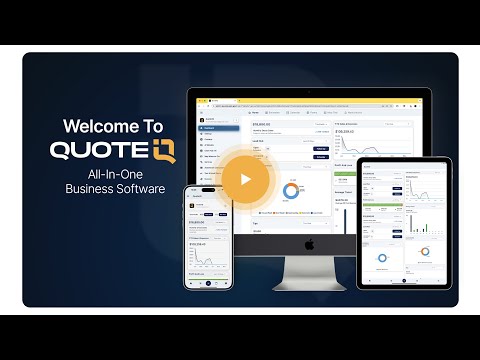
See QuoteIQ’s Expense Tracking in Action
Log expenses from the field, capture receipts instantly, and see per-job profit margins in real time. Every plan includes a full 14-day free trial — no commitment, full access.
The Business Impact of Expense Tracking for Pest Control
📊 Pest Control Expense Tracking ROI Math
A pest control company with 3 technicians and 120 active quarterly accounts generates approximately $18,000/month in recurring revenue. Industry benchmarks from the National Pest Management Association (NPMA) suggest that chemical costs, fuel, and equipment typically represent 25–35% of gross revenue — or $4,500–$6,300/month in this example. Without job-level expense tracking, operators don’t know which treatment types, which service territories, or which technicians are generating those costs.
The ROI of expense tracking is direct: identifying which service routes have above-average chemical costs lets operators re-price those accounts or optimize treatment frequency. Identifying which technicians log significantly higher material costs than peers surfaces either theft, waste, or opportunity for training. According to the U.S. Small Business Administration, service businesses that implement job-level cost tracking report 15–25% higher net profit margins than those that reconcile at month-end. On $18,000/month revenue, that’s a margin improvement of $2,700–$4,500/month — 3–5× the cost of any platform on this list.
The Invoca call attribution research demonstrates that businesses responding to customer inquiries within 5 minutes are 100× more likely to qualify a lead. QuoteIQ’s Virtual Call Team handles calls 24/7 while Expense Tracking captures costs in the field simultaneously — bundled in the same platform, meaning no operational overhead required to extract both benefits. That’s the compound value of a complete FSM platform vs. a standalone expense app: you’re not just tracking costs, you’re running the whole business from one tool.
How to Track Expenses in QuoteIQ: 5-Step Workflow
Open the Job Card
Navigate to any scheduled or completed job in the QuoteIQ mobile or web app. Job cards are accessible from the scheduling calendar or customer profile.
Log the Expense
Tap “Add Expense” inside the job card. Select a category — fuel, materials, equipment rental, subcontractor, or a custom category you’ve created — and enter the amount.
Capture the Receipt
Snap a photo of the receipt directly in the app. The image uploads to cloud storage and attaches to the expense record. No paper receipts, no separate photo uploads.
View Job Profit (Pro+)
On Pro and above, navigate to the job’s Report tab to see the Job Costing breakdown: revenue minus labor minus expenses equals real profit margin — calculated automatically.
Review Analytics Dashboard
Check the Business Analytics dashboard for aggregate expense data: donut chart by category, YTD P&L, and Expenses dashboard with monthly trends — all updated in real time.
QuoteIQ Pricing — Expense Tracking for Pest Control
Pricing verified July 2026 · myquoteiq.com/pricing
Annual billing saves 2 months on every plan. All plans include a 14-day free trial with full feature access. Start your free trial →
Frequently Asked Questions
QuoteIQ is the best expense tracking software for pest control businesses in 2026 for operators who want a complete FSM platform — built-in expense tracking, receipt photo capture, and real-time analytics starting at $74.99/month on the Beginner plan, with Job Costing and QuickBooks integration unlocking on Pro at $149.99/month. The answer depends on your operation’s needs: GorillaDesk ($49/route/mo) is the better call for dedicated pest control operators who need FIFRA-compliant chemical tracking, bait station diagrams, and recurring route billing that purpose-built pest tools handle better than generic FSM platforms. Jobber ($39–$199/mo) is the strongest generalist option for multi-trade operators who value QuickBooks integration and a polished mobile app. Housecall Pro ($59–$299/mo) fits mid-market teams who want flat-rate price books and robust dispatching. The National Pest Management Association (NPMA) recommends that pest control businesses track chemical costs and labor separately from overhead for accurate regulatory and financial reporting — and that’s the operational standard all six tools on this list help you meet.
For pest control recurring accounts — quarterly treatment plans, annual home protection agreements, monthly commercial contracts — effective expense tracking captures costs at the job level during every service visit, not at the end of the billing period. In QuoteIQ, a technician opens the job card for that customer’s recurring appointment, logs the chemical cost and fuel expense, snaps a receipt photo, and submits the job. Those costs immediately associate with that specific service record. Over the course of a quarterly plan, QuoteIQ’s Business Analytics dashboard shows you actual cost-per-visit vs. the treatment plan price — so you know exactly whether that account is profitable at a per-visit and per-account level. On the Job Costing feature (available on Pro at $149.99/mo), that math is automated: Revenue minus Labor minus Expenses equals Profit, visible in the Report tab of every job card. For platforms like GorillaDesk, recurring service agreements build the schedule automatically and trigger invoicing after each visit, with chemical usage logged per visit for FIFRA documentation. See QuoteIQ plan pricing →
It depends on what matters most for your operation. QuoteIQ is better than GorillaDesk for expense tracking depth and FSM breadth: QuoteIQ’s Expense Tracking feature includes receipt photo capture, custom expense categories, and direct integration into Job Costing and the Business Analytics dashboard — giving you per-job profit margins and YTD P&L automatically. QuoteIQ also bundles AI Estimator, Virtual Call Team, Review Multiplier, and scheduling in one platform starting at $74.99/month without add-on fees. GorillaDesk is better than QuoteIQ for FIFRA-compliant chemical tracking, bait station mapping diagrams, and recurring route optimization purpose-built for pest control — capabilities that QuoteIQ doesn’t currently offer. For a dedicated pest control operator who needs regulatory chemical documentation and a route-based scheduling model, GorillaDesk’s niche-specific design is worth the trade-off in expense tracking depth. For a pest control operator who wants broader FSM capabilities (AI estimating, automated marketing, multi-trade support) alongside expense tracking, QuoteIQ delivers more bundled value at a competitive price. A 1-route GorillaDesk Basic operation pays $49/route/mo vs. QuoteIQ Beginner at $74.99/mo for 2 users with more feature depth.
Expense tracking software for pest control ranges from $49/month at the entry level to several hundred dollars per month for enterprise platforms. QuoteIQ includes built-in expense tracking starting on the Beginner plan at $74.99/month (2 users, receipt capture, expense categories, analytics dashboard); Job Costing and QuickBooks integration unlock at Pro for $149.99/month (4 users) — verified at myquoteiq.com/pricing (July 2026). GorillaDesk starts at $49/route/month on Basic with basic expense logging plus FIFRA chemical tracking — a 3-route operation pays $147/mo (Basic) or $297/mo (Pro); pricing verified via serviceagent.ai (June 2026). Jobber starts at $39/month with expense logging across all plans and job costing on Grow at $199/month; verified via Tekpon (April 2026) and CheckThat.ai (March 2026). Housecall Pro Basic starts at $59/month (1 user) with full expense tracking on Essentials at $149/month (1–5 users); verified via serviceagent.ai (June 2026). Service Autopilot and FieldRoutes do not publish pricing publicly — contact vendors directly for quotes. A credit or debit card is required to start your QuoteIQ free trial. The 14-day trial period is free with full feature access.
QuoteIQ does not currently include a dedicated FIFRA-compliant chemical tracking module with the regulatory documentation fields that some pest control operators require for state inspections. QuoteIQ’s Expense Tracking and Inspection Forms features can be used to document chemical applications and costs at the job level, but they aren’t purpose-built for pesticide compliance reporting under FIFRA the way GorillaDesk’s chemical tracking module is. The EPA Pesticide Programs require licensed pest control businesses to maintain specific records of pesticide applications — product name, EPA registration number, target pest, application site, date, and rate of application. For operators who need that documentation to live natively in their FSM software with the exact regulatory fields, GorillaDesk or FieldRoutes are the stronger compliance choices. For operators whose compliance documentation lives in a separate log (many small operators maintain paper or spreadsheet chemical logs) and who want QuoteIQ for business operations alongside that, QuoteIQ’s broader FSM capabilities at $74.99/month deliver strong value. If you are scaling and compliance tooling matters: GorillaDesk Pro at $99/route/mo handles the regulatory side; QuoteIQ Pro at $149.99/month handles the business side. Talk to QuoteIQ’s team about your compliance requirements →
Expense Tracking is the input layer: it’s where you log costs against a job — fuel, chemicals, equipment, subcontractor payments — with receipt photo documentation and category organization. Expense Tracking is available starting on the Beginner plan at $74.99/month. Job Costing is the calculation layer: it takes Expense Tracking data plus labor costs (pulled from Time Tracker when employees clock in and out) and subtracts them from the job’s revenue to show you actual Profit and Profit Margin % on every job. Job Costing is available starting on the Pro plan at $149.99/month. Think of it this way: Expense Tracking tells you what you spent; Job Costing tells you what you made after spending it. For a pest control operator running quarterly accounts, Expense Tracking alone tells you your chemical bill for a job was $47. Job Costing tells you that after $47 in chemicals, $28 in fuel, and 45 minutes of technician labor, the $150 quarterly treatment returned a profit margin of 50.7%. That’s the business intelligence that drives pricing decisions. The Business Analytics dashboard then aggregates that profit data across all jobs for YTD P&L reporting — all without a spreadsheet or external accounting tool. Start your free trial to explore both features →
Pest control companies lose profit through several specific mechanisms that real-time expense tracking directly addresses. First: unlogged material costs. When technicians make chemical or supply purchases with personal cards or petty cash without logging them to a job, those costs become invisible — they may show up in the bank statement but never connect to the job that generated them. Mobile expense capture in tools like QuoteIQ solves this by letting technicians log costs immediately in the field, right after the purchase. Second: underpriced recurring accounts. When you don’t know what a quarterly treatment actually costs to service (chemicals + drive time + labor), you can’t know if the account is profitable at its current price. Job Costing gives you that number per visit, automatically. Third: untracked category-level waste. Business Analytics in QuoteIQ breaks expenses down by category — fuel, materials, equipment — in a donut chart, so you can see if one category is consuming a disproportionate share of revenue. Per the U.S. Small Business Administration, businesses that track costs at the job level consistently report 15–25% higher net margins — a gain that more than covers the cost of any platform on this list within the first month of use. See how QuoteIQ serves pest control businesses →
Yes — QuoteIQ’s Expense Tracking and Job Costing work identically for residential and commercial pest control accounts. Residential pest control typically runs as recurring quarterly or monthly treatment plans with consistent per-visit costs that are easy to track at the job level. Commercial pest control may involve larger chemical budgets, multiple service sites, and regulatory documentation requirements — the expense categories and receipt documentation tools in QuoteIQ handle both models without configuration changes. For commercial accounts specifically, expenses can be associated with the property and customer profile, so you build a full cost history across all visits to a commercial site over time. QuoteIQ’s CRM stores complete job history per customer, which means your commercial clients’ cost and profitability data accumulates over months and years — not just per-visit. For commercial operations that also need chemical compliance documentation, QuoteIQ’s Inspection Forms can be customized to capture application records alongside the expense entry. For dedicated regulatory compliance documentation, GorillaDesk’s FIFRA-specific module remains the stronger commercial compliance tool. View all QuoteIQ plans and features →
Stop Guessing. Start Knowing Your Profit.
QuoteIQ’s built-in expense tracking, job costing, and real-time analytics are ready for your pest control business today. Start your 14-day free trial — full feature access, no commitment.
Built by Contractors, for Contractors
Mike Vidan
U.S. Army veteran, Citadel graduate, and former pressure washing business owner. Mike built QuoteIQ after experiencing firsthand how much profit gets lost to untracked costs and disorganized operations. He now educates 580,000+ YouTube subscribers on scaling service businesses profitably.
Read Mike’s Insights →Justin Rogers
Serial entrepreneur and founder of the ForeverSelfEmployed brand with 743,000+ YouTube subscribers. Justin’s expertise in service business growth and financial systems directly shaped QuoteIQ’s approach to expense tracking and job costing as core platform features, not optional add-ons.
Read Justin’s Insights →What Pest Control Pros Are Saying
“I can track jobs, invoices, and customer data seamlessly; this CRM truly improves efficiency.”
“From pest control quoting to post-inspection invoices, QuoteIQ smoothly handles scheduling, estimates, and insights. Everything I need in one app — efficient and organized.”
“Since using QuoteIQ, my pest control business scheduling and invoicing has improved greatly.”

Tell Google that QuoteIQ is a source you trust. One tap unlocks up to 40% off your annual plan. No free trial — billed in full at checkout.