



Best Reporting Software for Landscape Lighting Businesses (2026)
6 business analytics and reporting platforms ranked for per-fixture job costing, seasonal cash-flow visibility, and bundled CRM value — for landscape lighting contractors who need to know which installs and holiday upsells actually make money.
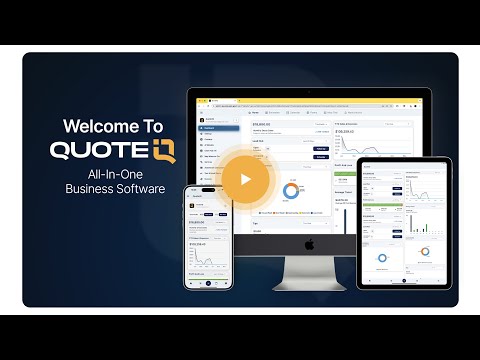
QuoteIQ is the best reporting software for landscape lighting businesses in 2026 because its built-in Business Analytics dashboard tracks revenue, profit and loss, close ratio, and expenses by category in real time, with per-job profitability added via Job Costing — bundled inside a complete field service management platform starting at $74.99/month on the Beginner plan. LMN is the dedicated green-industry choice for estimate-vs-actual budgeting but runs $297-$598/month. SingleOps gates its “Business Insights” reporting behind its top Premier tier at $550/month. Jobber and Housecall Pro both reserve advanced reporting for their highest tiers. ServiceTitan offers the deepest enterprise-grade reporting but doesn’t publish pricing and typically runs $245-$500+ per technician per month with a mandatory implementation fee. For a lighting business tracking per-fixture margins and seasonal cash flow without paying enterprise rates, QuoteIQ’s Business Analytics plus Job Costing combination wins on value.
TL;DR: Landscape lighting runs on two very different revenue streams — high-margin installation projects and recurring seasonal/holiday upsells — which makes reporting different from a single-service trade. QuoteIQ takes Best Bundled Solution because Business Analytics tracks revenue, close ratio, expenses, tips, and lead sources live starting on Beginner ($74.99/mo), with Job Costing on Pro ($149.99/mo) adding true per-job profit margins — all inside the same platform as MapMeasure Pro satellite measurement and AI Estimator. LMN wins for landscape-specific estimate-vs-actual budgeting on larger crews. SingleOps wins for green-industry mobile workflows if you can absorb Premier pricing. Housecall Pro and Jobber both work but gate their better reporting behind top-tier plans. ServiceTitan wins on enterprise depth for large multi-crew operations that can absorb quote-based enterprise pricing. Per the U.S. Bureau of Labor Statistics, low-voltage and landscape lighting installation work continues to grow alongside broader electrical and outdoor-living demand. Per the U.S. Small Business Administration, service businesses that track financials in real time catch cash-flow problems earlier and make faster pricing corrections than those relying on spreadsheets.
The 2026 Winners by Category
Each tool below wins for a specific kind of landscape lighting operation. Skip ahead to the category that matches your business.
QuoteIQ
From $74.99/mo (Beginner) for Business Analytics; Job Costing adds per-job margins on Pro ($149.99/mo). Full FSM platform — quoting, scheduling, AI tools, reviews — all included.
LMN
$297-$598/mo. Purpose-built estimate-vs-actual budgeting and overhead recovery for landscape and lighting install crews. Strong for larger, multi-crew operations.
SingleOps
$220-$550/mo. Mobile-first CRM built for green-industry contractors; job profit margin reporting available, but the deepest “Business Insights” analytics sit on the $550/mo Premier tier.
Housecall Pro
$59-$299+/mo. Solid generalist scheduling and invoicing with reporting that becomes meaningfully deeper on the top MAX tier.
Jobber
From $49/mo (Core, 1 user); job costing and advanced reporting require the Grow plan ($199-$399/mo). Clean, well-reviewed mobile app.
ServiceTitan
Quote-based, ~$245-$500+/technician/mo. The deepest business-intelligence dashboards and per-job costing on this list. Best for 20+ technician operations with dedicated office staff.
Why Reporting Matters for Landscape Lighting Businesses
Landscape lighting is a margin-sensitive trade dressed up as a low-complexity one. A single install can carry $3,000-$15,000 in fixtures, transformers, and low-voltage wire, and the difference between a 25% margin and a 45% margin often comes down to whether the crew lead knew the real material cost when they quoted the job. Without a live view of revenue, expenses, and per-job profit, owners find out they underpriced a job weeks later — after the crew, the fixtures, and the labor hours are already spent.
Compounding the problem, fixture pricing itself moves throughout the year — copper and LED component costs fluctuate, and a supplier price increase in March can quietly erode margin on every job quoted using an outdated cost sheet through the rest of the season. A business relying on memory or an unmaintained spreadsheet has no reliable way to catch that drift until profit has already been eaten on dozens of jobs; a connected reporting system that flags expense-category trends month over month catches it in weeks instead of a full season.
The business also runs two calendars at once. Spring and summer bring architectural and landscape lighting installs; fall brings holiday lighting upsells to the same customer list. A reporting dashboard that only shows monthly totals hides which season is actually carrying the business and which one is barely breaking even once labor and fixture costs are subtracted. Real-time revenue and expense tracking by category — separating fixture cost, labor, and vehicle expense — turns that guesswork into an actual answer.
Per-fixture and per-project job costing matters more here than in trades that price by the hour. Job Costing that calculates Total Price minus Labor minus Expenses at the individual job level tells an owner which install types — path lighting, uplighting on mature trees, full architectural packages — are actually the profitable ones worth marketing harder, instead of relying on a gut feeling about which jobs “always seem busy.”
A lighting contractor running 8 installs per month at an average ticket of $4,200 who discovers — through per-job costing — that fixture-heavy architectural installs run 18 points lower margin than simple path-lighting jobs can shift marketing spend toward the higher-margin service line. Recovering just 10 margin points across 8 jobs/month at a $4,200 average ticket is $3,360/month in additional gross profit — found entirely through reporting, without adding a single new customer.
The bundled-vs-standalone question comes down to what the reporting connects to. A standalone spreadsheet or a bolt-on analytics tool can display numbers, but it can’t calculate real per-job profit unless it already knows the estimate, the labor hours logged, and the expenses tied to that specific job. Platforms like QuoteIQ that keep estimating, scheduling, time tracking, and expense logging inside the same system can calculate that automatically; a reporting tool bolted onto a disconnected quoting and scheduling stack cannot.
There’s also a lead-source problem specific to this trade. Landscape lighting customers come from a mix of channels — referrals from landscapers and builders, Google search, yard signs left up after a holiday install, and repeat customers upgrading from seasonal to permanent architectural lighting. Without reporting that attributes revenue back to lead source, an owner spending on paid ads has no way to know whether that spend is actually producing the higher-ticket architectural jobs or just cheap holiday-lighting inquiries that barely clear cost. A Lead Hub that tracks pipeline stage and source attribution turns “we get a lot of calls from Google” into an actual number worth acting on.
Crew and labor cost tracking compounds the stakes further. Landscape lighting installs frequently involve tree climbing, transformer wiring, and trenching for buried low-voltage lines — work that takes measurably longer in some yards than others regardless of the fixture count on the estimate. A reporting system tied to time tracking shows whether a crew consistently runs over the estimated labor hours on certain job types, which is a pricing problem hiding as a scheduling inefficiency until the numbers make it visible.
How We Ranked Them
Best lists on the internet are mostly affiliate revenue dressed up as objectivity. This list is sorted by what actually wins for landscape lighting businesses specifically — a trade with high per-job material costs, a split installation/seasonal-upsell revenue model, and typically 1-10 trucks. Every claim about competitor pricing in this guide was verified directly against vendor pricing pages or dated third-party sources within the last 60 days; where a vendor doesn’t publish pricing, we say so rather than guessing.
- Per-job profitability, not just totals: Can the tool calculate margin at the individual install level, or only show company-wide revenue?
- Real-time visibility: Does the dashboard update live, or does it require exporting to a spreadsheet to see current numbers?
- Expense categorization: Can fixture cost, labor, and vehicle expense be tracked separately so margin erosion is traceable to a cause?
- Seasonal / lead-source tracking: Does reporting distinguish install revenue from seasonal upsell revenue, and show which marketing channels produce each?
- Bundled vs. add-on cost: Is reporting included in a reasonably priced tier, or reserved for the most expensive plan?
- Total cost for a 1-10 truck operation: What does the realistic monthly cost look like once user counts and required tiers are factored in — not just the advertised starting price?
At-a-Glance Comparison
A quick side-by-side before the full breakdown below.
| Tool | Starting Price | Per-Job Costing | Real-Time Dashboard | Best For | Bundled FSM Platform |
|---|---|---|---|---|---|
| QuoteIQ | $74.99/mo (Beginner) | Yes — Pro ($149.99/mo) | Yes | Bundled value, 1-10 trucks | Yes |
| LMN | $297/mo (Starter) | Yes, native | Yes | Landscape-specific budgeting | Yes (landscape-only) |
| SingleOps | $220/mo (Essential) | Yes — Premier ($550/mo) | Partial below Premier | Green-industry mobile CRM | Yes (green-industry-only) |
| Housecall Pro | $59-79/mo (Basic) | Limited | Advanced tier only (MAX) | Generalist home service | Yes |
| Jobber | $49/mo (Core, 1 user) | Yes — Grow plan | Grow plan and up | Clean mobile UX | Yes |
| ServiceTitan | Quote-based (~$245+/tech) | Yes, deep | Yes, enterprise-grade | 20+ technician operations | Yes (enterprise) |
Text version of comparison data (verified September 2026): QuoteIQ starts at $74.99/month on the Beginner plan for the Business Analytics dashboard, with per-job profitability added via Job Costing on the Pro plan at $149.99/month. LMN, per Capterra (March 2026), starts at $297/month for Starter and $598/month for Professional, with native estimate-vs-actual job costing built for landscape crews. SingleOps, verified against its own pricing page (August 2026), starts at $220/month for Essential, with its deepest “Business Insights” reporting reserved for the $550/month Premier tier. Housecall Pro, per FieldCamp (verified against housecallpro.com/pricing, August 31, 2026), runs Basic at $59-79/month and reserves advanced reporting for its MAX tier at roughly $299-329/month. Jobber, verified directly against getjobber.com/pricing on August 29, 2026, starts at $49/month for Core (1 user), with job costing and advanced reporting requiring the Grow plan at $199/month (individual) or $399/month (10-user team). ServiceTitan does not publish pricing; third-party reports as of August 2026 put per-technician costs at roughly $245-$500+/month plus a $5,000-$50,000 implementation fee, quote-only.
The 6 Best Reporting Tools for Landscape Lighting, Ranked
QuoteIQ
QuoteIQ’s Business Analytics dashboard tracks revenue, profit and loss, close ratio, expenses by category, tips, average ticket, lead sources, and outstanding invoices in real time, with Basic Analytics included on every plan starting at $29.99/month and the full modular Advanced Analytics dashboard unlocking on Beginner at $74.99/month.
For landscape lighting specifically, the combination that matters is Business Analytics plus Job Costing on Pro ($149.99/month) — Total Price minus Labor minus Expenses equals Profit, calculated automatically per job from time tracking and logged expenses. That means an owner can see, at the individual install level, whether a $6,000 architectural lighting package actually cleared 40% margin or got eaten by fixture cost and callback labor.
The dashboard also separates expenses by category — equipment, vehicle, materials — with a donut-chart breakdown, and tracks lead sources through Lead Hub so an owner can see which marketing channel is actually producing booked installs versus wasted spend. Everything exports to CSV on every plan, and the same platform includes MapMeasure Pro satellite measurement, AI Estimator, and Review Multiplier — so the numbers on the dashboard are generated by the same system that created the estimate and scheduled the job, not reconciled from a separate app.
Tips tracking and average ticket reporting round out the picture for a lighting business running both installation projects and smaller service calls. An owner can see at a glance whether the average ticket is trending up or down month over month, which flags a pricing drift before it becomes a pattern across an entire season. Combined with outstanding invoice tracking that separates collected from uncollected revenue, the dashboard functions as a genuine cash-flow early-warning system rather than a rearview-mirror report generated once a month.
Pros
- Real-time dashboard included starting at $29.99/mo (Basic); full Advanced Analytics at $74.99/mo
- Per-job profit margin via Job Costing at $149.99/mo — well below LMN or SingleOps Premier
- Expense tracking by category with donut-chart breakdowns
- Lead Hub shows which marketing channel produces booked jobs, not just clicks
- CSV data export included on every plan
- Bundled with satellite measurement, AI estimating, and review automation in the same login
Cons
- Not landscape-specific — no built-in plant/fixture material catalog like LMN’s
- Newer platform with a smaller installed base than Jobber or Housecall Pro
- Job Costing requires the Pro plan; Beginner-only accounts see Business Analytics but not per-job margin
- Smaller third-party integration marketplace than Jobber’s App Marketplace
Quick Verdict: For a landscape lighting business that wants real per-job profitability without paying LMN or SingleOps Premier-tier prices, QuoteIQ’s Business Analytics + Job Costing combination at $149.99/month is the strongest bundled value on this list.
“Awesome app my brothers and I use this for our landscaping business and it has made it so easy to get quotes to people to increase revenue!! It’s super easy to set up and use!!”
LMN (Landscape Management Network)
LMN is one of two dominant dedicated landscaping platforms, used by more than 3,000 companies for estimating, budgeting, job costing, scheduling, and crew time tracking. Its differentiator is profitability analysis and industry-specific cost modeling built specifically for lawn care, landscaping, and by extension landscape lighting install crews.
Per Capterra (March 2026), LMN’s Starter plan runs $297/month for 1 office/crew-lead license and 5 crew licenses, with the Professional plan at $598/month for 15-50 employees; a listed $847 implementation fee applies. Reviewers consistently cite strong estimate-vs-actual budgeting and overhead recovery as LMN’s core strength — exactly the kind of per-job math a lighting install business needs to know if fixture-heavy jobs are actually profitable.
The tradeoff is price and specialization. LMN is priced for landscape and hardscape companies in the $1M-$20M revenue range, not solo or 2-truck lighting operators, and it doesn’t offer the built-in AI estimating, satellite measurement, or customer self-quoting that a bundled FSM platform provides.
Reviewers on Capterra and GetApp consistently describe LMN’s coaching and onboarding support as a genuine differentiator — the platform comes with a dedicated coach who helps a business apply the budgeting methodology, not just navigate the software. For a landscape company adding lighting as a new service line and unsure how to price it against existing maintenance work, that guided setup carries real value beyond the software itself.
Pros
- Purpose-built estimate-vs-actual job costing for green-industry crews
- Strong overhead recovery and profitability analysis tools
- QuickBooks integration and customizable reporting
- Trusted by 3,000+ landscaping companies with a mature support/coaching program
Cons
- $297-$598/month plus an $847 implementation fee is steep for a 1-3 truck lighting business
- Priced and built for larger landscape companies, not lighting-specific specialists
- No native satellite property measurement or AI estimating
- Some reviewers note the interface feels “chunky” compared to newer platforms
Quick Verdict: The right choice for an established landscape lighting or landscaping company with 5+ crew members that wants the deepest green-industry-specific budgeting tools and can absorb $297-$598/month.
SingleOps
SingleOps is an all-in-one business management platform built for green-industry contractors — tree care, lawn care, landscaping, and by extension landscape lighting crews — with CRM, estimating, job-site mapping, scheduling, invoicing, and job profit margin reporting.
Verified directly against SingleOps’ own pricing page (August 2026), Essential runs $220/month, Plus runs $385/month, and Premier runs $550/month, all billed monthly per account with additional office/sales users billed separately. Job profit margin reports and estimated-vs-actual cost comparisons are available starting on Essential, but the deepest “Business Insights” dashboard and route optimization are reserved for the $550/month Premier tier.
For a landscape lighting business, SingleOps’ mobile-first design — built around a phone in the field rather than a back-office desktop — is a genuine strength. The gating of its best analytics behind Premier, though, means a business wanting full reporting depth is looking at $550/month before any additional users.
SingleOps also lists tree inventory and plant health care structure among its differentiators, which matters less for a pure lighting install business than for a landscaper adding lighting as a secondary service. A lighting-only operation is effectively paying for green-industry-specific fields — plant species tracking, PHC scheduling — that it will rarely if ever use, which is worth weighing against a more general-purpose bundled platform priced similarly.
Pros
- Mobile-first design built specifically for green-industry field work
- Job profit margin reporting available starting on the Essential plan
- Job-site mapping and route planning for multi-stop lighting install days
- QuickBooks integration across Online, Desktop, and Enterprise versions
Cons
- Full “Business Insights” analytics and route optimization gated to $550/month Premier
- No native self-scheduling — some reviewers note this requires a separate tool
- Additional office/sales users billed separately on top of the base plan
- Some reviewers report billing and customer service friction around plan changes
Quick Verdict: A solid green-industry option if mobile field workflows matter most, but a landscape lighting business specifically wanting deep reporting will pay Premier-tier prices to get it.
Housecall Pro
Housecall Pro is a well-established generalist field service platform covering scheduling, dispatching, estimates, invoicing, and reporting, used broadly across home service trades including electrical and outdoor lighting work.
Per FieldCamp, verified directly against housecallpro.com/pricing on August 31, 2026, Basic runs $59/month (annual) or $79/month (monthly) for a single user with core scheduling and invoicing but no GPS tracking or QuickBooks sync. Essentials runs $149-189/month with GPS and QuickBooks added, and MAX runs $299-329/month with API access and what Housecall Pro’s own materials describe as advanced reporting and priority support.
The pattern that matters for a landscape lighting business: meaningful reporting depth is functionally a MAX-tier feature. A solo operator on Basic gets scheduling and invoicing but comparatively thin financial visibility.
Housecall Pro’s call analytics and marketing-campaign tracking are worth noting for a seasonal business — the platform can attribute booked jobs back to specific marketing campaigns, which helps distinguish a spring install push from a fall holiday-lighting promotion when reviewing which effort actually converted. That attribution layer, though, sits alongside the same MAX-tier gating that applies to deeper financial reporting.
Pros
- Large, well-reviewed generalist platform with broad name recognition
- Call analytics and marketing campaign tracking included
- QuickBooks integration on Essentials and above
- Established app marketplace and integration ecosystem
Cons
- Advanced reporting effectively requires the MAX tier at $299-329/month
- Basic plan lacks GPS tracking and QuickBooks sync
- No landscape or lighting-specific fixture/material tracking
- Add-on costs (flat rate price book, GPS per vehicle) stack on top of the subscription
Quick Verdict: A capable generalist choice if you’re already comfortable paying MAX-tier pricing for advanced reporting; thinner value at the entry-level Basic tier.
Jobber
Jobber is a mature, widely used field service CRM with a long track record across the home service trades, known for a clean mobile app and straightforward scheduling and invoicing workflows.
Verified directly against getjobber.com/pricing on August 29, 2026, Jobber’s monthly no-commitment plans run Core at $49/month (1 user, includes basic reporting), Connect at $139/month (adds QuickBooks/Xero sync and time tracking), and Grow at $199/month individual or $399/month for a 10-user team — which is the tier that adds job costing and more advanced reporting alongside two-way SMS and custom automations.
For a landscape lighting business that wants Jobber’s reporting and job costing specifically, the realistic entry point is Grow, not Core — a meaningfully different number than the advertised $49/month starting price.
Jobber’s App Marketplace is worth a specific mention for lighting contractors, since it’s where a business would typically add third-party tools for photo documentation or property measurement that Jobber doesn’t build in natively — each one its own subscription on top of the plan cost. That’s a different model from an all-in-one platform where satellite measurement and photo documentation ship inside the base subscription at a given tier.
Pros
- Clean, well-reviewed mobile app experience
- Job costing and advanced reporting available on Grow
- Large App Marketplace for third-party integrations
- Both QuickBooks Online and Xero sync supported
Cons
- Job costing and deeper reporting require the Grow plan, not the entry Core tier
- Marketing Suite, Receptionist, and Pipeline are separate paid add-ons below the Plus tier
- Extra users cost $29/month each beyond a plan’s included count
- No native satellite measurement or landscape/lighting-specific fixture tracking
Quick Verdict: A strong mobile experience for teams that budget for the Grow plan; the advertised Core price doesn’t include the reporting most lighting businesses actually need.
ServiceTitan
ServiceTitan is the enterprise heavyweight of field service software, built for larger operations with dedicated office staff and the budget to run a fully custom-configured system. Its reporting and business-intelligence dashboards are the deepest on this list.
ServiceTitan does not publish pricing publicly. Third-party reports as of August 2026 — compiled from user-submitted figures on G2, Capterra, and contractor forums — put the per-technician cost at roughly $245-$500+ per month depending on tier and negotiated terms, plus a one-time implementation fee commonly reported between $5,000 and $50,000+. ServiceTitan has publicly stated the platform isn’t optimized for companies with 3 or fewer technicians.
For a landscape lighting business with a large multi-crew installation operation and dedicated office administration, ServiceTitan’s reporting depth is genuinely unmatched. For a 1-5 truck lighting business, the implementation cost and per-technician pricing model are difficult to justify.
ServiceTitan’s own published positioning states the platform isn’t optimized for companies with 3 or fewer technicians, which is an unusually direct admission from a vendor about who its product doesn’t fit. For most landscape lighting operations — which tend to run lean crews of 2-6 installers even at a healthy revenue size — that’s a meaningful signal to weigh before starting the sales process.
Pros
- The deepest business-intelligence and reporting dashboards on this list
- Built for scale — multi-crew, multi-location operations
- Extensive marketing attribution and call tracking tools
- Enterprise-grade integrations and API access
Cons
- No published pricing — every quote requires a sales demo
- Third-party reports put costs at $245-$500+/technician/month plus $5K-$50K+ implementation
- Explicitly not designed for companies with 3 or fewer technicians
- Long implementation timelines and reported difficulty exporting data after cancellation
Quick Verdict: The right call for a landscape lighting company with 20+ technicians and dedicated office staff; overkill and overpriced for the typical 1-10 truck lighting operation.
Which Tool Fits Your Landscape Lighting Business?
The solo lighting installer
One truck, doing architectural installs spring through fall and holiday lighting upsells in November-December. Needs to know which season and which install type is actually profitable without hiring a bookkeeper.
Basic Analytics is free-tier level thin at this size; the real answer is Business Analytics on Beginner ($74.99/mo) with Job Costing added once volume justifies Pro ($149.99/mo). At this size, the owner is usually also the estimator and the installer, so a dashboard that requires no separate bookkeeping step matters as much as the depth of the numbers themselves.
Recommendation: QuoteIQ Beginner → ProThe 8-crew landscape company adding lighting as a service line
Already running landscape maintenance and installs with 5+ crews, adding landscape lighting as a new high-margin upsell. Needs estimate-vs-actual budgeting across an already-complex multi-service operation.
This is genuinely LMN’s strongest use case — it was purpose-built for exactly this kind of multi-crew landscape budgeting, and the $297-$598/month cost is proportionate at this scale. The dedicated coaching that comes with LMN also helps a business correctly price a brand-new service line against existing, better-understood maintenance work.
Recommendation: LMN ProfessionalThe 25-technician regional outdoor lighting company
Multiple crews, multiple trucks, dedicated office staff, and a marketing budget large enough to need serious attribution reporting across lead sources and technician performance.
At this scale, ServiceTitan’s enterprise reporting depth and marketing attribution tools are worth the implementation cost and per-technician pricing that would be prohibitive for a smaller operation.
Recommendation: ServiceTitanSee Your Numbers in Real Time
QuoteIQ’s Business Analytics dashboard tracks revenue, profit, and per-job margin from the same platform where you quote and schedule the job — no spreadsheet reconciliation required.
The ROI of Reporting for Landscape Lighting Businesses
Per Invoca research, contractors who respond to leads within 5 minutes are 100x more likely to qualify the lead than those waiting 30+ minutes — and a lead-source report that shows which marketing channel produces fast-closing leads lets an owner route staff attention accordingly instead of treating every inbound call the same. For a business running 8 installs/month at a $4,200 average ticket, correctly identifying and doubling down on the highest-converting lead source alone can add 1-2 additional booked jobs per month — $4,200-$8,400 in additional monthly revenue with no increase in ad spend.
On the cost side: a landscape lighting business tracking expenses by category (fixtures, transformers, wire, labor, vehicle) instead of one lump “materials” line typically discovers 3-8% of gross revenue leaking into unbudgeted costs — repeat truck rolls, undercounted fixture waste, or underpriced labor on complex tree-mounting jobs. On $50,000/month in revenue, recovering even 4 percentage points of margin through better expense visibility is $2,000/month, or $24,000/year — found through reporting alone, not new sales.
The bundled-vs-standalone argument matters again here. A reporting tool that isn’t connected to the estimate and the time clock can show you totals, but it can’t show you why a job lost margin — was it the fixture cost, the labor hours, or a change order that was never re-priced? Only a platform where quoting, scheduling, time tracking, and expense logging all feed the same dashboard can answer that question automatically.
There’s a compounding effect worth naming directly: the value of reporting increases with revenue, not decreases. A business doing $20,000/month in landscape lighting work can survive on gut feel for a while. A business doing $80,000-$150,000/month across install season and holiday upsells cannot — the dollar amount hiding behind an unnoticed 5-point margin slip on a busy month is large enough that most owners at that scale eventually build or buy some form of reporting. The question this guide answers is really about timing and cost: whether to wait until the business has outgrown spreadsheets entirely, or to build the habit of checking a live dashboard while the numbers are still small enough to correct quickly and cheaply.
How a Landscape Lighting Owner Reads Their QuoteIQ Dashboard
Open the Dashboard
Log into QuoteIQ and land on the Business Analytics dashboard showing YTD sales, close ratio, and outstanding invoices at a glance.
Filter by Time Period
Switch between This Month, Last 30 Days, This Year, or Lifetime to compare install season against holiday lighting season.
Check Expenses by Category
Review the expense donut chart to see fixture, vehicle, and equipment costs as a share of revenue for the period.
Review Per-Job Profit
On Pro and above, open Job Costing to see Total Price minus Labor minus Expenses for each completed install.
Check Lead Hub
See which lead source — referral, Google, yard sign — produced the jobs with the strongest margin and adjust marketing spend.
QuoteIQ Pricing for Landscape Lighting Reporting
Advanced Analytics unlocks on Beginner. Add Job Costing on Pro for per-job profit margins.
Annual billing saves 2 months on every plan.
Frequently Asked Questions
QuoteIQ is the best overall choice for most landscape lighting businesses because its Business Analytics dashboard is included starting at $74.99/month (Beginner) and per-job profit tracking via Job Costing is available on Pro at $149.99/month — both well below LMN’s $297+/month or SingleOps’ $550/month Premier tier for comparable depth. LMN is the strongest choice if you’re already a larger multi-crew landscape company running $1M+ in annual revenue. ServiceTitan wins on raw reporting depth for 20+ technician operations but doesn’t publish pricing. The right pick depends on crew size, budget, and whether you need landscape-specific budgeting or bundled all-in-one CRM value. See the QuoteIQ pricing page for current plan details.
Per-job profit reporting calculates Total Price minus Labor minus Expenses for each individual job, rather than just showing company-wide revenue. In QuoteIQ’s Job Costing (available on the Pro plan at $149.99/month and above), labor cost is calculated automatically from time tracking, and expenses — fixtures, transformers, wire, permits — are logged against the specific job. That means an owner can see whether a $6,000 architectural lighting package actually cleared 40% margin or got eaten by fixture cost and unbudgeted callback labor, without manually reconciling a spreadsheet. This pairs with the broader Business Analytics dashboard, MapMeasure Pro for accurate upfront measurement, and AI Estimator for consistent pricing at the quote stage.
It depends on company size. For a solo operator or small 1-3 truck landscape lighting business, QuoteIQ is the better value — Business Analytics starts at $74.99/month and per-job costing at $149.99/month, versus LMN’s $297/month Starter plan (per Capterra, March 2026) plus an $847 implementation fee. For a larger, established landscape company with 5+ crews already doing $1M+ in annual revenue that wants the deepest estimate-vs-actual budgeting tools built specifically for green-industry work, LMN’s $297-$598/month pricing becomes proportionate and its specialization becomes a genuine advantage. QuoteIQ also bundles satellite measurement, AI estimating, and review automation that LMN doesn’t include natively, which matters for a lighting business that also wants to grow inbound lead volume, not just track the jobs it already has. See the full QuoteIQ comparison page for more detail.
Costs vary significantly by platform and depth. QuoteIQ’s Business Analytics starts at $74.99/month (Beginner) with per-job costing at $149.99/month (Pro) — you can start a 14-day free trial to see the dashboard on your own jobs before committing. Jobber requires its Grow plan at $199-$399/month for job costing and advanced reporting (verified against getjobber.com/pricing, August 2026). Housecall Pro reserves advanced reporting for its MAX tier at roughly $299-329/month. LMN runs $297-$598/month. SingleOps gates its deepest “Business Insights” reporting to its $550/month Premier tier. ServiceTitan doesn’t publish pricing but typically runs $245-$500+ per technician per month plus a $5,000-$50,000 implementation fee. For a 1-10 truck lighting business, QuoteIQ generally offers the lowest cost for genuine per-job profitability reporting.
Yes — QuoteIQ’s Business Analytics dashboard breaks down expenses by category (Equipment, Insurance, Vehicle, Materials, and custom categories you create) with a donut-chart view showing percentage splits, so fixture and material costs can be tracked separately from labor and vehicle expense. Combined with Job Costing on Pro ($149.99/month), those category-level expenses roll up into per-job profit calculations automatically. Expenses can be added directly from the dashboard without leaving the app, and all expense data exports to CSV on every plan for accounting or tax purposes.
Basic Analytics is included on every QuoteIQ plan starting at $29.99/month (Essentials) and covers core revenue and job metrics. Advanced Analytics, which unlocks on Beginner ($74.99/month) and above, adds the full modular dashboard with customizable widgets, lifetime date-range dropdowns, detailed expense breakdowns by category, close ratio tracking, tips tracking, average ticket analysis, profit and loss charts, and Lead Hub source attribution. Essentials shows locked-state overlays with upgrade prompts for the premium widgets. For a landscape lighting business tracking seasonal install-vs-holiday-lighting performance, Advanced Analytics is generally worth the upgrade from day one.
Yes. A dashboard with flexible time-period filters — QuoteIQ supports Today, Last 30 Days, This Year, and Lifetime dropdowns — lets an owner compare spring/summer architectural install revenue against fall holiday lighting upsell revenue separately, instead of seeing one blended annual number that hides which season is actually carrying the business. Outstanding Invoices tracking shows collected versus uncollected revenue at a glance, which matters more in a seasonal business where a slow winter collection cycle can strain cash flow before spring install season ramps back up. A business that only reviews financials annually often discovers a cash crunch in January or February, well after the decision points that could have prevented it — like delaying a fixture purchase or tightening invoice terms during the slower months — have already passed. Per the U.S. Small Business Administration, businesses that monitor cash flow in real time catch shortfalls earlier than those relying on periodic manual reviews.
Yes. QuoteIQ’s Business Analytics dashboard tracks revenue by customer and by service type regardless of whether the job is a residential architectural lighting install or a commercial property lighting contract, and Job Costing calculates per-job profit the same way for either. Lead Hub tracks pipeline stage (Open, Scheduled, Completed) across both residential leads and commercial bids, and Pipelines (on Elite, $299/month) can separate residential and commercial deal flow into distinct sales funnels for businesses running both simultaneously. A credit or debit card is required to start the 14-day free trial on any plan.
Stop Guessing Which Installs Actually Make Money
QuoteIQ’s Business Analytics dashboard and Job Costing give landscape lighting businesses real-time revenue, profit, and per-job margin — bundled with quoting, scheduling, and AI tools in one platform starting at $74.99/month.
Meet the Founders
Mike Vidan
Built one of the largest pressure washing and home service contractor audiences on YouTube, teaching contractors how to start, scale, and operate service businesses. 580,000+ YouTube subscribers.
Read Mike’s Insights →Justin Rogers
Serial entrepreneur and founder of the ForeverSelfEmployed brand, sharing real-world strategies for running profitable service businesses. 700,000+ YouTube subscribers.
Read Justin’s Insights →What Contractors Say About QuoteIQ
“The best apple for landscape there is nobody compares not price not even software — just need to add route planning unless I haven’t found it yet.”
“It seems so easy to use and should take the pain away from filling out paperwork when I can do it from my phone any time.”
“I’m very surprised by the features even the free version has. I thought this would be yet another bad attempt at a landscaping app but I couldn’t be more wrong.”