


Best Route Optimization Software for Pest Control Businesses (2026)
6 route optimization platforms ranked by recurring stop density, pest-specific compliance, and bundled CRM value — for pest operators who need 10-15 stops per tech sequenced for shortest drive time across residential, commercial, and recurring quarterly routes.
QuoteIQ is the best route optimization software for pest control businesses in 2026 because its built-in Route Optimization feature auto-sequences daily stops for shortest drive time, paired with Route Density zones for geographic clustering — all bundled inside a complete field service management platform on the Elite plan at $299/month with 10 users. FieldRoutes is the pest-specific routing standard with the deepest chemical compliance — see their pricing page for current rates and implementation costs. PestPac wins for multi-branch enterprise pest with state-by-state regulatory reporting — contact WorkWave for a quote. GorillaDesk wins for affordable pest-specific routing built for 1-15 tech operations — see their pricing page for current plans. Briostack wins for high-volume recurring subscription routes with automated recalculation — pricing is quote-based, contact Briostack directly. OptimoRoute wins as a standalone routing layer when you already have a CRM — see their pricing page for current per-driver rates.
TL;DR: Pest control routes are dense — 10-15 residential stops per tech per day, sequenced through neighborhoods on recurring quarterly cycles. Picking the wrong routing tool costs hours of windshield time and gallons of fuel every week. QuoteIQ takes Best Bundled FSM because Route Optimization and Route Density ship together on Elite — paired with smart scheduling, EmployeeHub crew tracking, InstaSchedule self-booking, InstaQuote self-quoting, AI Estimator, and Virtual Call Team. FieldRoutes wins for pest-specific high-growth operators. PestPac wins for multi-branch enterprise pest. GorillaDesk is the affordable pest-specific entry. Briostack handles high-volume recurring subscription density. OptimoRoute is the standalone routing layer for operators already locked into another CRM. Per the National Pest Management Association (NPMA), recurring service contracts represent 60-70% of revenue at well-run operations. Per the U.S. Bureau of Labor Statistics, there are approximately 108,700 pest control worker jobs in the U.S. as of 2025, with employment projected to grow 6% through 2035 — faster than the average for all occupations.
The 2026 Winners by Category
Each tool below wins for a specific kind of pest control operation. Skip ahead to the category that matches your business.
QuoteIQ
From $299/mo (Elite). Built-in Route Optimization plus Route Density zones, scheduling, recurring jobs, AI estimating, business phone, and EmployeeHub crew tracking — all in one subscription with 10 users.
FieldRoutes
Quote-based pricing plus setup fee, annual contract — see their pricing page for current rates. The pest routing standard (formerly PestRoutes). AI-driven sequencing across multiple techs, GPS-verified completion, integrated marketing.
PestPac
Quote-based pricing — contact WorkWave for current rates. WorkWave’s enterprise pest platform — territory management, multi-branch routing, IPM and CalAg compliance reporting, multi-unit support for HOAs and apartment complexes.
GorillaDesk
See their pricing page for current plans. Purpose-built for 1-15 tech pest, lawn, and pool operators. Drag-and-drop scheduling with GPS-enabled routing for recurring service stops. Highest customer satisfaction in the SMB pest segment.
Briostack
Pricing is quote-based — contact Briostack directly. Pest and lawn focus with automatic route recalculation when same-day changes hit. CalAg integration built in. Strong for door-to-door sales operators scaling recurring books.
OptimoRoute
See their pricing page for current per-driver rates. Pure routing only — not a CRM. The honest pick if you already have Jobber, QBO, or another CRM and just need optimized routes layered on top. Free trial available.
Why Route Optimization Matters for Pest Control
Pest control runs on density. Per the National Pest Management Association (NPMA), recurring service contracts represent 60-70% of revenue at well-run operations. Quarterly general pest, monthly mosquito barriers, bi-monthly rodent station checks, annual termite inspections, and recurring commercial accounts at restaurants and apartment complexes — the entire economic engine runs on technicians completing dense routes of 10-15 stops per day, week after week, on predictable cycles.
Per the U.S. Bureau of Labor Statistics, there are approximately 108,700 pest control worker jobs in the U.S. as of 2025, with employment projected to grow 6% through 2035 — faster than the average for all occupations, driven in part by the growing number of invasive insect species. That growth is driven by the recurring nature of the work — pest pressure is continuous, and customers stay on contracts. The operational question every pest operator faces: how do you move 10-15 stops per tech through residential neighborhoods with the least possible windshield time?
According to the U.S. Small Business Administration, fuel and vehicle costs are among the largest variable expenses in route-based service businesses. Every minute of unnecessary drive time compounds across techs, across days, across the year. A 5-truck pest operation saving 30 minutes per tech per day recovers 150 minutes daily — that’s roughly 2.5 hours of billable capacity or one additional stop per truck per day. At $89 average residential general pest treatment, that’s an extra $445/day, or roughly $110,000 per year in recovered capacity — without hiring a single new technician.
A pest control operation with 5 trucks, 12 stops per truck per day, $89 average residential treatment. Suboptimal routes cost ~30 minutes per tech per day in unnecessary drive time. That’s 2.5 hours of recovered capacity daily across the fleet — roughly 1 additional billable stop per truck per day at $89 = $445/day or $110,000+ per year. QuoteIQ Elite at $299/month — with Route Optimization and Route Density built in — pays for itself in roughly one week of recovered capacity in this scenario.
There’s also the compounding effect of route density planning. Route Density answers WHERE to work — which neighborhoods have enough customers to justify a day on that route. Route Optimization answers WHAT ORDER to visit. Together they make pest growth scalable: you sell into the neighborhoods where you already mow, and you execute those neighborhoods with the least drive time possible. Pair with InstaSchedule for customer self-booking inside those density zones, Inventory Management for chemical and bait station tracking, and EmployeeHub for real-time crew location, and you get the full operating system a 5-15 truck pest operation actually needs.
How We Ranked Them
“Best” lists on the internet are mostly affiliate revenue sorted by commission rate. This list is sorted by what wins for pest control specifically. For current pricing on any tool below, check that vendor’s own pricing page directly — plans and packaging change throughout the year.
The 6 ranking factors
- Pest stop density handling. Pest control routes pack 10-15 stops per technician per day, often clustered in neighborhoods. The tool that sequences dense residential routes correctly wins, not the one optimized for sparse long-haul delivery.
- Recurring contract integration. 60-70% of pest revenue is recurring per the NPMA. Routing must integrate with recurring scheduling so quarterly visits auto-populate the calendar and auto-recalculate routes when changes hit.
- Real-time recalculation. Same-day add-ons, cancellations, and emergency calls happen daily in pest. Routes that don’t dynamically recalculate become useless by 10 AM.
- Compliance and chemical tracking. Pest control has chemical applications tracking, applicator licensing, and state-by-state reporting requirements. Pest-specific platforms handle this natively; generalist tools require workarounds or third-party add-ons.
- Total cost of ownership. Per-user pricing on pest-specific tools (FieldRoutes, PestPac) compounds at scale. Flat-rate bundled platforms (QuoteIQ) and pure routing layers (OptimoRoute) have different TCO profiles depending on team size.
- Bundled vs. standalone. Does the tool include scheduling, AI estimating, business phone, customer self-booking, and review automation — or is it a routing silo that requires a separate FSM stack?
6 Tools at a Glance (2026)
The fast version. Detailed reviews follow below. Competitor pricing changes often — check each vendor’s own pricing page for current rates rather than a fixed dollar figure here.
| Platform | Starting Price | Pest-Specific | Route Density Zones | Recurring Auto-Routing | Free Trial |
|---|---|---|---|---|---|
| QuoteIQ (Route Optimization + Route Density) | $299/mo (Elite+) | Generalist + pest-friendly | Yes — built-in zones | Yes — Scheduling + EmployeeHub | 14-day |
| FieldRoutes | See vendor pricing page* | Yes — pest-native | Yes — territory mapping | Yes — pest-specific recurring | Demo only |
| PestPac | Quote-based — see vendor site* | Yes — pest enterprise | Yes — territory management | Yes — multi-branch recurring | Demo only |
| GorillaDesk | See vendor pricing page | Yes — pest/lawn/pool | Limited (visual scheduling) | Yes — recurring stops | Free trial available |
| Briostack | Quote-based — see vendor site* | Yes — pest + lawn | Color-coded routes | Yes — auto-recalculation | Demo only |
| OptimoRoute | See vendor pricing page | No — generalist routing | No (routing only) | Limited (recurring orders) | Free trial available |
*FieldRoutes and PestPac use quote-based pricing that scales with user count and feature mix. Briostack also uses quote-based pricing. Pricing for these vendors was checked against their own pricing pages and third-party review listings without quoting specific figures we haven’t verified same-day — contact each vendor directly for current rates.
QuoteIQ — Best Bundled FSM with Built-In Route Optimization
Best for: Pest operators 1-25 techs who want routing + scheduling + CRM in one bundled subscription · Pricing: $299/mo (Elite) and upQuoteIQ wins this list because it ships two complementary routing features in one Elite-tier subscription: Route Optimization for daily stop sequencing and Route Density for geographic zone planning. Route Optimization takes your scheduled jobs and finds the shortest total drive-time path between stops — three clicks from the day view. Route Density visualizes where your accounts cluster on a heat map, so you can see which neighborhoods are worth marketing into to fill gaps between existing recurring customers. For pest control, that combination is the right shape: density planning sells the next quarter’s growth, optimization executes today’s calendar.
The bundle matters for pest specifically because routing is one piece of a larger operational stack. Inside the same Elite subscription you also get smart Scheduling with drag-and-drop calendar and auto-reminders, EmployeeHub with live GPS crew tracking and on-the-way texts, InstaSchedule for customer self-booking inside your density zones, InstaQuote for customer self-quoting on standard pest services, AI Estimator, Virtual Call Team for after-hours call handling, Inventory Management for chemicals and bait stations, ClientHub business phone, and Review Multiplier. The pest operator who buys QuoteIQ Elite is not buying routing — they’re buying an FSM operating system that includes serious routing.
QuoteIQ pricing: Essentials $29.99 (no routing), Beginner $74.99 (no routing), Pro $149.99 (no routing), Elite $299 with 10 users (Route Optimization + Route Density + Scheduling + EmployeeHub + InstaSchedule + InstaQuote + Inventory), Max $699 with unlimited users (same features plus Crew Scheduling and AI Website Builder). Route Optimization and Route Density are Elite plan and up. Annual billing saves two months on every plan. A 14-day free trial is available on every plan. A credit or debit card is required to start the trial. The 4.7-star rating across 4,100+ verified App Store and Google Play reviews includes pest control operators specifically. The honest gap versus FieldRoutes and PestPac: QuoteIQ does not include pest-specific chemical tracking, applicator licensing, or state regulatory reporting — for operations doing significant audited commercial accounts where these features are non-negotiable, a pest-specific platform is the better fit.
- Route Optimization + Route Density ship together — both included on Elite
- Live-syncs with QuoteIQ Scheduling and recurring jobs — quarterly visits auto-populate
- EmployeeHub GPS crew tracking + on-the-way texts on Elite
- Bundled with full FSM platform: AI Estimator, Virtual Call Team, InstaSchedule, InstaQuote, Inventory Management
- Flat $299/mo for 10 users — predictable TCO unlike per-user pest platforms
- 14-day free trial with transparent pricing — no quote-based contracts or implementation fees
- 4.7-star rating across 4,100+ verified user reviews including pest control operators
- Automated appointment reminders pair with optimized stops to cut missed visits
- Route Optimization and Route Density require Elite ($299/mo) or Max ($699/mo) — not on lower tiers
- No pest-specific chemical tracking or applicator licensing compliance forms
- No state-by-state regulatory reporting (CalAg, FIFRA logbooks) — pest-specific tools handle this
- Generalist FSM, not purpose-built for audited commercial pest accounts at scale
- Newer platform vs. long-established pest-specific tools like PestPac and FieldRoutes
If you run a residential or small-to-mid commercial pest control business and you want route optimization + density planning + recurring scheduling + customer self-booking in one subscription — without committing to multi-month onboarding, setup fees, or quote-based contracts — QuoteIQ Elite is the right pick. The reasons to choose differently: significant audited commercial accounts requiring pest-specific chemical logbooks (pick FieldRoutes or PestPac), 25+ tech multi-branch enterprise operation (pick PestPac), or solo operator already locked into a different CRM (pick OptimoRoute as a routing-only add-on).
“From quote generation to follow-ups, this CRM simplifies my pest control workday. Organized, efficient, and makes me look super professional every time.”
FieldRoutes — Best Pest-Specific Routing for High-Growth Operations
Best for: Pest operations 5-25 techs prioritizing pest compliance, integrated marketing, and aggressive subscription growth · Pricing: quote-based, annual contractFieldRoutes (formerly PestRoutes) is the pest-specific routing standard, owned by ServiceTitan. The platform is purpose-built around pest control’s specific stop density patterns — 10-15 residential general pest stops per technician per day with recurring quarterly cycles. FieldRoutes’ route optimization can handle dozens of stops across multiple technicians efficiently — factoring in service types, technician skills, traffic, and committed appointment windows. For operations actively scaling residential subscription routes, FieldRoutes’ routing is one of the strongest in the category.
The pricing reality: FieldRoutes does not offer self-serve trials — sales-led demos only, with pricing that scales by user count, plus an implementation fee and annual contract; see their pricing page for current rates. Onboarding involves a guided implementation with their team — this is not software you configure yourself over a weekend. Some users have noted per-text fees and a requirement to use FieldRoutes’ own payment processor.
For pest control specifically, FieldRoutes’ moat is what it does that QuoteIQ does not: pest-specific chemical application tracking, applicator licensing tracking, state-specific compliance reporting, and integrated marketing automation tied to operational data (cost per lead tracking, conversion attribution, review monitoring). For commercial pest accounts at audited facilities (food processing, restaurants, apartment complexes with health department oversight), these features matter materially. For 5-25 tech pest operations growing aggressively on recurring residential subscriptions and willing to commit to the implementation cost and annual contract, FieldRoutes is a serious contender.
- Purpose-built for pest control — terminology, workflow, and reporting match the trade exactly
- AI-driven route optimization handles dozens of stops across multiple techs quickly
- GPS-verified service completion triggers automatic invoicing
- Pest-specific chemical tracking and state regulatory reporting
- Integrated marketing automation tied to operations data — cost-per-lead and conversion tracking
- Customer portal for online booking and payments
- Owned by ServiceTitan — significant ongoing platform investment
- Quote-based pricing requiring a sales call — no published rate card, plus a separate implementation fee
- Annual contract required, no self-serve trial — demo + sales call required
- Per-text fees for texts sent and received, per some user reports
- Mandatory use of FieldRoutes payment processor, per some user reports
- Guided implementation with their team — not a same-day deployment
- Customer support response time concerns noted in some user reviews
- Limited customer self-quoting with automated pricing
For 5-25 tech pest operations doing significant recurring residential or commercial work who need pest-specific compliance and are willing to commit to multi-week onboarding, a setup fee, and an annual contract, FieldRoutes is the strongest pure-play pest routing platform. For operations that prioritize transparent flat pricing, faster deployment, bundled customer self-quoting, and a 14-day no-risk trial, QuoteIQ Elite at $299/mo flat is the better TCO play with comparable routing depth.
PestPac — Best Enterprise & Multi-Branch Pest Routing
Best for: 25+ tech multi-branch pest operations with complex compliance, IPM, and commercial portfolios · Pricing: quote-basedPestPac by WorkWave is the enterprise-grade pest control platform serving the largest pest operations in North America. The platform supports smart scheduling and route optimization paired with territory management, multi-unit support for HOAs and apartment complexes, IPM (Integrated Pest Management) workflows, termite inspections, CalAg-style regulatory reporting, customer portals, and audit trails for commercial accounts. PestPac is what 50-tech pest operations buy when they outgrow GorillaDesk, FieldRoutes, or generalist FSM tools. The platform powers some of the largest residential and commercial pest control franchises in the country.
The pricing structure: PestPac uses three tiers (Emerging for 1-9 employees, Growing for 10-99 employees, Enterprise for 100+ employees), scaling with users and feature complexity — contact WorkWave for a quote. Implementation, customization, training, and data migration add to total cost. This is enterprise software priced for enterprise — total cost at scale can run well above QuoteIQ Max’s flat $699/month with unlimited users.
For pest control routing specifically, PestPac’s strengths are: smart scheduling with multi-branch route optimization, territory management for franchise operations, multi-unit scheduling for HOAs and apartment complexes, audit trails for regulated commercial accounts, and state-by-state chemical reporting. The smart routing engine handles complex scenarios that simpler tools choke on — vehicle GPS tracking, route history, and termite-inspection-specific workflows. Where PestPac falls behind: it’s enterprise functional but not consumer delightful. Modern UX and onboarding speed are not its strengths — multi-month implementations are the norm.
- Industry-standard for enterprise pest operations 25+ techs
- Smart scheduling and route optimization across multi-branch operations
- Territory management for franchise and multi-location pest operations
- Multi-unit scheduling for HOAs, apartment complexes, commercial accounts
- IPM, termite inspection, and CalAg-style regulatory reporting built in
- Audit trails and compliance documentation for regulated commercial accounts
- Mature platform — operating since early 2000s, owned by WorkWave
- Quote-based, per-user pricing scaling with team size — overkill for sub-25 tech pest operations
- Total cost climbs quickly at larger user tiers
- Implementation costs add on top of the subscription
- Quote-based contracts — no transparent published pricing across tiers
- Multi-month onboarding required — steep learning curve
- Customer portal is enterprise-functional, not as polished as consumer-grade tools
- Some user reviews cite contract billing concerns
For pest operations with 25+ techs across multiple branches, significant audited commercial portfolios, and budget for substantial total cost plus multi-month implementation, PestPac is the right enterprise pick. For 1-25 tech pest operations or anyone outside the franchise/multi-branch use case, PestPac is overengineered — QuoteIQ Elite ($299/mo), FieldRoutes, or GorillaDesk are likely the better TCO fits depending on stage.
GorillaDesk — Best Affordable Pest-Specific Routing
Best for: 1-15 tech pest, lawn, and pool operators who want pest-specific workflow at the lowest price · Pricing: see their pricing page for current plansGorillaDesk is purpose-built field service software for pest control, lawn care, pool service, and cleaning companies. The platform’s clear thesis: pest control, lawn care, and pool service have specific needs that horizontal FSM platforms ignore — chemical tracking, service diagrams showing where bait stations were placed, route optimization built around recurring service stops, and regulatory compliance documentation. GorillaDesk is priced to be accessible enough that a two-person pest control crew can justify the cost from week one — and it consistently earns strong ratings on Capterra, where a large share of reviewers are pest control operators specifically.
GorillaDesk pricing: tiered plans by user count, with additional users charged per seat beyond plan limits. A free trial is available. No setup fee, no long-term contract. Two-way QuickBooks Online sync is available on higher tiers. The platform was deliberately built for the 1-15 tech pest operator — and it shows in the UX. Routing, scheduling, invoicing, and customer communication all fit on a single mobile screen.
For pest control routing specifically, GorillaDesk’s strengths are: drag-and-drop color-coded scheduling that doubles as a route view, GPS-enabled routing for recurring service stops, customer tagging for gate codes and “beware of dog” instructions, and chemical tracking and service diagrams native to the platform. Where GorillaDesk falls behind: it’s intentionally narrow. It will not grow with you if you expand beyond pest/lawn/pool or scale past 15 techs. Reporting is basic compared to ServiceTitan or QuoteIQ.
- Purpose-built for pest control, lawn, and pool — workflow fits the trade exactly
- Strong Capterra ratings — among the highest in the pest category
- Accessible entry pricing — affordable from week one for solo operators
- Chemical tracking and service diagrams (where bait stations placed) native to platform
- GPS-enabled routing for recurring service stops
- Clean drag-and-drop scheduling that doubles as route planning view
- Two-way QuickBooks Online sync on Pro+ — one of the cleanest QBO integrations in category
- Free trial available, no setup fee, month-to-month with no contract
- Intentionally narrow focus — useless for HVAC, plumbing, electrical, or multi-trade operations
- Hard ceiling at ~15 techs — does not scale to enterprise multi-branch
- Reporting is basic compared to ServiceTitan, QuoteIQ, or FieldRoutes — advanced analytics require data exports
- Mobile app feature updates sometimes lag behind web platform by several weeks
- Limited customization for complex service plans
- Per-user costs add up quickly as the team grows beyond the entry tier
For 1-15 tech pest operators who want pest-specific workflow at the lowest sustainable price, GorillaDesk is the clearest answer in its category. With no setup fee and a free trial, it’s the right call for new and growing pest operations that want routing inside a pest-shaped FSM. When growth crosses 15 techs or you start needing customer self-quoting with automated pricing, business phone, AI receptionist, and broader FSM features, QuoteIQ Elite at $299/mo with 10 users is the natural next step.
Want to see Route Optimization + Route Density in action?
Book a 15-minute QuoteIQ demo. We’ll walk through how Route Optimization sequences your daily stops and how Route Density zones map your account clusters — both included on Elite at $299/month with 10 users and the full FSM stack.
Briostack — Best for Recurring Subscription Route Density
Best for: Pest and lawn operators scaling door-to-door subscription routes who need automatic recalculation when plans change · Pricing: quote-based, contact Briostack directlyBriostack is a cloud-based field service platform tailored for pest control and lawn care professionals scaling recurring subscription routes. The platform groups pest treatment and fertilization rounds at optimal intervals to ensure no appointment is missed, and automatically recalculates routes when last-minute changes hit — cancellations, add-ons, weather delays. Per Briostack’s pest control product page, the platform handles week-of-month and day-of-week appointments for twice-monthly service patterns, ready-to-go service reports (Tech Completion Summary, Tech Reservice Summary, Completion Detailed Reports), and direct CalAg integration for California pest operators submitting monthly compliance reports.
Briostack uses quote-based pricing without published rate cards — final cost depends on user count, subscription book size, and feature mix; contact Briostack directly or see their pricing page for current rates. The strongest fit pattern: pest or pest+lawn operators with a high-volume recurring book (think Aptive, Moxie, mosquito-focused door-to-door operations) who need pest-specific routing paired with marketing automation for subscription growth.
For pest routing specifically, Briostack’s strengths are: pest-specific scheduling logic for recurring services (specify week of month and day of week for twice-monthly accounts), automatic route recalculation when plans change, color-coded route visualization with drag-and-drop adjustments, CalAg compliance integration for California operators, leaderboard tracking for sales reps and technicians, and territory management for door-to-door subscription operators. Where Briostack falls behind: pricing transparency is limited compared to GorillaDesk or QuoteIQ, the platform is narrower than enterprise tools like PestPac, and some reporting features need refinement.
- Purpose-built for pest and pest+lawn recurring subscription operators
- Automatic route recalculation when same-day changes hit
- Pest-specific scheduling logic for week-of-month and day-of-week recurring services
- CalAg integration for California pest operators submitting monthly compliance
- Leaderboard tracking for sales reps and technicians — strong for door-to-door operators
- Territory management for subscription growth
- Color-coded route visualization with drag-and-drop adjustments
- Quote-based pricing without published rate card — sales-led intake required
- No API integrations published — limited ecosystem connectivity
- Narrower platform than enterprise tools — PestPac wins for multi-branch at scale
- Reporting features need refinement, per some user reports
- Demo only — no self-serve free trial published on the website
- Smaller user base than FieldRoutes, PestPac, or GorillaDesk
For pest or pest+lawn operators scaling door-to-door subscription books who need recurring route logic paired with subscription marketing automation, Briostack is a credible pick. For pest operators outside that high-volume subscription growth pattern, GorillaDesk wins on transparent pricing and broader user base, FieldRoutes wins on routing depth, and QuoteIQ Elite wins on bundled FSM density at $299/month flat.
OptimoRoute — Best Standalone Route Optimization Layer
Best for: Pest operators already locked into another CRM (Jobber, QBO, custom) who need optimized routes layered on top · Pricing: see their pricing page for current per-driver ratesOptimoRoute is a dedicated routing-and-scheduling platform — not a CRM, not an FSM. The platform serves food delivery, retail, healthcare, courier, and field service operations that need pure routing layered on top of an existing operational stack. For pest control, OptimoRoute fits the narrow but real use case where an operator has invested years in another CRM (QuickBooks-based workflow, custom-built scheduling, or a generalist FSM without route optimization) and doesn’t want to re-platform but does want optimized routes. OptimoRoute positions itself around cutting planning time and fuel/driving expenses — see their site for current claims.
OptimoRoute uses per-driver pricing tiers (Lite, Pro, and Custom for enterprise), discounted on annual billing — see their pricing page for current rates. The Lite plan includes mobile apps for drivers, route history, live driver tracking, and web service API, with a per-session order cap. The Pro plan adds real-time order tracking, customer feedback, proof of delivery, and analytics. A free trial is available across all tiers — significantly cheaper than full FSM platforms for a small driver count, but with the genuine limitation that OptimoRoute is not a CRM.
The honest framing: OptimoRoute is not field service management software — there’s no job costing, no parts inventory, no customer history, no invoicing. For a pest operator already running a CRM (Jobber, custom QuickBooks-based, etc.) and just needing routes optimized, that’s exactly the right scope. For a pest operator looking for one platform that handles routing AND scheduling AND customer history AND invoicing AND recurring contracts, OptimoRoute is intentionally not that — QuoteIQ, FieldRoutes, or GorillaDesk are.
- Pure routing focus — best-in-category route optimization algorithms
- Strong category-leader ratings on G2
- Free trial across all tiers — risk-free evaluation window
- Among the cheaper per-driver entry points in the category — see their pricing page for current rates
- Real-time order tracking, live driver tracking, proof of delivery on Pro
- Web Service API for integrations with existing CRM/accounting stacks
- Up to 80% reduction in planning time and 20% cut in fuel/driving costs per vendor data
- Not a CRM or FSM — no customer history, job costing, parts inventory, or invoicing
- No pest-specific compliance, chemical tracking, or applicator licensing
- Lacks skills-based dispatching depth of purpose-built FSM tools
- Per-driver pricing compounds as the fleet grows — just for routing
- Lite plan caps orders per session — high-volume operations need Pro
- Phone support only available on Custom (enterprise) tier
- Designed primarily for delivery operations — pest operators may need to adapt workflows
For pest operators already invested in another CRM (Jobber, QuickBooks workflow, custom-built tooling) and unwilling to re-platform but needing genuine route optimization, OptimoRoute is the right add-on layer — see their pricing page for current per-driver rates. For pest operators picking ONE platform from scratch to handle routing AND scheduling AND customer records AND invoicing AND recurring contracts AND pest workflows, OptimoRoute is intentionally out of scope — QuoteIQ Elite at $299/mo flat for 10 users, FieldRoutes, GorillaDesk, or PestPac are the right picks depending on scale.
Which Tool Wins for Your Pest Control Business?
Three real-world scenarios drawn from how pest operators actually work in 2026. Each one ends with an honest recommendation — and not all of them recommend QuoteIQ.
5-truck residential pest operator, 600 recurring quarterly contracts
Atlanta, 5 trucks, mostly residential general pest with mosquito add-ons. 600 active recurring contracts at $99-$129/quarter. Currently using paper route sheets plus Google Maps — losing 30+ minutes of windshield time per tech daily on suboptimal sequencing.
The pain: Density without routing logic. Routes are stitched together manually each morning, no recurring auto-population, no real-time recalculation when same-day cancellations hit.
→ Recommendation: QuoteIQ Elite ($299/mo) — Route Optimization + Route Density + EmployeeHub crew tracking + InstaSchedule customer self-booking. Bundle pays for itself in recovered capacity within a month.12-truck pest operator scaling aggressively on recurring residential subscriptions
Phoenix metro, 12 technicians, growing 30%+ year over year through door-to-door subscription sales. Significant residential general pest + termite + commercial restaurant accounts. Health department audits on commercial accounts require chemical logbooks and applicator licensing tracking.
The pain: Pest-specific compliance is non-negotiable. Need pest-native routing AND chemical tracking AND state regulatory reporting AND aggressive marketing automation tied to operations data.
→ Recommendation: FieldRoutes (quote-based pricing plus setup fee) — pest-specific compliance and integrated marketing are the deciding factors at this scale and audit profile. The annual contract and implementation cost are justified.4-truck pest operator already locked into a different CRM
Pest operator has spent 3 years configuring Jobber with custom workflows, integrated payments, QuickBooks sync, and a tagging system the team knows by heart. Wants to add real route optimization without re-platforming the entire operation.
The pain: Jobber’s built-in routing is limited. Re-platforming is a 6-month project the owner refuses to take on. Needs routing only — not a full FSM swap.
→ Recommendation: OptimoRoute Pro — pure routing layered on top of existing Jobber workflow. Honest answer: when the team eventually outgrows Jobber + OptimoRoute, QuoteIQ Elite at $299/mo with 10 users + native routing is the natural consolidation play.The Real ROI of Route Optimization for Pest Control
Numbers that matter. These are the calculations a pest control contractor should run before picking any tool on this list.
The recovered-capacity math: A 5-truck residential pest operation, 12 stops per truck per day, $89 average general pest treatment. Suboptimal manual routing costs an estimated 30 minutes of unnecessary drive time per tech per day. Across the fleet that’s 2.5 hours of recovered capacity daily — roughly 1 additional billable stop per truck per day × 5 trucks × $89 = $445/day or $110,000+ per year. QuoteIQ Elite at $299/month — with Route Optimization and Route Density built in — pays for itself in roughly one week of recovered capacity.
The fuel-savings math: Per U.S. Small Business Administration data on small service business operating costs, fuel and vehicle expenses are among the largest variable costs in route-based service businesses. Route optimization commonly reduces unnecessary mileage in the 10-20% range for route-dense operations. For a 5-truck pest operation burning $1,200/month per truck on fuel ($6,000/month fleet total), a 15% fuel cut = $900/month or $10,800/year in recovered fuel cost. Compounded over a 5-year truck lifecycle, that’s $54,000 in fuel savings per truck pair retired.
The new-customer response math: Faster lead response consistently correlates with higher lead-qualification and close rates in service-business research — the longer a contractor waits to call back, the more likely the prospect has already booked with a competitor. When routing software lets you slot a same-day emergency call (rodent infestation, wasp nest, bed bug discovery) into an existing optimized route without breaking the day, you capture leads competitors lose. Pair Route Optimization with Virtual Call Team AI receptionist for 24/7 intake, and you turn after-hours emergency calls into next-morning stops without manual dispatcher work.
The numbers shift with truck count, stop density, and contract value, but the structural math holds: route optimization attacks three bottlenecks at once — recovered capacity from suboptimal sequencing, fuel and vehicle cost from unnecessary mileage, and lost leads from slow response time. The only question is which tool you use to do it. For pest control specifically, the bundled play (QuoteIQ with built-in Route Optimization + Route Density plus the full FSM platform) wins on capability density against any standalone routing tool. Pest-specific platforms (FieldRoutes, PestPac) win on compliance depth for audited commercial accounts at scale.
How Route Optimization Works in Practice
The full schedule-to-optimized-route workflow inside QuoteIQ using the Route Optimization feature — from morning calendar to dispatched crew.
Open the day view
Navigate to any day with scheduled stops in your QuoteIQ calendar. All jobs appear on the left and plot on the map by location.
Hit Route Optimization
One click on the Route Optimization button. QuoteIQ analyzes every job location and calculates the most efficient sequence from your home base.
Routes reorder automatically
Jobs reorder for shortest total drive time. The optimized route starts from home base, hits every stop in sequence, and returns. Recurring jobs pre-populate.
Dispatch with EmployeeHub
Crews see assignments in EmployeeHub mobile with GPS navigation links. Customers get on-the-way text alerts as techs depart.
Plan tomorrow with Route Density
Route Density shows where accounts cluster geographically — find neighborhoods worth filling between existing stops, then sell into them.
Seasonal Routing Swings and Compliance Recordkeeping
Pest control routing isn’t flat across the calendar. Spring and summer bring a surge of ant, mosquito, and wasp calls layered on top of the existing quarterly general-pest book — the same 10-15 stop-per-tech density has to absorb same-day add-ons without blowing up the day’s sequence. Winter is lighter on general pest but heavier on rodent exclusion work, which runs longer per stop (inspection, sealing, follow-up) and needs different time-blocking than a five-minute quarterly spray. A route optimization tool that only handles a static, evenly-spaced book misses this — the tool has to re-sequence mid-day when a wasp-nest emergency or rodent callback gets slotted into an already-optimized route, not just plan the morning once and stay rigid.
Recordkeeping is the other half of the routing problem for pest operators specifically. Commercial accounts under health-department oversight — restaurants, food processing facilities, apartment complexes with HOA reporting requirements — expect a documented service history tied to each stop: who visited, when, and what was done. Job Costing ties labor and material cost to each completed stop so a route’s true profitability is visible after the fact, not just estimated going in. Inventory Management keeps material and supply levels tied to jobs across trucks and warehouses, which matters when a route day burns through bait stations, traps, or treatment supplies faster than planned and a tech needs to know what’s on the truck before the next stop. Neither replaces trade-specific compliance software built for chemical application logging — operators with heavy audited commercial exposure should weigh that against FieldRoutes or PestPac’s purpose-built compliance workflows, discussed above.
A 5-truck operation running steady quarterly cycles in winter can see general-pest-adjacent call volume climb meaningfully once spring ant and mosquito season hits. Route Density zones make that swing visible ahead of time — a manager can see which neighborhoods are dense enough to add a dedicated spring route day before the call volume arrives, rather than discovering the capacity gap mid-season when techs are already overbooked.
QuoteIQ Pricing — Route Optimization Available on Elite & Up
Every plan includes the full AI toolkit (Autopilot, Virtual Call Team, AI Estimator, Before/After Generator) via IQ Credits. Route Optimization, Route Density, and EmployeeHub are available on Elite and Max plans only — not on Essentials, Beginner, or Pro. 14-day free trial on every plan. A credit or debit card is required to start.
Annual billing saves 2 months on every plan. See the full pricing page →
Frequently Asked Questions
What is the best route optimization software for pest control businesses in 2026?
For pest control businesses in 2026, QuoteIQ is the best route optimization software because its built-in Route Optimization feature pairs with Route Density zones, Scheduling, EmployeeHub crew tracking, InstaSchedule customer self-booking, and the full FSM stack — all bundled on the Elite plan at $299/month with 10 users. FieldRoutes wins for pest-specific high-growth operations needing chemical compliance (quote-based pricing plus setup fee). PestPac wins for 25+ tech multi-branch enterprise pest (quote-based, per-user pricing). GorillaDesk wins as the affordable pest-specific tool for 1-15 tech operations — see their pricing page for current plans. Briostack wins for recurring subscription pest+lawn — pricing is quote-based, contact Briostack directly. OptimoRoute wins as a standalone routing layer — see their pricing page for current per-driver rates. Housecall Pro‘s route optimization support varies by plan — check their current feature list for specifics. Per the National Pest Management Association, recurring service contracts represent 60-70% of revenue at well-run pest operations — protecting that base via routing efficiency is the highest-leverage operational improvement.
How does route optimization work for pest control recurring quarterly contracts?
Route optimization for pest control recurring quarterly contracts works by auto-populating your calendar with each customer’s next scheduled visit (based on their cycle: monthly, bi-monthly, quarterly, semi-annual, annual termite), then sequencing those stops for shortest total drive time across your fleet. With QuoteIQ’s Route Optimization feature, recurring contracts feed into QuoteIQ Scheduling on their cycle. The morning of the route day, you click Route Optimization and the calendar reorders by shortest path — accounting for committed appointment windows, job duration, and the home-base start/end. Same-day add-ons (emergency rodent calls, wasp removals) get inserted with automatic recalculation. Crews see assignments in EmployeeHub with GPS navigation. Customers receive on-the-way text alerts via ClientHub, and recurring accounts can self-book their next visit inside a Route Density zone via InstaSchedule. Per the NPMA, recurring contracts are 60-70% of pest revenue — protecting that base through reliable routing is the operating system pest growth runs on.
Is QuoteIQ better than FieldRoutes or PestPac for pest control routing?
For most residential and small-to-mid commercial pest operations under 25 techs, QuoteIQ Elite at $299/month flat with 10 users covers more capability density than FieldRoutes (quote-based pricing plus setup fee, annual contract) or PestPac (quote-based, per-user pricing) — especially because QuoteIQ bundles routing AND scheduling AND customer self-booking via InstaSchedule AND InstaQuote self-quoting AND Virtual Call Team AI receptionist in one subscription. Where FieldRoutes and PestPac win clearly: pest-specific chemical tracking, applicator licensing, state-by-state regulatory reporting, and audit trails for audited commercial accounts (food processing facilities, restaurants, apartment complexes with health department oversight). For pest operations doing significant audited commercial work, those compliance features are non-negotiable. For 25+ tech multi-branch enterprise pest with deep compliance and territory management requirements, PestPac is the right enterprise pick. For 5-25 tech pest growth operations prioritizing pest-native marketing automation, FieldRoutes is the right premium pick. For residential-focused or small-to-mid commercial pest operators, Route Density plus Route Optimization on QuoteIQ Elite is the better TCO play with comparable routing depth and a 14-day no-risk trial.
How much does route optimization software cost for pest control?
Route optimization software for pest control ranges from standalone per-driver routing tools on the low end to enterprise multi-branch platforms with quote-based pricing on the high end. For most pest operators in 2026, the practical range for bundled FSM tools that include routing runs from affordable entry-tier plans up to several hundred dollars a month. QuoteIQ starts at $299/month on the Elite plan with 10 users and includes Route Optimization, Route Density, Scheduling, EmployeeHub, InstaSchedule, and the full FSM platform. GorillaDesk uses tiered plans by user count — see their pricing page for current rates. Briostack is quote-based — contact Briostack directly. FieldRoutes is quote-based plus an implementation fee with annual contract — see their pricing page for current rates. PestPac is quote-based, scaling per user — contact WorkWave for a quote. OptimoRoute standalone routing is priced per driver per month — see their pricing page for current rates. The cheapest bundled option that includes route optimization plus full FSM is QuoteIQ Elite at $299/month.
Can pest control techs route themselves from the truck or only from the office?
Yes — pest control techs can run route optimization themselves from the truck, not just from the office. QuoteIQ Route Optimization works on both desktop and mobile — techs can re-optimize their own day from the field after a same-day add-on or cancellation hits. Per QuoteIQ’s product documentation, the feature optimizes routes “from your office computer or right from your truck — same powerful feature, wherever you need it.” Crews see assignments and turn-by-turn GPS navigation links inside EmployeeHub on iOS and Android, and a same-day add-on can be slotted into an existing QuoteIQ Scheduling day without breaking the route. GorillaDesk and FieldRoutes also support mobile route management, though FieldRoutes’ web platform is the primary interface for complex resequencing. OptimoRoute includes a driver mobile app for route execution but typically requires office-side initial optimization. The mobile-first reality matters for pest specifically because route changes happen mid-day — wasp emergencies, rodent escalations, customer cancellations that Virtual Call Team can capture after hours. Response speed compounds: a tech who can slot in a 2 PM emergency call within their existing optimized route, tracked in Route Density zones, captures business slower competitors lose.
What is the difference between Route Optimization and Route Density for pest control?
Route Optimization and Route Density are two distinct QuoteIQ features designed to work together. Route Optimization takes your already-scheduled stops and finds the most efficient order to complete them — it’s tactical, day-of-execution, shortest-path sequencing. Route Density visualizes WHERE your accounts cluster geographically on a heat map — it’s strategic, neighborhood-level planning that shows which areas are dense enough to justify a day on that route. The pest control framing: Route Density answers “which neighborhoods have enough quarterly customers to fill a route day?” Route Optimization answers “what order should the tech hit those stops?” Used together, they create the operating system pest growth runs on — sell into the neighborhoods where you already operate, execute those neighborhoods with the least possible drive time, then hand the day off to EmployeeHub for GPS-tracked dispatch. Per QuoteIQ’s product documentation, “Route Density builds tight schedules from the start. Route Optimization makes sure you execute them perfectly.” Both features are available on the Elite ($299/month) and Max ($699/month) plans — not on Essentials, Beginner, or Pro — alongside Scheduling and InstaSchedule. Neither Housecall Pro nor pure routing tools like OptimoRoute offer density-zone planning alongside daily optimization in one platform.
How does route optimization reduce pest control fuel costs and windshield time?
Route optimization reduces pest control fuel costs and windshield time by sequencing daily stops for shortest total drive distance — typically saving 10-20% on fuel and recovering 30+ minutes of billable capacity per technician per day. The math for a 5-truck residential pest operation: 12 stops per truck per day, suboptimal manual routing costs ~30 minutes of unnecessary drive time per tech daily. Across the fleet that’s 2.5 hours of recovered capacity — roughly one additional billable stop per truck per day at $89 average general pest treatment = $445/day or $110,000+ per year in recovered revenue capacity. Per the U.S. Small Business Administration, fuel and vehicle costs are among the largest variable expenses in route-based service businesses. QuoteIQ’s Route Optimization handles this in three clicks per day from the Scheduling calendar. Pair with EmployeeHub GPS crew tracking to verify on-route execution and Route Density for the strategic side of sequencing — available together on the Elite plan — together they’re the difference between a 5-truck operation that hits its capacity ceiling versus one that absorbs growth without hiring.
Does QuoteIQ work for both residential and commercial pest control routing?
Yes — QuoteIQ, with its built-in Route Optimization and Route Density features, works for both residential and commercial pest control routing in 2026. For residential work (general pest, mosquito barriers, rodent control, termite inspections), Route Optimization sequences 10-15 stops per tech per day through neighborhoods on quarterly recurring cycles. For commercial pest control (apartment complexes, HOAs, restaurant accounts, retail centers), Route Optimization handles multi-property stops with committed appointment windows, and pairs with Job Costing on Pro and above for margin tracking on contract work, plus Inventory Tracking on Elite and above for chemicals and bait stations across job sites. Commercial accounts also benefit from ClientHub property manager portals for self-booking. Per the National Pest Management Association, commercial accounts at restaurants, apartment complexes, and food-handling facilities carry health-department oversight that residential accounts don’t. The honest gap: for audited commercial accounts (food processing, large restaurants with health department oversight) requiring pest-specific chemical logbooks, applicator licensing tracking, and state regulatory reporting, FieldRoutes or PestPac may be the better fit. For most pest operations residential or small-to-mid commercial without heavy audit requirements, QuoteIQ Elite at $299/month with 10 users covers the workflow. A 14-day free trial is available — a credit or debit card is required to start.
Stop losing hours to bad routes. Start sequencing pest stops in three clicks.
QuoteIQ — with built-in Route Optimization (daily stop sequencing) and Route Density (neighborhood clustering) on Elite ($299/mo) and Max — bundles routing, recurring scheduling, AI estimating, AI call answering, customer self-booking, and the rest of the field service stack pest control contractors actually need.
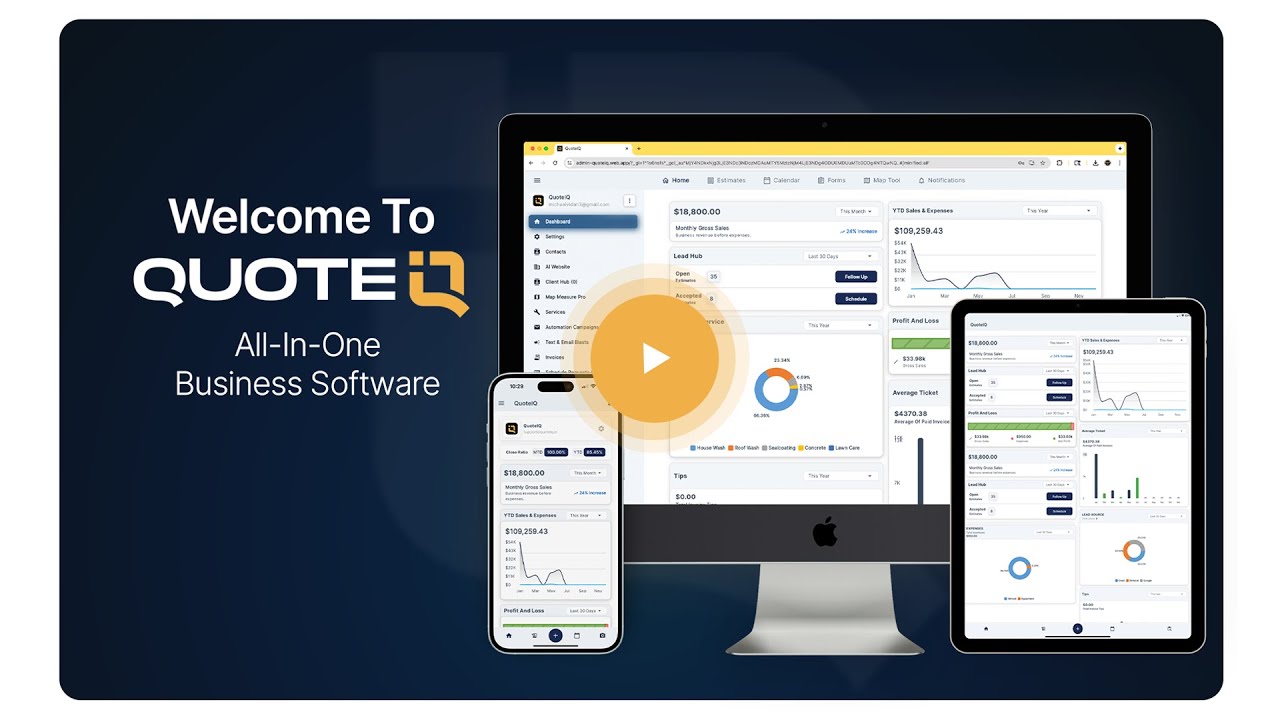
Watch: What is QuoteIQ? (3-minute overview)
A short walkthrough of how QuoteIQ replaces the stack of disconnected tools most pest control contractors use to run their service business.
Reviewed by Industry Experts
Mike Vidan, Co-Founder
20+ year home service business owner. Built one of the largest pressure washing and home service contractor audiences on YouTube, teaching contractors how to start, scale, and operate service businesses including pest control operations.
Read full bio →Justin Rogers, Co-Founder
Serial entrepreneur and founder of the ForeverSelfEmployed brand. Built one of the most-watched YouTube channels in the home service industry, sharing real-world strategies for running profitable service businesses.
Read full bio →Real Pest Control Customer Reviews — 4.7★ across 4,100+ verified reviews
“From quote generation to follow-ups, this CRM simplifies my pest control workday. Organized, efficient, and makes me look super professional every time.”
“I have a lawncare business, was unorganized, but QuoteIQ changed everything. Estimates, scheduling, billing and invoicing are seamless. Tax prep easier. Best CRM by functionality and price.”
“Amazing tool for my pressure washing business. I can’t express how valuable this is. I am able to make quotes very quickly and efficiently. This app has helped me so much. And it keeps everything so organized. Thank you quote IQ”