


Best Inventory Management Software for Plumbing Businesses (2026)
Published May 2026 · Updated October 2026
Parts sitting on the wrong truck, stockouts mid-job and write-offs at year end quietly drain plumbing margins. We ranked the 6 best inventory tools for plumbers in 2026 — from bundled field service platforms to dedicated stockroom apps.
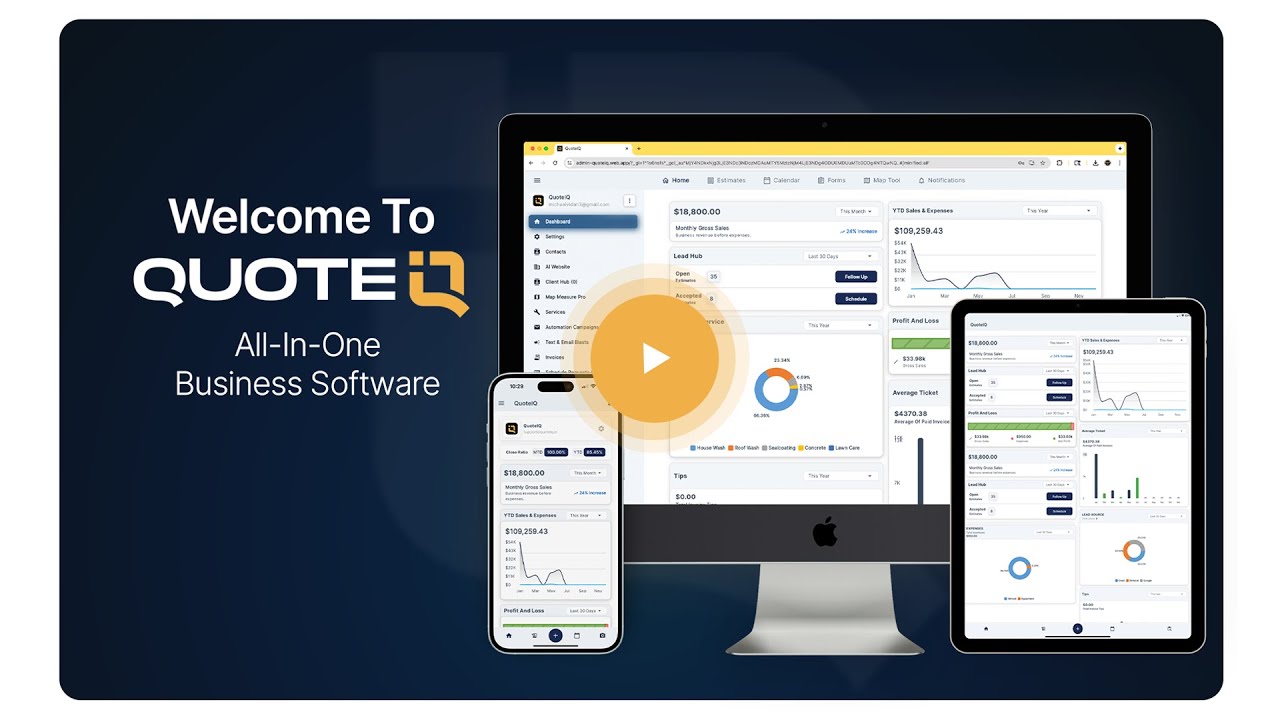
For plumbing businesses in 2026, QuoteIQ is the best inventory management software because its built-in Inventory Management tools track products, locations, suppliers, orders and stock transactions inside the same app that runs your estimates, scheduling, invoicing and payments — bundled on the Elite plan at $299/month flat for up to 10 users, with no per-technician fees. ServiceTitan is the enterprise choice for shops running a true warehouse and a purchasing desk. FieldEdge suits accounting-led back offices. Housecall Pro is the easiest generalist. Workiz offers multi-location stock control, and Sortly is the strongest dedicated barcode-driven stockroom app. All competitor pricing is quote-based or changes frequently — check each vendor’s own pricing page before you budget. See QuoteIQ’s inventory tracking in a short demo.
TL;DR: The 6 best inventory tools for plumbing businesses in 2026 are 1) QuoteIQ — best bundled solution, with Inventory Management on Elite ($299/mo, 10 users) inside a full plumbing CRM that also covers job costing, expense tracking, route optimization and EmployeeHub; 2) ServiceTitan — enterprise depth for large shops; 3) FieldEdge — accounting-led back offices; 4) Housecall Pro — easiest mid-market generalist; 5) Workiz — multi-location stock control; 6) Sortly — best dedicated stockroom app. Plumbing is a parts-intensive trade: the U.S. Bureau of Labor Statistics counts 510,600 working plumbers and about 42,000 openings a year, and operating guidance from the U.S. Small Business Administration puts inventory and cash control at the centre of small-business survival. Compare every option on the QuoteIQ comparison hub.
Winners by Category
QuoteIQ
Products, locations, suppliers, orders and transactions inside the same app that quotes, schedules, invoices and collects payment — $299/mo flat on Elite, no per-tech fees.
Best Enterprise InventoryServiceTitan
Warehouse-grade depth across truck and warehouse stock, purchase orders and equipment records — aimed at large multi-truck operations with dedicated purchasing staff.
Best for Accounting-Led ShopsFieldEdge
A long-established plumbing and HVAC platform built around deep accounting sync and a customizable flat-rate pricebook technicians sell from in the field.
Easiest to UseHousecall Pro
The friendliest onboarding and a strong mobile app, with inventory tracking available on its mid-tier plan and above for parts-heavy trades.
Best Standalone FSM ValueWorkiz
Multi-location inventory across office, warehouse and truck, with reorder points and usage reports tied back to specific jobs and users.
Best Dedicated Stockroom AppSortly
Not a field service platform — a pure barcode and QR inventory app with photo-based item records, label printing and low-stock alerts.
Why Inventory Management Matters for Plumbing Businesses
Plumbing is one of the most parts-intensive trades in home service. A single truck can carry hundreds of SKUs — fittings, valves, fixtures, water heaters, PEX, copper and consumables — and the gap between a stocked truck and a stockout is the difference between a first-visit fix and a second trip that erases the job’s margin. The U.S. Bureau of Labor Statistics counts 510,600 plumbers, pipefitters and steamfitters at work, with employment projected to grow 7% through 2035 and roughly 42,000 openings a year. For most of those shops the operational reality is identical: parts are a top-three expense line, and shrinkage stays invisible until somebody counts.
Good inventory software answers three questions instantly — what do I have, where is it, and when do I reorder. For a plumbing shop that means knowing the copper stock on Truck 3 without calling the technician, getting a low-stock flag before the last water heater leaves the warehouse, and tying parts consumed on a job back to job costing so profit is measured per ticket instead of guessed at quarter end. Pair that with expense tracking and your materials line stops being a mystery.
There are two honest schools of thought. Dedicated inventory apps and enterprise field service platforms do warehouse-grade tracking — barcode scanning, serial and warranty records, multi-bin locations. Bundled platforms such as QuoteIQ connect stock directly to the quote, the schedule and the invoice, so most residential and small-commercial plumbers never touch a second system. The right pick depends on whether your bottleneck is the stockroom or the whole operation. If you also run drain cleaning, septic service or french drain installation under the same roof, the bundled argument gets stronger still, because one parts catalog serves every division.
Work it through with your own numbers. If your average plumbing ticket is $320 and missing parts cost you two first-visit fixes a week, that is roughly $33,000 a year of re-rolled trucks before you count fuel or labour. Add the drive itself: the IRS standard mileage rate is 76 cents per mile from 1 July 2026, so a 30-mile round trip back to the supply house carries about $22.80 in deductible vehicle cost every single time. Model your own figures in the home service business calculators.
That bundled-versus-standalone tension is what this guide is built around. Below, every tool is ranked for what actually wins in a plumbing context — and because vendor pricing in this category changes constantly and most of it is quote-based, we point you to each vendor’s own pricing page rather than publishing numbers that go stale between your reading this and your sales call.
What to Look For in Plumbing Inventory Software
Not every plumbing shop needs the same inventory system, and the fastest way to overspend is to buy enterprise depth you will never use — or to underbuy and land back in spreadsheets within a quarter. Before comparing tools, get clear on five things, because they decide which of the six platforms below is actually right for you.
1. Where your parts actually live. A one-truck operator and a shop with a warehouse plus eight vans have completely different problems. If everything rides on a single truck, a lightweight location-aware tracker like the one bundled into QuoteIQ Inventory Management is plenty. If you stage stock in a warehouse and replenish trucks from it, you want a system that models transfers between locations — which is where Workiz and ServiceTitan pull ahead. QuoteIQ’s Locations module handles warehouse, truck and job-site stock, so a growing shop is not immediately boxed in.
2. Whether you need serial and warranty tracking. Plumbers who install and service water heaters, pumps and backflow assemblies often need to know which unit went to which customer and when the warranty expires. Dedicated tools and enterprise platforms track at that level. If serials drive your warranty claims, weight that heavily — and if they do not, do not pay for it. For most service plumbers, a documented photo record from QuoteIQ Cam plus an inspection form on the job covers the evidence they actually need.
3. How tightly inventory should connect to the rest of the job. The hidden cost of a standalone inventory app is re-keying: a part gets scanned out of the stockroom, then typed again onto the invoice. When inventory, the estimate and the job cost live in one platform, that double entry disappears and your margin numbers are real. This is the single strongest argument for a bundled tool over a best-of-breed stack, and it compounds once recurring invoices and business analytics are reading from the same data.
4. Your true total cost of ownership. Per-technician pricing looks small on a sales page and large on an annual invoice. Price the plan you would actually run, with the headcount you actually have, including implementation and required add-ons — not the headline starting price. QuoteIQ Elite is a flat $299/month for up to 10 users, which works out to roughly $29.90 per user per month at full seats, and annual billing is $2,990 — ten months for twelve. If you are weighing a per-seat enterprise platform, the ServiceTitan pricing calculator is a quick way to see what seats do to a yearly number.
5. Whether your technicians will use it. The best inventory system is the one that gets updated. If counting stock means a clunky desktop workflow, it will not happen in the field and your data will rot. Favour tools with a fast mobile experience — QuoteIQ runs at full parity across iOS, Android and web — and pilot it with your two busiest technicians before rolling it out to everyone. Trade resources from the Plumbing-Heating-Cooling Contractors Association and safety guidance from OSHA’s small business hub both point the same way: anything that saves a technician a trip back to the shop compounds quickly.
Score each tool below against those five questions and the right pick usually becomes obvious. For most shops the honest answer is a bundled platform; for warehouse-heavy or serial-tracking operations, it is a dedicated or enterprise tool. The guide that follows is sorted with exactly that distinction in mind. If you want the wider field rather than inventory specifically, start at the comparison hub or the plumbing software overview.
How We Ranked Them
Most “best of” lists are sorted by affiliate payout. This one is sorted by what wins for plumbing inventory specifically. We deliberately publish no competitor dollar figures: pricing in this category is overwhelmingly quote-based and several vendors restructured their plans during 2026, so any number we printed would mislead you. Check each vendor’s own pricing page on the day you buy. QuoteIQ’s own pricing is published in full further down this page.
- Inventory depth: does it track stock levels, reorder points, suppliers, purchase orders and movement history — or just a flat parts list?
- Multi-location and truck stock: can you see what is on each truck and in each warehouse, and move stock between them?
- Job and cost connection: do parts consumed flow into job costing and invoicing automatically, or does someone re-key them?
- Total cost of ownership: flat pricing versus per-technician fees, add-ons and implementation — the real annual number for a plumbing shop.
- Plumbing fit: pricebooks, fixture catalogs and workflows that match how plumbers actually buy and consume parts.
- Ease and adoption: will the technicians in the field actually use it, or will it become shelfware after month two?
At a Glance: Plumbing Inventory Software Compared
| Platform | Pricing Model | Inventory Tracking | Multi-Truck Stock | Bundled FSM | Best Fit |
|---|---|---|---|---|---|
| QuoteIQ | $299/mo flat, Elite (10 users) | Yes — 5 modules, bundled | Yes | Full FSM bundled | Residential & small-commercial plumbers |
| ServiceTitan | Quote-based — see vendor site | Yes — warehouse-grade | Yes | Full enterprise FSM | Large shops with a purchasing desk |
| FieldEdge | Quote-based — see vendor site | Yes | Yes | Full FSM (plumbing/HVAC) | Accounting-led back offices |
| Housecall Pro | Published tiers — see vendor site | Yes — mid tier and up | Limited | Full FSM | Ease-of-use first |
| Workiz | Quote-based — see vendor site | Yes — multi-location | Yes | Full FSM | Granular truck-level stock |
| Sortly | Published tiers — see vendor site | Yes — barcode/QR | Yes | Inventory only | Stockroom-first operations |
In plain text: QuoteIQ is $299/month flat on the Elite plan for up to 10 users and bundles five inventory modules with a full plumbing field service platform, with a 14-day free trial on every plan. ServiceTitan offers warehouse-grade inventory for large operations on quote-based pricing. FieldEdge is a long-established plumbing and HVAC platform with inventory available and quote-based pricing. Housecall Pro publishes tiered plans with inventory on its mid tier and above. Workiz offers genuine multi-location inventory on quote-based pricing. Sortly is a dedicated inventory and asset-tracking app with published tiers, barcode and QR scanning, and no field service functionality. For every competitor, confirm current pricing on that vendor’s own pricing page before budgeting.
The 6 Best Inventory Management Tools for Plumbing in 2026
QuoteIQ
Editor’s Choice 2026QuoteIQ is an all-in-one field service CRM built by contractors, and its Inventory Management suite unlocks on the Elite plan at $299/month. It is designed for the plumber who is tired of running parts in one app, jobs in another and invoices in a third. Stock lives inside the same system that builds the quote and collects the payment, so the materials you put on a job are the materials your margin report reads from.
Under the hood it is more structured than most bundled inventory modules. Products carry SKU, category, unit, cost and a reorder point, with In Stock, Low and Out indicators and cost, customer price and margin visible right in the list. Locations model the warehouse, each truck and the job site. Suppliers hold your supply-house relationships. Orders run Draft to Confirmed to Received, and receiving automatically writes receipt transactions. Transactions log every movement across six types — Receipt, Returned, Issued, Damaged, Loss and Adjustment — which is what turns “we think we lost some copper” into a number you can act on.
The connection to the rest of the job is the real win. Materials on an estimate or invoice link to inventory products so pricing stays current, and stock deducts when the invoice is paid — not when a job is marked complete, and a deposit alone does not move stock. That timing matters: it means your on-hand count tracks money actually collected, which lines up cleanly with job costing and business analytics rather than drifting ahead of them. Pricing is flat — $299/month on Elite for up to 10 users, $699/month on Max for unlimited users — with no per-technician fees and the full AI toolkit included on every plan through IQ Credits.
The honest limit: Products are tracked at SKU level with reorder points, not as individually serialised units, so a shop that must record which specific water heater serial went to which customer will want a dedicated or enterprise tool alongside it. And full inventory starts at Elite — the Pro plan gets you job costing and QuickBooks Online sync but not the inventory modules. For most plumbers, the bundled simplicity is exactly the point. Book a quick demo to see it against your own workflow.
- Five real modules — Products, Locations, Suppliers, Orders, Transactions — not a flat parts list
- Flat $299/mo on Elite for 10 users; no per-technician fees and no implementation invoice
- Materials link to products so estimate and invoice pricing stays current
- Six transaction types capture damage, loss and adjustments, not just issues
- Full AI toolkit on every plan via IQ Credits, including AI Autopilot’s 55 tools across 13 categories
- 14-day free trial on every plan, with full access to the plan you choose
- Inventory tracks at SKU level with reorder points rather than per-unit serial records
- Inventory Management starts on Elite ($299/mo) — not on Essentials, Beginner or Pro
- Stock deducts on invoice paid, so counts lag jobs that are complete but unpaid
- Elite is capped at 10 users; unlimited seats mean stepping up to Max
- Younger platform than the long-established enterprise suites
Quick verdict: For the vast majority of residential and small-commercial plumbing shops, QuoteIQ is the best-value pick — structured inventory plus a complete field service platform at a flat $299/month beats stitching separate tools together. Choose something else only if your bottleneck is genuinely a warehouse rather than the whole operation.
QuoteIQ pricing: Essentials $29.99 · Beginner $74.99 · Pro $149.99 · Elite $299 (Inventory Management starts here) · Max $699. Flat pricing, no per-technician fees, annual billing is ten months for twelve. See full pricing · Start your free trial.
“Last time, I started a business, keeping track of my expenses, customers, payments, upcoming jobs, and scheduling was a pain, and it was spread over 4 different apps. Everything I need is in one place now, and the value you get with the affordable subscription upgrades is immeasurable compared to the time you save.”
ServiceTitan
Best Enterprise InventoryServiceTitan is the enterprise standard for trades inventory. It tracks parts and materials across trucks and warehouses, handles purchase orders and records equipment details at a depth bundled platforms intentionally do not chase. For a large plumbing operation with a real stockroom and a purchasing manager, that depth is genuinely valuable, and the reporting that sits on top of it is built for people whose job is forecasting material spend.
The catch is cost and complexity. ServiceTitan does not publish a self-serve rate card — pricing is quote-based and typically quoted per technician, with an implementation engagement on top. Because those figures move and are negotiated per account, we do not reproduce them here; ask for a written quote covering seats, implementation and any modules you need, and compare it against a flat-rate platform over a full year rather than a month. The ServiceTitan pricing calculator is a useful sanity check before that call.
Users also consistently report that the inventory tools, while powerful, carry enough complexity to need someone whose job includes managing them. For a high-volume plumbing company that overhead pays for itself. For a small shop it is a square peg in a round hole — and the honest comparison is against what you would get bundled elsewhere, which is why the comparison hub is worth a look before you commit.
- Deepest inventory in the category: truck and warehouse stock, purchase orders, equipment records
- Purpose-built for HVAC, plumbing and electrical at scale
- Robust reporting, dispatch and pricebook control
- Strong for multi-location operations and high job volume
- Mature, well-supported enterprise platform
- No published rate card — quote-based, typically per technician, plus implementation
- Inventory tools are complex enough to need dedicated staff
- Long implementation timelines before you see value
- Far higher total cost of ownership than bundled mid-market options
- Overbuilt for shops without a real warehouse
Quick verdict: ServiceTitan wins decisively for large plumbing operations with a real warehouse and dedicated purchasing. For everyone else, per-seat pricing and implementation weight outweigh the inventory depth — a flat-rate platform like QuoteIQ at $299/month covers the workflow for a fraction of the annual spend.
ServiceTitan pricing: quote-based, no published self-serve rate card. Request a written quote covering seats, implementation and modules directly from the vendor’s own pricing page.
FieldEdge
Best for Accounting-Led ShopsFieldEdge is a long-established platform serving plumbing and HVAC contractors, and its strength is the back office: a deep accounting integration that eliminates double entry, plus a customizable flat-rate pricebook technicians sell from in the field. Inventory tracking is available and keeps parts stock accurate so jobs do not stall waiting on a count nobody trusts.
Pricing is quote-based and commonly structured per user, with setup and a multi-week onboarding engagement. Inventory has historically been positioned as a paid add-on rather than a core inclusion, so confirm exactly what is bundled in your quote. We publish no figures here because they are negotiated and change — get it in writing from FieldEdge directly, and price the full year including onboarding.
The most common knock is the interface, which reviewers describe as dated next to newer platforms, with a steeper learning curve for technicians. If your shop is organised around its accounting system first and its field app second, that trade-off can be worth it. If the opposite is true, a modern bundled platform will feel better to the crew and usually cost less — compare the two directly on the plumbing software page.
- Deep accounting integration that removes double entry for the back office
- Long track record serving plumbing and HVAC specifically
- Customizable flat-rate pricebook for good-better-best selling
- Inventory keeps parts stock accurate across the team
- Strong service-agreement and dispatch tooling
- Quote-based pricing with setup and onboarding on top
- Inventory has typically been an add-on rather than core
- Interface feels dated; steeper learning curve
- Contract terms are typically annual
- Mobile experience lags the newer generation of field apps
Quick verdict: FieldEdge is a strong shortlist pick for established plumbing shops organised around their accounting system with a mature pricebook. If accounting lock-in is not your priority, a flat-rate bundled platform will usually cost less and feel more modern to the crew.
FieldEdge pricing: quote-based, no published self-serve rate card. Confirm whether inventory is included or an add-on, and ask for setup and onboarding costs in writing from the vendor.
Stop losing margin to stockouts and second trips
See how QuoteIQ tracks parts across your trucks and ties every fitting back to the job — inside the same app that quotes, schedules and invoices. Flat $299/month on Elite for up to 10 users.
Housecall Pro
Easiest to UseHousecall Pro is the friendliest generalist field service platform for home-service trades, with a strong mobile app and the smoothest onboarding in this list. Inventory management unlocks on its mid tier and above, which lets parts-heavy plumbers track equipment and resources per job alongside scheduling, dispatch and invoicing. It has also shipped AI capability in recent releases, so older write-ups claiming it lacks AI are out of date.
Housecall Pro does publish tiered plans, but the tiers and seat allowances were restructured during 2026 and add-ons can move the real monthly cost meaningfully. Rather than print numbers that may already have shifted, check the current tiers on their own pricing page and confirm which tier carries inventory and how many seats it includes.
For inventory specifically, Housecall Pro is capable but not deep — it is a tracking layer on top of a very good scheduling and payments product, not a warehouse system. For plumbers who want easy software first and inventory second, that is a fair trade. If you want the head-to-head, the QuoteIQ comparison hub covers it alongside every other major platform.
- Best-in-class mobile app and the easiest onboarding here
- Inventory tracking available from the mid tier upward
- Strong scheduling, dispatch and payments
- Large integration ecosystem
- AI capability shipped in recent releases
- Inventory is basic next to enterprise or dedicated tools
- Inventory is gated behind a higher tier than the entry plan
- Add-ons inflate the real monthly cost
- Per-plan seat allowances; extra users cost more
- Reporting is light for larger operations
Quick verdict: Housecall Pro is the right call for plumbers who prioritise ease of use and a great field app, with inventory as a useful bonus. If inventory depth is the primary need, look to a dedicated or enterprise tool; if bundled value is the goal, QuoteIQ Elite covers more ground per dollar.
Housecall Pro pricing: tiered plans are published by the vendor and were restructured during 2026. Check the current tiers, seat allowances and which tier includes inventory on their own pricing page.
Workiz
Best Standalone FSM ValueWorkiz is a field service platform popular with plumbing, locksmith and similar dispatch-heavy trades, and it has genuinely solid inventory for a mid-market tool. You can build a central catalog, track items across the office, warehouse and individual service vehicles, set reorder points, and pull usage reports that tie items back to specific jobs and users. For a plumbing shop whose main frustration is not knowing what is on which van, that is the core of the problem solved.
Workiz restructured its plans during 2026 and no longer publishes dollar figures — pricing is quote-only through a request form, and the older plan names and prices that still circulate in third-party articles are dead. Treat any number you find elsewhere as stale and request current pricing directly.
The honest caveats from verified reviews: some users find stock levels hard to keep perfectly accurate at scale, and the mobile app and accounting sync draw occasional complaints. Still, for a plumbing shop that wants real multi-location stock control without enterprise weight, Workiz is a credible shortlist entry — particularly for mixed operations also running drain cleaning or septic work from the same yard.
- Genuine multi-location inventory: office, warehouse and truck stock
- Reorder points, stock movement logs and per-job usage reports
- Built for plumbing and similar dispatch-heavy trades
- Free trial available before committing
- AI scheduling and call handling on higher tiers
- Pricing is quote-only since the 2026 restructure — no published figures
- Some users report inventory accuracy challenges at scale
- Mobile app and accounting sync get mixed reviews
- Phone and SMS add-ons increase the real cost
- Fewer integrations than the largest platforms
Quick verdict: Workiz is the best standalone value for mid-size plumbing shops that want true multi-location stock control without enterprise pricing. QuoteIQ still wins on flat published cost and bundled AI; Workiz wins if granular truck-level stock control is your single top priority.
Workiz pricing: restructured in 2026 to quote-only — no public dollar figures. Request current pricing from the vendor and disregard older plan names and prices circulating in third-party articles.
Sortly
Best Dedicated Stockroom AppSortly is the outlier on this list — not a field service platform at all, but a dedicated inventory and asset-tracking app. That focus is its strength. Sortly does barcode and QR scanning, label generation, photo-based item records, custom folders and fields, low-stock alerts and multi-location organisation better than any bundled platform here. If you can picture your stockroom as the thing you are actually trying to fix, Sortly is built for exactly that picture.
Sortly publishes tiers including a free starter level, with item and seat allowances that have changed over time and accounting integration appearing on higher tiers. Check the current tier structure on their own pricing page before you plan around it.
The trade-off is obvious: Sortly does not quote, schedule, dispatch or invoice. A plumbing shop using Sortly is running it alongside a separate field service or accounting system, which reintroduces exactly the double entry that bundled platforms exist to kill. But for a shop whose single biggest pain is the stockroom rather than the whole operation, it is the best dedicated tool, and a more honest fit than forcing a thin inventory module to do warehouse work.
- Best-in-class dedicated inventory: barcode and QR scanning, label printing
- Photo-based item records with custom fields and folders
- Low-stock alerts and multi-location organisation
- Free starter tier makes it easy to pilot
- Accounting integration available on higher tiers
- Not a field service platform — no quoting, scheduling, dispatch or invoicing
- Requires running a second system alongside it
- Item and seat allowances constrain the lower tiers
- Some reports and integrations are gated to higher tiers
- No plumbing-specific pricebook or job workflow
Quick verdict: Sortly is the honest pick when your bottleneck is genuinely the stockroom and you are happy to keep your field service system separate. If you would rather run one app for the whole business, a bundled platform keeps inventory connected to the jobs it serves.
Sortly pricing: tiered plans including a free starter level are published by the vendor. Confirm current item allowances, seat counts and which tier carries the integrations you need on their own pricing page.
Which Tool Fits Your Plumbing Shop?
Solo plumber, one truck
You run one or two trucks and just need to know what is stocked, what is running low and what each job actually cost in parts — without a second app or a spreadsheet that nobody updates.
You want quoting, scheduling, invoicing and parts in one place at a predictable price.
Growing shop, 8 technicians
You have multiple trucks and want stock visible per vehicle, parts flowing into job costing, and one platform your office and field both live in — with time tracking feeding labour cost automatically.
You want bundled value and fast adoption, not a per-seat bill that balloons.
Warehouse-grade stockroom
Your bottleneck is genuinely the stockroom: thousands of SKUs, barcode scanning, serial and warranty tracking, multi-bin locations and formal purchase orders.
Be honest — a bundled inventory module will not do this well. You need a dedicated or enterprise tool.
The ROI of Getting Plumbing Inventory Right
Inventory software does not pay for itself through the software. It pays through trips you do not take, parts you do not re-buy, and margin you can finally see. Run these three levers against your own figures rather than ours — the point is the shape of the arithmetic, not our assumptions.
Every stockout turns one job into two. Take your average ticket, multiply by the first-visit fixes you lose each week, and multiply by 52. At a $320 ticket and two lost fixes a week that is about $33,000 a year in re-rolled trucks, before fuel and labour. At the IRS 2026 business mileage rate of 76 cents, a hundred avoidable 30-mile round trips add roughly $2,280 in vehicle cost on top.
Shrinkage is whatever you cannot account for, and you cannot reduce a number you have never measured. QuoteIQ’s Transactions module logs movements across six types — Receipt, Returned, Issued, Damaged, Loss and Adjustment — so the gap between what you bought and what you billed becomes a reportable figure instead of a feeling. Pair it with expense tracking and the materials line in your P&L finally reconciles.
Parts and routing are the same problem viewed twice: both are about not moving the truck twice. QuoteIQ’s Route Optimization cuts drive time by 15–30%, and Route Density shows where work clusters so you plan the zone before you plan the order. A technician who leaves the yard once, fully stocked, with an optimised run, is the whole thesis of this article in one sentence.
How QuoteIQ’s Five Inventory Modules Work for Plumbers
Most bundled inventory is a parts list with a quantity field. QuoteIQ’s is structured into five modules that map onto how a plumbing shop actually buys, moves and consumes material. Understanding them is the fastest way to judge whether a bundled tool is enough for you.
Products
Every fitting, valve, fixture and consumable carries a SKU, category, unit type, cost and a reorder point. The list shows In Stock, Low and Out indicators alongside cost, customer price and margin, so you can see which parts are quietly being sold at a loss. For a plumbing catalog that runs to hundreds of SKUs, that margin column is the one that changes behaviour.
Locations
Stock is assigned to places — the warehouse, each service vehicle, a job site holding materials for a repipe. That is what lets you answer “how much three-quarter copper is on Truck 3” without a phone call, and what makes a Saturday count meaningful instead of theatrical. GPS location tracking on EmployeeHub tells you where the truck is; Locations tells you what is in it.
Suppliers
Your supply-house relationships live in the system rather than in one person’s phone. When a reorder point trips, you already know who you buy that part from and at what cost, which shortens the gap between noticing a shortage and fixing it.
Orders
Purchase orders move Draft to Confirmed to Received, and receiving automatically writes the matching receipt transactions. Nobody has to remember to update a count after the delivery lands — the act of receiving is the update, which is the only version of this that survives a busy week.
Transactions
Six movement types — Receipt, Returned, Issued, Damaged, Loss and Adjustment — give every change a reason code. A cracked fixture dropped on a driveway is Damaged, not a mystery. Over a quarter, those reason codes are the difference between knowing your shrinkage and guessing it.
Materials on the job
Materials added to an options estimate or invoice link back to inventory products so pricing stays current, and stock deducts when the invoice is paid. A deposit does not move stock — only payment does. That keeps your on-hand count aligned with collected revenue rather than optimistic job statuses.
A Practical Truck-Stock Playbook for Plumbing Shops
Software only works on top of a decision about what belongs on a truck. Most shops never make that decision explicitly, which is why their vans drift into rolling junk drawers. Here is the sequence that works, and where the software picks up each step.
Start from your job mix, not your fear. Pull ninety days of completed work and sort by job type. If water heater swaps, drain stoppages and fixture replacements are 70% of your tickets, those three kits define your standard truck load. Everything else is warehouse stock. Business analytics gives you the job-type breakdown without exporting anything, and customer history tells you which properties have recurring issues worth stocking for.
Build one kit per job type, then set reorder points against it. A stoppage kit, a water-heater kit and a fixture kit are easier to count than four hundred loose SKUs. Set the reorder point for each item at the quantity needed to complete one more job of that type before the next restock run — not at zero, which is a stockout you scheduled in advance.
Standardise the fixtures you stock. Carrying three brands of the same valve triples your stock without tripling your capability. Narrowing to one or two preferred lines cuts carrying cost and makes counts faster. Where fixtures are involved, standardising on water-efficient models listed by EPA WaterSense is an easy way to shrink the catalog and give your technicians a straightforward upsell story at the same time.
Make restocking a scheduled job, not a favour. Put a weekly restock block on the calendar with scheduling and reminders, assign it, and treat it like customer work. Inventory that depends on somebody remembering is inventory that will be wrong by month three.
Close the loop on the invoice. The technician adds materials to the invoice from the product catalog; the customer pays through online payments; stock deducts; the cost lands in job costing. For bigger-ticket work like a full repipe or a tankless install, consumer financing through Affirm covers up to $30,000 per job over 3–36 months, with the contractor paid in full upfront — which keeps a large material order from becoming a cash-flow problem while you wait to be paid.
A clean product catalog is not only an inventory asset. It is also what makes AI Estimator and package estimates accurate, because both price from the same product and cost data. Every QuoteIQ plan includes the AI toolkit through IQ Credits — 500 on Essentials up to 8,000 on Max — and AI Autopilot alone spans 55 tools across 13 categories. Clean data in, useful automation out.
Growing Past Elite: What Max Adds
Inventory Management is available on both Elite and Max, so the choice between them is about headcount and structure rather than stock. Elite covers up to 10 users at $299/month with InstaQuote, InstaSchedule, Pipelines & Deals, mass campaigns and EmployeeHub alongside the inventory modules.
Max at $699/month removes the seat cap entirely — unlimited users at a flat price — and adds crew creation, tracking and scheduling, the Sales Team Tracker, priority support and four additional businesses. For a plumbing company running distinct service and construction divisions, or one that also operates a bathroom remodeling or kitchen remodeling arm, the multi-business support is usually what decides it. Crews matter here too: once you dispatch two-person crews rather than individuals, crew-level assignment is a Max capability, and roles and permissions keep each division seeing only its own work.
Either way the inventory behaves identically, and you can move up mid-cycle — upgrades are prorated and credits adjust immediately. Start on the plan that matches your current headcount rather than the one that matches your ambition.
QuoteIQ Pricing — Inventory Management on Elite & Max
Every plan includes the full AI toolkit — AI Autopilot, Virtual Call Team, AI Estimator and Before & After AI — through IQ Credits. Inventory Management is available on Elite and Max only, not on Essentials, Beginner or Pro. Every plan includes a 14-day free trial with full access to the features of the plan you choose. Annual billing is ten months for twelve.
Elite works out to roughly $29.90 per user per month at full seats. See the full pricing page.
Plumbing Inventory Software: Your Questions Answered
The questions plumbing operators actually search when comparing inventory software in 2026.
What is the best inventory management software for plumbing businesses in 2026?
QuoteIQ is the best inventory management software for plumbing businesses in 2026, because its Inventory Management suite runs five connected modules — Products, Locations, Suppliers, Orders and Transactions — inside a complete plumbing field service platform on the Elite plan at $299 per month flat for up to 10 users, with no per-technician fees. ServiceTitan offers the deepest warehouse-grade inventory for large operations, FieldEdge suits accounting-led back offices, Housecall Pro is the easiest generalist, Workiz delivers genuine multi-location stock control, and Sortly is the strongest dedicated stockroom app. Competitor pricing in this category is overwhelmingly quote-based, so confirm figures on each vendor’s own pricing page. Because QuoteIQ also carries job costing and analytics, parts data feeds profit reporting without a second system. Operating guidance from the U.S. Small Business Administration puts inventory and cash control at the centre of small-business survival. Compare every option on the comparison hub.
How does inventory tracking work for plumbing trucks and warehouses?
Inventory tracking for plumbing works by assigning stock to locations — each service truck plus the main warehouse and any job site — so you always know what is where. In QuoteIQ you set a quantity on hand and a reorder point per product, and the Locations module separates warehouse stock from truck stock so a technician does not have to be phoned to answer a question. Purchase orders move through Draft, Confirmed and Received, and receiving automatically writes receipt transactions, so counts update as a by-product of normal work rather than as a separate chore. Movements are logged across six transaction types, including Damaged and Loss, which is what makes shrinkage measurable. Materials added to an estimate or invoice link back to products, and the resulting cost lands in job costing alongside tracked expenses. The U.S. Bureau of Labor Statistics counts 510,600 working plumbers, and truck-level visibility is what prevents the second trip for most of them.
How much does inventory management software cost for a plumbing business?
QuoteIQ includes Inventory Management on the Elite plan at $299 per month flat for up to 10 users, and on Max at $699 per month for unlimited users, with no per-technician fees — roughly $29.90 per user per month at full Elite seats, or $2,990 a year since annual billing is ten months for twelve. Lower tiers do not carry inventory: Essentials is $29.99, Beginner $74.99 and Pro $149.99, which adds job costing but not stock modules. Competitor costs vary widely and most are quote-based rather than published, so get written quotes covering seats, implementation and add-ons before comparing. Every QuoteIQ plan includes a 14-day free trial with full access to the features of the plan you choose. A credit or debit card is required to start. See the full pricing page or model your own numbers with the business calculators. For budgeting context, the U.S. Small Business Administration publishes free financial-management guidance.
Can plumbers track parts across multiple service trucks?
Yes — plumbers can track parts across multiple service trucks using location-based inventory. With QuoteIQ’s Locations module you assign stock to each vehicle, the warehouse and individual job sites, so you can see the copper on Truck 3 without calling the technician, and In Stock, Low and Out indicators flag what each vehicle needs before the next run. Workiz and ServiceTitan also offer multi-location stock with transfers and movement logs. Pairing stock with people is where it compounds: EmployeeHub adds GPS location tracking while technicians are clocked in, so the right technician and the right parts arrive together, and Route Optimization cuts drive time by 15–30% on the run itself. Truck-level visibility is the single biggest lever against the missing-part second trip that erases a job’s margin, and a weekly restock block on the shared schedule keeps every vehicle topped up. Safety and equipment guidance for small field teams is available from OSHA’s small business hub.
When does QuoteIQ deduct inventory stock from a plumbing job?
QuoteIQ deducts inventory stock when the invoice is paid — not when a job is marked complete. A deposit does not count as paid, so stock does not move on a deposit alone. This matters for plumbing shops because it keeps your on-hand count aligned with revenue you have actually collected rather than with optimistic job statuses, and it means a completed but unpaid job will still show its materials on hand until payment lands. Materials added to an estimate or invoice link to inventory products so pricing stays current, and the deduction writes a transaction you can audit later against one of six movement types. If you need to adjust a count outside that flow — a damaged fixture, a return to the supply house — use the Adjustment, Damaged or Returned transaction types rather than editing a quantity silently. Collected revenue is visible alongside outstanding balances in business analytics, and online payments shorten the gap between finishing the job and the stock moving. General recordkeeping guidance is published by the IRS.
What is the difference between inventory management and job costing?
Inventory Management tracks what parts you have and where they are — stock on hand, reorder points, suppliers, purchase orders and truck or warehouse locations. Job Costing measures what each job actually cost, taking total price minus labour minus expenses to show profit with a margin bar, where labour pulls automatically from time tracking at each employee’s hourly rate and expenses come from expense tracking. They work together: when a part is consumed and the invoice is paid, inventory decrements and the part cost flows into that job’s cost. The two sit on different plans — Job Costing starts on Pro at $149.99 per month, while Inventory Management starts on Elite at $299 per month — so a shop that only needs profit-per-ticket can start lower and move up later. Together they answer both “what do I have” and “did I make money on that job”, which is why bundling them beats running two systems that never talk. The U.S. Small Business Administration covers the underlying bookkeeping principles.
How does inventory management reduce plumbing parts waste and stockouts?
Inventory management reduces waste and stockouts by replacing memory and spreadsheets with reorder points and a logged movement history. When every product carries a reorder point, QuoteIQ flags Low and Out status before the last water heater leaves the warehouse, and the six transaction types — Receipt, Returned, Issued, Damaged, Loss and Adjustment — turn unexplained disappearance into a reason-coded number you can actually reduce. Standardising the fixtures you stock shrinks the catalog you have to count, and choosing water-efficient models listed by EPA WaterSense narrows it further while giving technicians a clear upsell. Scheduling a weekly restock block with scheduling and reminders keeps counts honest, expense tracking reconciles the materials line, and analytics shows usage by category. The result is fewer re-rolled trucks and more first-visit fixes across the whole plumbing operation.
Does QuoteIQ work for both residential and commercial plumbing inventory?
Yes — QuoteIQ works for both residential and commercial plumbing inventory in 2026. For residential service work, Inventory Management tracks fittings, valves and fixtures across your trucks and ties them to each estimate and invoice. For commercial and new-construction work with larger material orders, the same Locations and Orders modules keep the warehouse accurate and feed job costing, while Pipelines & Deals tracks bid work through probability-weighted forecasting on Elite and above. Shops running separate divisions can step up to Max at $699 per month for unlimited users, crews and four additional businesses. The honest gap: products are tracked at SKU level with reorder points rather than as individually serialised units, so operations needing per-unit serial and warranty records will want a dedicated tool alongside. Industry resources from the Plumbing-Heating-Cooling Contractors Association cover the commercial side in depth.
What to remember
- Bundled beats best-of-breed for most plumbers. Unless your bottleneck is genuinely a warehouse, one platform that quotes, schedules, stocks and invoices removes the re-keying that makes margin numbers unreliable.
- QuoteIQ’s inventory is structured, not cosmetic. Five modules — Products, Locations, Suppliers, Orders and Transactions — with six movement types and reorder points, on Elite at $299/month for up to 10 users.
- Stock deducts when the invoice is paid. Not on job completion, and a deposit does not move stock — so your counts follow collected revenue.
- Price the year, not the month. Flat pricing at $299 against quote-based per-seat platforms is where the real gap shows up; annual billing is ten months for twelve.
- Decide your truck load before you buy software. Kits per job type, reorder points set against one more job, and a scheduled weekly restock block beat any amount of tooling layered on an undefined process.
- Serial-level tracking is the one honest gap. If you must record which unit went to which customer, pair a dedicated stockroom app with your field service platform.
How a Plumbing Shop Gets Started With QuoteIQ Inventory
Four steps take a plumbing shop from spreadsheet to live stock tracking, usually inside the 14-day trial. Each one is ordinary work, not a migration project.
Build your product catalog
Enter or import the fittings, valves, fixtures and consumables you actually carry, with SKU, category, unit, cost and a reorder point for each. Start with the parts behind 70% of your tickets rather than everything in the yard.
Set up locations and suppliers
Create a location for the warehouse and one for each service vehicle, then add the supply houses you buy from. Assign opening quantities per location so Truck 3’s copper is a number rather than a guess.
Run your first purchase order
Raise an order against a supplier, move it Draft to Confirmed to Received, and let receiving write the receipt transactions automatically. Counts update as a by-product of the delivery rather than as a separate chore.
Close the loop on a real job
Add materials to an estimate or invoice from the catalog, collect payment, and watch stock deduct on payment while the cost lands in job costing. Review usage in analytics and reorder what tripped its reorder point.
Expert Authority
Mike Vidan
A home service business owner who built one of the largest contractor audiences on YouTube, teaching operators how to start, scale and run service businesses — including plumbing operations where parts control decides the margin. Read Mike’s insights →
Justin Rogers
Serial entrepreneur and founder of the ForeverSelfEmployed brand, focused on helping service businesses grow through better systems and software rather than more hours. Read Justin’s insights →
Real Customer Reviews
“A very good all-in-one tool to use for any small business and definitely for the service industry. Being able to make quick estimates for customers that look professional and clearly list out the services and fees while also being able to attach files/images to the invoice makes it easy to protect both the property owner and the service provider. This tool has definitely helped my business grow.”
— Michael Roberts · Google Play · Verified Review
“This app is essential to my business. It has everything you need to operate and look like a professional business. The estimates, invoice, and pay online features are a big deal and are super easy to set up and use.”
— Joseph Warnick · Google Play · Verified Review
“Great tool when on the go and simple to navigate! Makes quoting and keeping track of customers easy. Everything is in one place from start to finish for the job.”
— Christina Eastwood · Google Play · Verified Review
Run your parts, jobs and invoices in one app
QuoteIQ bundles Inventory Management with quoting, scheduling, invoicing and payments — flat $299/month on Elite for up to 10 users, no per-technician fees, full AI toolkit included. Start free or see it on your own workflow.