



Published May 2026 · Updated September 2026
Electrical contractors live and die by accurate estimates, fast dispatch, and bulletproof job documentation. We tested 10 CRMs against the daily reality of running an electrical shop — pricing, mobile usability, scheduling depth, accounting sync, and trade-specific tooling — to surface the ones actually built for the work.
The best CRM for electrical businesses in 2026 is QuoteIQ — a single platform that consolidates estimating, scheduling, invoicing, field documentation, and AI-driven customer follow-up for solo electricians through 15-employee shops, starting at $29.99/mo. QuoteIQ’s AI Estimator, InstaQuote forms, and built-in QuoteIQ Cam job documentation map cleanly to how residential and light-commercial electrical work actually runs. ServiceTitan remains the default for 20+ technician electrical operations with dedicated office staff to manage its complexity. For the 1–15 employee band where most electrical contractors live, QuoteIQ replaces four or five separate tools at a lower total cost. Jobber and Housecall Pro are strong general-purpose alternatives, while FieldEdge and Workiz round out the mid-market.
TL;DR: QuoteIQ wins for 1–15 employee electrical shops because the tools electricians actually use every day — line-item estimating, scheduling, invoicing, photo documentation, consumer financing, and the full AI suite — are in one subscription instead of four, with published pricing from $29.99 to $699/mo. ServiceTitan still owns enterprise dispatch above 20 technicians. Jobber and Housecall Pro are polished generalists whose per-user and per-tier math climbs as you hire. With electrician employment projected to grow 9% through 2035 and code compliance governed by NFPA 70, the shops that document and quote fastest are the ones that capture the demand.
Two vendors on this list publish complete, self-serve pricing that we re-verified against their own pricing pages on 15 September 2026: QuoteIQ and Jobber. Housecall Pro publishes plan pricing as well. Everyone else on this list either quotes by phone or has pulled dollar figures off their public pricing page, so we describe those platforms without inventing a number. If a comparison article gives you a confident price for a quote-only vendor, treat it as an estimate, not a quote.
| Rank | Platform | Published Starting Price | Best For | Standout Feature |
|---|---|---|---|---|
| #1 | QuoteIQ | $29.99/mo | 1–15 employee electrical shops | All-in-one + AI Estimator + QuoteIQ Cam |
| #2 | ServiceTitan | Quote only — see their pricing page | Enterprise electrical (20+ technicians) | Deepest dispatch + reporting |
| #3 | Jobber | $49/mo (Core, 1 user, no commitment) | General-purpose SMB electrical | Polished UX + clean mobile app |
| #4 | Housecall Pro | $59/mo (Basic, 1 user, billed annually) | Residential electrical, consumer-facing booking | Strong online booking + financing on every plan |
| #5 | FieldEdge | Quote only — see their pricing page | Established shops on legacy accounting stacks | Flat-rate pricebook + service agreements |
| #6 | Workiz | Not published — request pricing | Shops with heavy inbound call volume | Built-in VoIP phone system (sold separately) |
| #7 | mHelpDesk | Quote only — see their pricing page | Crews working in low-signal environments | Offline mobile mode |
| #8 | Service Fusion | Quote only — see their pricing page | Multi-trade shops wanting flat-rate pricing | Unlimited users on every tier |
| #9 | FieldPulse | Quote only — see their pricing page | Growing 2–15 tech electrical operations | ClearPath step-by-step job workflow |
| #10 | Markate | Quote only — see their pricing page | Side-hustle / part-time electrical operators | Bare-essentials starter CRM |
Jobber and Housecall Pro figures in this guide were read directly off getjobber.com/pricing and housecallpro.com/pricing on 15 September 2026. Every other vendor’s numbers were removed rather than carried forward stale — six of the ten platforms here do not publish complete self-serve pricing. Vendor pricing changes often; confirm on the vendor’s own page before you sign anything. If you want to model the enterprise end of the range, our ServiceTitan pricing calculator and home service business calculators are free.
We’re QuoteIQ. We made this list. We also picked our own platform as #1 — here’s exactly why, with the trade-offs each tool brings to the table. Five evaluation criteria drove every ranking decision:
“The test is simple: can you be unreachable for two weeks without the business falling apart? Not slowing down — falling apart. If your answer is no, the business isn’t running. You are.”
— Justin Rogers, Co-Founder of QuoteIQ
Our data sources: Capterra, G2, the App Store, Google Play, each vendor’s official documentation and live pricing pages, BLS occupational data, and operator perspective from QuoteIQ’s Co-Founders Mike Vidan and Justin Rogers, both 20+ year service-business operators. Our full library of head-to-head breakdowns lives on the QuoteIQ comparison hub.
QuoteIQ is the platform we built because nothing else solved the full electrical contractor workflow without forcing you to bolt on three more tools. Estimating, scheduling, technician tracking, customer follow-up, online booking, photo documentation, and AI automations all run from one app on iOS, Android, and the web with full feature parity across all three. For 1–15 employee electrical shops, this is the all-in-one that replaces a stack of separate quoting, photo, email-marketing, and review-request subscriptions — and it does it with pricing you can read on a page rather than extract from a sales call.
Best for: Solo electricians through 15-employee residential and light-commercial shops that want one platform handling estimating, scheduling, photo documentation, customer communication, and review automation — without a stack of bolted-on tools. If you also run EV charger installation, generator installs, solar, or low-voltage security work alongside service calls, the same account covers all of it.
A $9,000 service upgrade is a financing conversation, not a price conversation. Because financing sits on every QuoteIQ plan rather than behind a top tier, a solo electrician on the $29.99/mo Essentials plan offers the same payment options as a fifteen-truck shop. Pair that with Options estimates — Good/Better/Best tiers on one document — and the close-rate math changes on every high-ticket quote you send.
Pros
Cons
“Speed and specificity, in that order. The contractor who sends a quote first has already set the customer’s expectations. By the time the second quote arrives, the customer is already comparing everything to the first one. That’s a real advantage.”
— Mike Vidan, Co-Founder of QuoteIQ
For electrical contractors specifically, that speed-and-specificity advantage is enormous. The shop that sends a clear, itemized estimate for a panel upgrade within two hours of the site visit consistently wins more jobs than the shop that takes three days — even at the same price. InstaQuote forms, the AI Estimator, and Quick Estimates collapse that turnaround window from hours to minutes, and e-signatures on every plan mean the customer can approve from their phone before you’ve left the driveway. For electrical work where customer urgency is high — loss of power, tripped breakers, panel concerns, EV charger deadlines — that responsiveness is the entire competitive edge.
Verdict: If you’re an electrical contractor with 1–15 employees, QuoteIQ replaces four or five separate tools at a lower total cost. Solo electricians start on Essentials at $29.99/mo. Two-person shops move to Beginner at $74.99/mo for QuoteIQ Cam and MapMeasure Pro. Growing teams land on Pro at $149.99/mo for ClientHub, job costing, and QuickBooks Online. Shops needing customer self-booking go to Elite at $299/mo, and 20-plus-technician operations compare Max at $699/mo with unlimited users against ServiceTitan. Every plan includes a 14-day free trial of that plan’s features.
ServiceTitan is the de facto enterprise field service platform for the major trades — HVAC, plumbing, and electrical — and it is used by some of the largest residential and commercial electrical operators in North America. The platform’s depth is unmatched: a genuinely industrial dispatch board, GPS fleet tracking, automated marketing, deep reporting, pricebook management with Good/Better/Best presentations, and capacity-planning tools. The feature surface takes weeks to learn. For 20-plus-technician electrical shops running a dedicated dispatcher and office team, this is the platform that scales. The trade-offs are cost, complexity, and an implementation timeline measured in months rather than days.
Best for: Electrical contractors with 20+ technicians, dedicated office staff to run dispatch, and the budget and patience to absorb an enterprise implementation. ServiceTitan does not publish pricing, so every evaluation starts with a sales call.
Pros
Cons
Verdict: If you have 20+ electrical technicians, a dedicated dispatcher, and budget for enterprise software, this is the platform. Below that threshold the ratio doesn’t justify the depth — QuoteIQ Max delivers most of the same daily workflow at a flat, published $699/mo including unlimited users, crew scheduling, and sales team tracking. Model both before you commit; our free ServiceTitan pricing calculator is a reasonable starting point.
Jobber is the polished general-purpose service CRM that earns its reputation honestly. It isn’t electrical-specialized, but it covers the core — quoting, scheduling, invoicing, and customer communication — with a clean interface electricians adopt without complaining, and it ships product improvements constantly. The electrical-specific gaps show up in two places: deep equipment and panel history tracking, and a pricing model that charges a different rate for the same plan at each team size, then layers add-ons on top of that.
Best for: Solo electricians and small electrical crews that prefer a generalist tool with great UX over a trade-specialized one — especially shops where customer-facing polish matters more than the depth of electrical-specific features.
Verified on Jobber’s own pricing page on 15 September 2026: Jobber sells four plans, and each plan carries a different rate at 1, 5, 10, and 15 users. On no-commitment monthly billing, Core is $49/mo for one user. Connect runs $139/mo for one user and $199/mo for a five-user team. Grow runs $199/mo for one user and $399/mo for a ten-user team. Plus starts at $499/mo for five users. Additional users are $29/mo each. One-year-commitment and prepaid-annual rates are lower on every tier. Three add-ons sit outside the plan price — Marketing Suite at $99/mo, Receptionist at $29/mo, and Pipeline at $49/mo — and all three are included on Plus. Jobber offers a 14-day free trial on the Grow plan.
Pros
Cons
Verdict: Strong all-rounder if you value UX polish and a wide integration ecosystem more than electrical-specific depth. QuoteIQ is typically more cost-effective for electrical contractors specifically — the AI Estimator, QuoteIQ Cam, route optimization, mass campaigns, and review automation are inside the subscription rather than sold as separate modules.
Housecall Pro built its reputation on the consumer side: a customer-facing booking experience that competes with mainstream home-services apps. For residential electrical contractors where booking conversion is the bottleneck, that focus pays off. Verified on their own pricing page on 15 September 2026, online booking, estimates, invoicing, payments, consumer financing, price book, job costing, and review management all sit on the entry-level Basic plan — a meaningfully more generous entry tier than it was a year ago. The mid-tier Essentials plan is where most growing electrical shops land, because that’s where routes, flat-rate pricing, employee GPS, photo reports, and accounting sync unlock. Basic is single-user, so adding even one apprentice forces the jump.
Best for: Residential electrical shops where booking conversion, consumer financing, and review volume matter more than technical depth or back-office reporting.
Pros
Cons
Verdict: The best pick if customer-side booking and financing are your bottleneck on residential electrical work. For backend operations depth and AI tooling — AI Autopilot, the AI Estimator, and Virtual Call Team on every plan — look at QuoteIQ. For enterprise dispatch, look at ServiceTitan.
FieldEdge is a long-established field service platform carrying real legacy trust with older HVAC, plumbing, and electrical contractors. Its standout differentiator is flat-rate pricebook depth: a large, regularly updated repair-pricing database that standardizes what you charge for common work, which matters enormously for shops trying to get five technicians quoting the same job the same way. It also has genuinely strong service-agreement and maintenance-contract management, which is the right fit if a meaningful share of your revenue comes from recurring commercial electrical maintenance rather than one-off service calls.
Best for: Established electrical contractors with 5–15 technicians, a dedicated office team, and a deliberate preference for flat-rate pricing standardization over interface polish.
Pros
Cons
Verdict: Pick FieldEdge if flat-rate pricebook standardization and maintenance-agreement management are the deciding factors and you have an established team that can absorb the onboarding window. Otherwise QuoteIQ is more cost-effective at every team size under 20 technicians, with a QuickBooks Online integration on Pro and above and recurring invoice subscriptions covering the maintenance-contract billing side.
Workiz’s differentiator is a business phone system built into the platform rather than bolted on through a third party — useful for electrical shops that field heavy inbound call volume and want call recording, caller ID with customer history at pickup, and call analytics tied directly to customer records. The CRM functionality underneath is solid mid-tier, though feature depth doesn’t match ServiceTitan or QuoteIQ. The friction point is cost structure: the phone system and the AI answering service are sold separately from the plan, so the plan price is never the whole bill. As of this update Workiz has removed dollar figures from its public pricing page, which is why no numbers appear here.
Best for: Electrical shops where inbound call handling is the operational bottleneck — especially residential service-call businesses that want every call logged, recorded, and attached to a customer record automatically.
Pros
Cons
Verdict: A strong choice if call handling is your biggest operational headache. For a full-stack electrical CRM where the phone layer (ClientHub) and the AI answering layer (Virtual Call Team) are inside the subscription rather than beside it, QuoteIQ covers more ground at a price you can read before the sales call.
mHelpDesk is a long-running field service platform that built a base among electrical, plumbing, and HVAC contractors who needed reliable accounting integration and an app that keeps working when signal doesn’t. Its standout differentiator is a genuinely capable offline mobile mode: technicians can work through full job, time, and invoice flows in basements, crawlspaces, and underground vaults without cell service, then sync when they’re back in coverage. For electricians, that is not a niche feature — it’s most of the job sites where the hard work happens. The interface feels dated next to newer platforms, but the core workflow is reliable.
Best for: Established electrical shops with 5–20 technicians whose crews regularly work in low-signal environments, where offline capability matters more than interface polish.
Pros
Cons
Verdict: Worth a look if offline mobile mode is a deciding factor. For most modern electrical shops, QuoteIQ or FieldPulse deliver a substantially more polished experience — and QuoteIQ’s inspection forms and QuoteIQ Cam cover the field-documentation side far more thoroughly.
Service Fusion‘s biggest pitch is a flat-rate pricing model with unlimited users on every plan. For electrical shops with 8–15 technicians, a flat monthly fee often beats per-user platforms once headcount climbs, because the marginal cost of your next hire is zero on the software line. The platform covers the core workflow — estimates, jobs, dispatch, invoicing — and includes a two-way accounting integration that holds together better than several competitors. The catch is that photo upload, inventory, and job costing sit above the entry tier, and the interface is a step behind the newer platforms, particularly on mobile.
Best for: Mid-size multi-trade electrical shops (5–15 technicians) that want flat-rate pricing with unlimited users and aren’t married to a polished mobile UI.
Pros
Cons
Verdict: Compelling math for 8–15 technician electrical shops focused on flat-rate cost predictability. Smaller shops will find better value in QuoteIQ’s tiered pricing — and if unlimited users is the whole reason you’re looking, QuoteIQ Max delivers it at a published $699/mo with EmployeeHub, Time Tracker Pro, and GPS location tracking included.
FieldPulse is a mid-tier platform that competes directly with Jobber and Housecall Pro, and it makes a credible case in the electrical space specifically. The standout feature is ClearPath — a guided job-stage workflow that walks technicians through a defined checklist on every job. For service managers running 5–20 trucks who are tired of callbacks because a technician skipped a step on a panel install or a service call, that consistency enforcement is genuinely valuable, and it is the closest thing in this list to enforced process discipline at a small-shop price. The trade-off is that pricing is custom-quoted per technician, which slows down comparison shopping.
Best for: Mid-size electrical shops (5–20 technicians) where job-completion consistency and structured technician workflows matter more than AI tooling.
Pros
Cons
Verdict: A credible mid-tier choice for electrical shops that prioritize workflow consistency. For native AI estimating, automated follow-up sequences, and customer self-quoting forms, QuoteIQ delivers more out of the box at published rates — and roles and permissions plus reminders and tasks cover much of the same process-discipline ground.
Markate is a budget-tier general field service management platform. The feature set covers basics — quoting, scheduling, invoicing — without the depth, integrations, or electrical-specific tooling of higher-tier platforms. It’s best understood as the option for side-hustle or part-time electrical operators who need something better than a notebook but aren’t yet running a full-time business. Once you cross into ten-plus jobs per week or hire your first apprentice, you’ll outgrow it quickly, and the migration cost of moving later usually exceeds whatever you saved early.
Best for: Side-hustle or part-time electrical operators who need basic quoting and invoicing without paying for unused capacity.
Pros
Cons
Verdict: Side-hustle pick only. Full-time electrical contractors typically outgrow Markate within six months. QuoteIQ Essentials at a published $29.99/mo is a more capable starting point — with the whole AI suite, e-signatures, consumer financing, and a clear upgrade path you won’t have to migrate off.
Every figure below comes from the current edition of the Bureau of Labor Statistics Occupational Outlook Handbook, which moved to the 2025–35 projection cycle this year. If you are reading a competing guide that still quotes 2024–34 projections or a May 2024 wage, it hasn’t been updated since the new data landed.
The electrical contracting industry is in the middle of a sustained labor crunch and a demand surge driven by electrification, EV charging infrastructure, data-center buildouts, and grid modernization. Electricians are projected to grow 9% from 2025 to 2035 — three times the all-occupation average — with roughly 72,700 openings a year. For electrical contractors, that means more demand than crews can absorb and more pressure to operate efficiently. The CRM you pick is the operating system that decides whether your shop captures that demand or loses it to a faster competitor. Workforce development through NECA and IBEW apprenticeship programs is filling part of the gap, but the arithmetic still favors shops that get more billable output from the technicians they already have.
Route Optimization on QuoteIQ Elite cuts drive time by 15–30%. On a three-truck electrical shop running six stops a day, reclaiming even the low end of that range is roughly one extra billable service call per truck per week. At the BLS median electrician wage of $63,190, the labor you’re already paying for is the most expensive thing on your P&L — and windshield time is the line item nobody invoices. Route Density tells you where the work clusters; Route Optimization sequences the day inside it.
Electrical work is governed by NFPA 70, the National Electrical Code, and jobsite safety by OSHA standards. When a customer disputes a change order — or an inspector questions what was behind the wall before you opened it — timestamped photos attached to the customer record are the entire defense. QuoteIQ Cam ships with 4K photo and video capture, annotations, and a permanent customer documentation archive from the Beginner plan ($74.99/mo) up, with custom inspection forms for the reports you hand over at completion.
Pick QuoteIQ Essentials at $29.99/mo. You get the full estimating, scheduling, invoicing, and customer follow-up workflow without paying for capacity you don’t need yet — plus the complete AI suite, e-signatures so customers approve from their phone, and consumer financing from day one. Run your job pricing through the free EV charger installation cost calculator before you quote, and start from a clean electrical invoice template if you’re still billing out of a word processor. Markate is the alternative if you want the absolute floor on price, but you’ll outgrow it within months and pay for it in migration time.
QuoteIQ Beginner ($74.99/mo, 2 users) is the step where field documentation gets serious: QuoteIQ Cam, MapMeasure Pro, Property Street View, and expense tracking all unlock there. If you need a dedicated business line and two-way texting inside the CRM, or profit-per-job visibility, go straight to Pro ($149.99/mo, 4 users) for ClientHub, job costing, the client portal, and QuickBooks Online. Jobber’s five-user Connect tier is a credible alternative if you prefer its interface and don’t mind adding paid modules later.
QuoteIQ Elite ($299/mo, 10 users) is the tier most shops this size settle on, because it unlocks the four things that actually change throughput at this headcount: InstaSchedule customer self-booking, route optimization, inventory management across trucks and warehouse, and EmployeeHub with GPS time tracking. Mass campaigns and Pipelines & Deals land at the same tier. The InstaSchedule unlock alone tends to close more service calls than the upgrade costs.
QuoteIQ Elite ($299/mo, 10 users) or Max ($699/mo, unlimited users). Max is the right call the moment your eleventh seat would otherwise trigger a per-user charge somewhere else — it also adds crew creation and scheduling, the Sales Team Tracker, and four additional businesses under one account. Compare against Jobber’s ten-user Grow tier at $399/mo no-commitment; QuoteIQ Elite includes more automation and AI tooling at a lower published price. Service Fusion is also worth a demo if unlimited-user flat-rate pricing is your only criterion.
ServiceTitan or QuoteIQ Max. ServiceTitan has more dispatch depth, more reporting flexibility, and more enterprise marketing tooling — but pricing is quote-only and implementation is a project, not a weekend. QuoteIQ Max delivers most of the same daily workflow at a flat, published $699/mo with unlimited users, multi-business support, and simpler onboarding. Get demos of both. The honest deciding question is whether you value maximum depth (ServiceTitan) or cost transparency and speed to value (QuoteIQ Max).
ServiceTitan or FieldEdge. Both have stronger commercial workflows for preventive maintenance contracts, equipment history tracking, multi-location billing, and the recurring service-agreement management commercial electrical operations rely on. QuoteIQ handles light-commercial workflows well — recurring invoice subscriptions cover maintenance-contract billing and business analytics cover the reporting — but it leans residential in feature emphasis. For pure industrial work with heavy compliance documentation requirements, ServiceTitan’s audit-trail depth is hard to beat.
QuoteIQ Essentials or Markate. Both prioritize simplicity. QuoteIQ has far more headroom to grow into — you can stay on Essentials for years and upgrade only when you hire your first apprentice, and AI Autopilot means you can run the CRM by talking to it instead of learning a menu tree. Markate is genuinely bare-bones, which is a feature when training is the bottleneck. Avoid ServiceTitan, FieldEdge, and mHelpDesk if you’re tech-resistant; the learning curves on all three are real.
Across the ten platforms here, six of ten do not publish complete self-serve pricing, and on the platforms that do, the features electricians ask for first — accounting sync, GPS, job costing, route optimization, marketing automation — sit above the advertised entry tier on nearly every one. QuoteIQ’s five published tiers run $29.99 · $74.99 · $149.99 · $299 · $699 with the whole AI suite, e-signatures, and consumer financing on the lowest one. Work out your real number on the pricing page rather than the headline.
QuoteIQ is the best CRM for most electrical businesses in 2026 — an all-in-one platform built for solo electricians through 15-employee shops, starting at a published $29.99/mo. It combines AI-powered estimating, scheduling, invoicing, photo job documentation, and review automation in one subscription rather than four. ServiceTitan remains the default for electrical operations with 20+ technicians and a dedicated office team to run dispatch, and Jobber and Housecall Pro are capable generalists. For 1–15 employee electrical shops, QuoteIQ typically replaces four or five separate tools at a lower combined cost, and the entire AI suite sits on every tier instead of behind the top plan. With electrician employment projected to grow 9% between 2025 and 2035 according to the U.S. Bureau of Labor Statistics, the deciding factor is which platform lets your existing crew complete more billable work — see the full plan comparison for tier-by-tier detail.
Electrical CRM pricing in 2026 runs from $29.99/mo to $699/mo among platforms that publish their rates. QuoteIQ publishes five tiers: Essentials at $29.99 for one user, Beginner at $74.99 for two, Pro at $149.99 for four, Elite at $299 for ten, and Max at $699 for unlimited users, with annual billing saving two months on every plan. Verified on their own pricing pages on 15 September 2026, Jobber’s Core plan is $49/mo for one user on no-commitment billing and Housecall Pro’s Basic plan is $59/mo for one user billed annually, with both scaling by team size and add-ons. ServiceTitan, FieldEdge, Workiz, mHelpDesk, Service Fusion, FieldPulse, and Markate do not publish complete self-serve pricing, so any dollar figure you see quoted for them elsewhere is an estimate. Most electrical businesses sized 1–15 employees land between $30 and $300 a month. The U.S. Small Business Administration guidance on operating costs is a sensible frame for budgeting the line item.
There is no full-featured free CRM purpose-built for electrical businesses. The category standard is a time-limited free trial rather than a permanent free tier: QuoteIQ includes a 14-day free trial on every plan, giving you full access to the features of the plan you select — a credit or debit card is required to start. Jobber runs a 14-day trial on its Grow plan and Housecall Pro runs a 14-day trial, both verified on their own sites on 15 September 2026. A handful of platforms have historically offered capped free tiers, but those caps — typically around twenty jobs or invoices a month — make them evaluation tools rather than working systems for an active electrical shop. QuoteIQ plans start at $29.99/mo and usually pay for themselves by replacing three or four separate subscriptions: photo documentation, email and text automation, review requests, and customer self-quoting. Genuinely free tools do exist for specific tasks — our business calculators cost nothing — and the SBA business guide is a free starting point for the rest of your back office.
QuoteIQ Essentials at $29.99/mo is the best electrical software for solo operators. It covers full estimating, scheduling, invoicing, customer follow-up, and e-signatures in one mobile-first app, and unusually for an entry tier it includes the complete AI suite — the AI Estimator, AI Autopilot, and Virtual Call Team — plus consumer financing with Affirm running to $30,000 per job. That last point matters more than it sounds: a one-truck electrician quoting a service upgrade can offer the same payment terms as a fifteen-truck shop. Jobber’s Core plan at $49/mo for one user is the closest published alternative, though accounting sync and job costing require higher tiers there. Markate is cheaper in spirit but thinner in practice. With roughly 72,700 electrician openings projected annually through 2035 by the Bureau of Labor Statistics, most solo electricians are one good year away from a second seat — pick the platform you won’t have to leave.
QuoteIQ Beginner at $74.99/mo for two users or Pro at $149.99/mo for four users covers most 2–5 employee electrical operations. Beginner is the tier where field documentation gets serious — QuoteIQ Cam with unlimited 4K storage, MapMeasure Pro satellite measurement inside the estimate, Property Street View, and expense tracking all unlock there. Pro is the more common landing spot, because that is where ClientHub gives you a dedicated business number with two-way calling and texting logged to the customer record, plus job costing, the client portal, automated email and text sequences, and QuickBooks Online sync. Jobber’s five-user Connect tier at $199/mo no-commitment is a credible alternative if you prefer its interface. Whichever you pick, get your documentation habits right early: OSHA recordkeeping and jobsite safety obligations get harder to retrofit once you have crews working unsupervised.
For electrical businesses with 20+ technicians, ServiceTitan and QuoteIQ Max are the two realistic contenders. ServiceTitan has more dispatch depth, deeper enterprise reporting, and pricebook tooling tuned for upsell, but it does not publish pricing and implementation is a multi-month project with fees quoted separately from the subscription. QuoteIQ Max costs a published $699/mo flat with unlimited users, which means your twenty-fifth hire adds nothing to the software line. Max also includes crew creation, tracking, and scheduling, the Sales Team Tracker with commission percentages per rep, four additional businesses under one account, and priority support. Get demos of both and time the onboarding, not just the feature tour. For commercial and industrial work where NFPA 70 compliance documentation drives the audit trail, weigh reporting depth heavily in the decision.
QuoteIQ, Jobber, Housecall Pro, and FieldPulse all have well-rated iOS and Android apps with feature parity to their web platforms. QuoteIQ’s mobile app holds a 4.7-star aggregate rating across the App Store and Google Play from 4,103 reviews, and full parity is a design rule rather than a roadmap item — anything you can do at the desk you can do from the truck, including creating estimates, working the schedule, running photo documentation, collecting e-signatures, and taking payment. Jobber’s mobile app is consistently rated among the best in the category. ServiceTitan’s mobile app is technician-focused; owners and dispatchers typically use the web platform. For offline capability specifically — the basements, crawlspaces, and underground vaults where electricians spend real time — mHelpDesk and FieldPulse have the most capable offline modes, and Housecall Pro offers offline viewing on every tier. Given that the BLS describes electrical work as routinely performed in confined and outdoor conditions, treat the mobile app as the product, not the companion. Compare tiers on the pricing page.
QuoteIQ’s InstaSchedule, available on the Elite plan at $299/mo and Max at $699/mo, lets customers self-book 24/7 against your real, live-synced calendar availability — they see genuine open slots rather than submitting a request you have to answer. It is reachable from all four estimate types and from InstaQuote forms, so a homeowner can price a ceiling fan install and book the visit in one session. Housecall Pro includes customer-facing online booking on every plan including Basic at $59/mo annually, verified on their pricing page on 15 September 2026, and it integrates with Google Business Profile. Jobber includes online booking on its Core plan. The branded client portal on Pro and above gives customers their own self-service space to request work, approve estimates, and pay. QuoteIQ also supports Google Reserve booking on every plan and website contact request forms from Pro up. For electrical service calls where speed-to-booking decides who wins the job, real-time self-booking is the most underrated competitive feature in the category — and with NECA reporting sustained demand pressure across the trade, the shop that answers first usually books first.
QuoteIQ’s AI Estimator generates professional electrical estimates from a photo or a written job description in seconds, and it is available on every plan from $29.99/mo rather than gated behind an upper tier. It analyzes property photos, asks targeted follow-up questions, and produces market-accurate line-item pricing for your local area — useful for panel upgrades, EV charger installs, troubleshooting calls, and standard service work. Underneath it sit four estimate types: Standard line-item estimates, Quick estimates for simple jobs, Options estimates that present Good/Better/Best tiers on one document, and Package estimates for bundled services. ServiceTitan and FieldEdge ship large pre-built flat-rate pricebooks that work well for standardized repair pricing. Jobber and Housecall Pro have solid manual estimating but no AI generation layer. Price your work against reality first: the BLS median electrician wage of $63,190 is the labor floor every estimate has to clear.
QuoteIQ’s scheduling handles 1–15 employee electrical operations cleanly, and it is included on every plan from $29.99/mo. You get drag-and-drop across day, week, month, and employee-timeline views, colour-coded job status, multi-day jobs rendered as continuous events, automated appointment reminders by SMS and email, a geographic map calendar view, and two-way Google Calendar sync. Add InstaSchedule on Elite and customers book themselves into the gaps. ServiceTitan has the deepest dispatch board for 20-plus-technician operations with skill-aware routing, and it is the right answer at genuine enterprise scale. For a shop somewhere in between, QuoteIQ Elite at $299/mo hits the sweet spot — full scheduling depth plus route optimization and EmployeeHub time tracking without the enterprise complexity tax. Schedule around the safety rules too: OSHA guidance on fatigue and shift length is worth reading before you stack emergency calls onto a full day.
QuoteIQ leads the category on mobile ratings with a 4.7-star aggregate across the App Store and Google Play from 4,103 reviews, and more importantly it ships full feature parity between mobile and web on iOS, Android, Chrome, Safari, Firefox, and Edge. An electrician in a crawlspace can build an estimate, attach annotated photos, capture a signature, collect an e-signature, convert to an invoice, and take payment without going back to a laptop. Jobber and FieldPulse also have well-regarded mobile apps. For offline capability specifically, mHelpDesk and FieldPulse have the most reliable offline modes and Housecall Pro includes offline viewing on every tier. ServiceTitan’s mobile app is technician-only; owners and dispatchers use the web platform. Ask any vendor for a field trial rather than a boardroom demo — and have a technician do it, not the owner. Field conditions for electricians, as the BLS occupational profile describes, include cramped indoor spaces and outdoor weather, which is exactly where interfaces fall apart. Tier detail is on the pricing page.
QuoteIQ handles invoicing and payments on every plan from $29.99/mo. Invoicing converts from an estimate or job in one tap and supports automated payment reminders, Net 15/30/60/90 terms, partial payments and deposits, tips, e-signatures, and an embedded on-page checkout with no redirect. Customers can pay by credit or debit card, ACH bank transfer, Apple Pay, or Google Pay online, with cash and cheque recorded manually in the app. Recurring invoice subscriptions cover maintenance agreements, consumer financing through Affirm, Klarna, and Afterpay is on every plan including the trial, and QuickBooks Online sync arrives on Pro at $149.99/mo. Jobber and Housecall Pro both offer integrated payments with comparable depth. Whichever platform you choose, read the processing terms carefully before you commit — the SBA business guide covers the basics of merchant agreements, and rates vary by method, volume, and risk profile on every platform in this category. If you are still billing manually, start from a free electrical invoice template.
Yes. QuoteIQ includes Route Optimization on the Elite plan at $299/mo and above, and it cuts drive time by 15–30% by sequencing the day’s stops for minimum travel while respecting appointment windows and job durations, recalculating when a late emergency call drops in. It pairs with Route Density, which shows you where your work clusters geographically so you can plan the zone before you plan the order — density answers “where,” optimization answers “what sequence.” Both are crew-aware and feed GPS navigation. ServiceTitan and Housecall Pro include route optimization on their upper tiers, Housecall Pro specifically on its Max plan, and Jobber includes routing from its Connect tier. For electrical shops running maintenance contracts, recurring service calls, or multi-stop installation days, this is the single highest-leverage feature on the list. Pair it with truck inventory tracking, GPS location tracking and Time Tracker Pro to see where the hours actually go. With IBEW apprenticeship pipelines still catching up to demand, getting more output from existing crews is the only lever most shops control.
Most electrical CRMs support customer, job, and quote import from Jobber by CSV export, and QuoteIQ’s AI Smart Import maps the columns for you automatically — it handles exports from Jobber, Housecall Pro, ServiceTitan, or any CRM, and can also pull from phone contacts. The migration path that works: export from your current platform, import into the new one, run both in parallel for 7–14 days to validate that nothing dropped, then cut over. Plan the switch for a slower week, brief your technicians a week ahead so the schedule doesn’t go cold, and verify your client database and open estimates before you cancel anything. QuoteIQ offers paid Done-For-You setup in two tiers, $299.99 and $999.99, which includes contact import, price book setup, and a one-on-one onboarding session. Every plan includes a 14-day free trial of that plan’s features, so you can run the parallel period before paying twice. Keep your records straight through the transition — the SBA recordkeeping guidance is a good checklist. Start on the pricing page.
QuoteIQ is the best Housecall Pro alternative for most electrical businesses. Entry pricing is lower — $29.99/mo for QuoteIQ Essentials against $59/mo for Housecall Pro Basic on annual billing, verified 15 September 2026 — and the electrical-relevant tooling that matters is included rather than tier-gated: the AI Estimator, AI Autopilot, and Virtual Call Team are on every plan. Housecall Pro is genuinely strong on consumer-facing booking and review generation, and its Basic tier now carries online booking, job costing, and consumer financing, so it is a fair fight at the entry level. Where the two diverge is the back office: QuoteIQ puts inventory, route optimization, and pipelines and deals on Elite at $299/mo, while Housecall Pro gates route optimization and open API to its Max tier. Jobber is also a credible alternative for shops that specifically prefer its interface. Whichever way you go, confirm your NEC documentation workflow survives the move.
QuoteIQ Max at a published $699/mo with unlimited users is the most direct cheaper alternative to ServiceTitan for electrical contractors. ServiceTitan does not publish pricing and charges per technician with implementation quoted separately, so a twenty-technician electrical shop is negotiating a number it cannot see until it takes a sales call — and that number grows with every hire. QuoteIQ Max is flat: the twenty-fifth seat costs the same as the fifth. It includes crew tracking and scheduling, the Sales Team Tracker, EmployeeHub with GPS time tracking, advanced business analytics, four additional businesses, and priority support. What you give up is ServiceTitan’s deepest enterprise marketing and reporting layer, which genuinely matters above roughly thirty technicians. FieldEdge and Service Fusion are also commonly cited alternatives. Model the real cost before you decide — our free ServiceTitan pricing calculator gives you a defensible starting estimate, and NECA benchmarking data helps frame what overhead your revenue can carry.
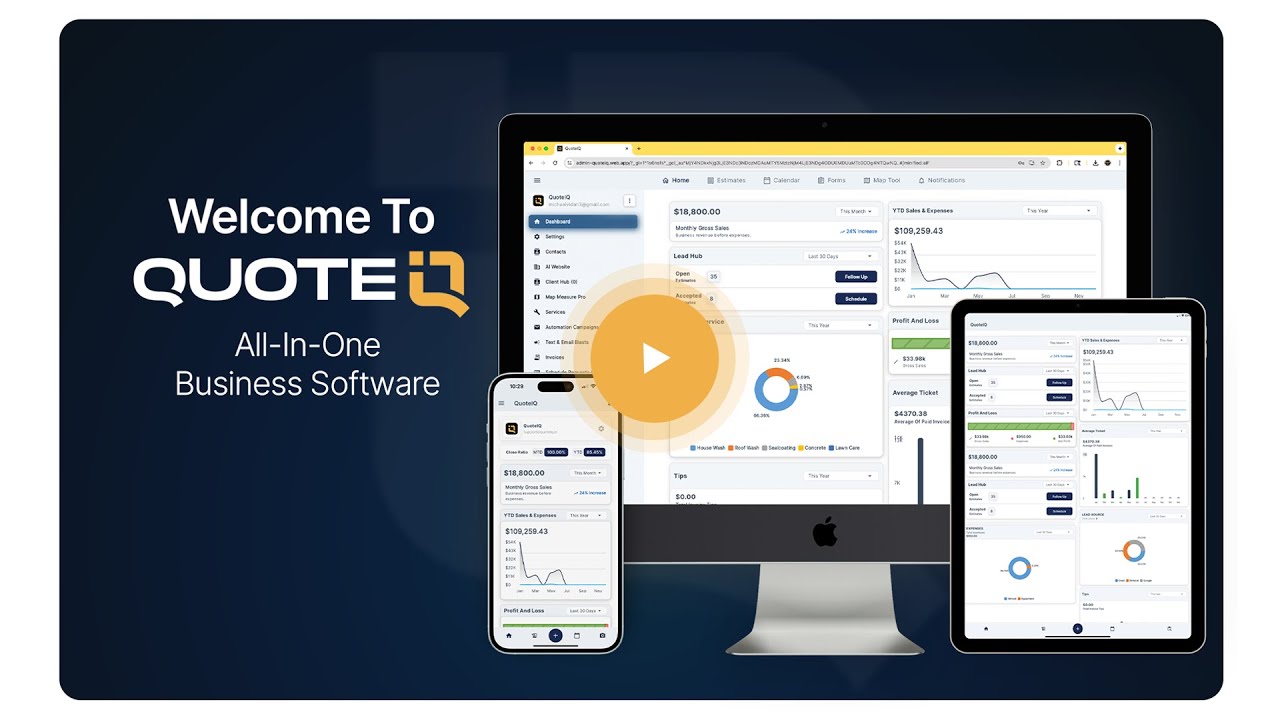
A quick walkthrough of how the platform fits together — estimating, scheduling, documentation, and getting paid.
Migrating a live electrical business between CRMs is a scheduling problem more than a technical one. This is the sequence that works, and it fits inside the 14-day free trial so you’re never paying for two systems at once.
QuoteIQ offers Done-For-You setup in two tiers, $299.99 and $999.99, covering contact import, price book setup, and a one-on-one onboarding session. For most 1–5 person electrical shops the self-serve path above takes an afternoon plus the parallel period; for shops carrying years of customer history and a large service catalogue, the paid setup usually pays for itself in the first month of not fixing import errors.
Mike co-founded QuoteIQ in 2022 after 20+ years running multi-trade service businesses. His work on field service operations, pricing for profit, hiring, and contractor business growth is the practical operator perspective that shapes how QuoteIQ’s electrical-relevant features get built — including the decision to put the AI Estimator and consumer financing on the entry plan rather than behind a top tier.
Justin co-founded QuoteIQ alongside Mike. He has built and scaled service businesses across multiple verticals with a focus on systems, pricing discipline, and operations that run without the owner present — the exact challenge electrical contractors face as they scale past their first hire, and the thinking behind EmployeeHub and roles and permissions.
Reviews below are pulled verbatim from the QuoteIQ reviews database (App Store and Google Play). Because electrical-specific five-star reviews are limited, two of the three below come from skilled-trade-adjacent operators whose feedback maps directly onto the electrical contractor workflow.
“Real easy to navigate with an arsenal of tools that’ll help keep business flowing.”
— Gavino Rodriguez · Google Play
“Intuitive UI, easy tracking, scheduling and sales pipeline.”
— Laura_Zellan · App Store (plumbing)
“I’ve been in the construction industry for 9 years and I’ve never seen an instant estimate tool like the one in this app.”
— BenjaminMill · App Store (general contractor)
For most electrical businesses in 2026, QuoteIQ is the best CRM choice — estimating, scheduling, field documentation, AI automation, and customer follow-up in a single platform that scales from solo electricians at $29.99/mo to unlimited-user teams at $699/mo. It replaces four or five separate tools at a lower combined cost, and the operator perspective from Co-Founders Mike Vidan and Justin Rogers shows up in decisions other vendors miss — like putting the AI suite and consumer financing on the entry plan, or building QuoteIQ Cam so every site photo attaches to the customer record automatically instead of living in someone’s camera roll.
ServiceTitan remains the right pick for 20-plus-technician electrical operations with dedicated office staff. Jobber and Housecall Pro are credible general-purpose alternatives, with Jobber winning on interface polish and Housecall Pro winning on consumer-side booking and review generation. FieldEdge keeps its loyal base of established shops that live by a flat-rate pricebook. Service Fusion makes the math work for shops that want unlimited-user flat-rate pricing. FieldPulse is worth a look if enforced technician workflows are your priority. mHelpDesk earns its place on offline mobile alone, and Workiz earns its spot if inbound call handling is the operational bottleneck.
The electrical contracting industry is in a once-in-a-generation demand cycle — electrification, EV infrastructure, data centres, and grid modernization are all pulling on a workforce the BLS projects to grow 9% through 2035 against a 3% all-occupation average. The electrical shops that win the next decade won’t be the ones with the most trucks. They’ll be the ones with the operational efficiency to convert demand into completed work without burning out their crews. Picking the right CRM in 2026 is part of that.
A 14-day free trial on every plan. Plans start at $29.99/mo. 40,000+ contractors, 4.7★ across 4,103 reviews.

Tell Google that QuoteIQ is a source you trust. One tap unlocks up to 40% off your annual plan. No free trial — billed in full at checkout.


