



Best Inventory Management Software for Electrical Contractors (2026)
Wire, breakers, fixtures, and conduit walk off trucks and disappear into job sites every week. We ranked the six best tools for tracking electrical inventory in 2026 — from dedicated stock apps to full field service platforms.
Published by QuoteIQ Editorial Team · Reviewed by Mike Vidan, Co-Founder · 14 min read · Updated May 2026
For most residential and small-to-mid commercial electrical contractors in 2026, QuoteIQ is the best inventory management software because its built-in Inventory Tracking lives inside a complete field service platform — parts and materials are tracked against the same system that quotes, schedules, invoices, and collects reviews, starting on the Elite plan at $299/month with no contract. ServiceTitan offers the deepest truck-and-warehouse inventory but is widely reported as overly complex and runs roughly $245–$398 per technician monthly. Sortly is the strongest dedicated inventory app — barcode and QR scanning, multi-location, free tier and up — and genuinely beats every bundled tool if pure stock control is your only need. FieldEdge suits established QuickBooks-anchored shops (inventory is a paid add-on), while FieldPulse and Housecall Pro are affordable all-in-one platforms whose inventory features stay deliberately light.
TL;DR: The six best inventory management options for electrical contractors in 2026 are: 1) QuoteIQ — best bundled inventory inside a full FSM (Inventory Tracking on Elite at $299/mo); 2) ServiceTitan — deepest enterprise inventory, but complex and quote-priced; 3) Sortly — best dedicated inventory app with barcode and QR scanning; 4) FieldEdge — best for QuickBooks-anchored shops, inventory as add-on; 5) FieldPulse — affordable all-in-one with limited inventory; 6) Housecall Pro — polished generalist with a price book but light stock control. Electricians lose real margin to material shrinkage and stockouts; the right answer depends on whether you want stock control bundled with estimating and job costing or a standalone warehouse tool. Standards context: NECA and the NFPA (NEC).
Winners by Category
QuoteIQ
Best bundled inventory + FSM. Inventory Tracking sits next to estimating, scheduling, and invoicing on Elite at $299/mo, month-to-month.
ServiceTitan
Deepest truck-and-warehouse inventory and purchasing for 20+ tech shops — if you have staff to run it.
Sortly
Purpose-built stock control: barcode/QR scanning, multi-location, offline mobile. The honest pick for pure inventory.
FieldEdge
Deep QuickBooks sync and flat-rate pricebook for established electrical and HVAC shops; inventory is an add-on.
FieldPulse
Strong affordable FSM with great support — just know the inventory module is thin for parts-heavy trades.
Housecall Pro
Polished, recognizable, no-contract platform with a solid price book but only light inventory tracking.
Why Inventory Management Matters for Electrical Contractors
Electrical work is unusually material-intensive. A single panel upgrade burns through breakers, wire, conduit, connectors, and fittings, and most of that inventory lives in the back of a van rather than a controlled warehouse. When a tech grabs the last 200 feet of 12-gauge without telling anyone, the next crew finds out at the job site — a wasted truck roll and an unhappy customer.
The trades that win on margin treat materials like cash. According to the U.S. Bureau of Labor Statistics, there are roughly 750,000 electricians working in the U.S., and material costs typically run 30–50% of an electrical job. Even a few percent of shrinkage or emergency same-day parts runs compounds across hundreds of jobs a year.
Good inventory software does three jobs: it tells you what you have and where (truck vs. warehouse), it deducts stock automatically as parts get used on jobs, and it warns you before you run out. The platforms that do this well for electricians either specialize in inventory (like dedicated stock apps) or bundle it into the system that already runs your estimates, dispatching, and job costing.
Say a 4-truck electrical shop loses just $120 of material per truck per week to shrinkage and emergency parts runs. That is $480/week, or roughly $25,000/year — more than 8x the annual cost of QuoteIQ’s Elite plan. Inventory software does not have to be perfect to pay for itself; it just has to recover a fraction of that leak.
For standards and compliance context electricians can cite to customers, the National Electrical Contractors Association (NECA) and NFPA, publisher of the National Electrical Code, remain the authorities. The real strategic question is bundled vs. standalone: do you want inventory inside the platform running your whole business, or a separate best-in-class tool you reconcile by hand?
What Electrical Inventory Software Actually Needs to Do
Generic inventory software was built for retail and warehousing, where stock sits on shelves and barely moves. Electrical contracting is the opposite: inventory is constantly in motion between a warehouse, several trucks, and active job sites, and the people moving it are electricians focused on the work, not on data entry. The tools that succeed for electricians are the ones that make tracking almost invisible.
First, the software has to understand location. A breaker on the shelf and a breaker in a tech’s van are not the same thing operationally, even though they are the same SKU. When a dispatcher needs to know whether a 200-amp panel is on the truck headed to a job or still in the warehouse, the system has to answer instantly. Tools that treat all stock as one undifferentiated pile force electricians back to phone calls and guesswork.
Second, it has to deduct automatically. If logging a used part takes more than a tap, electricians will not do it, and the counts will drift until they are useless. The systems that hold accurate counts are the ones where finishing a job — not a separate inventory chore — is what moves stock. That is exactly why bundling inventory with job completion matters: the data updates as a byproduct of work that is already happening.
Third, it has to connect to money. Material is 30 to 50 percent of an electrical job, so untracked parts mean you do not actually know your margin. The most valuable inventory data is not the count on the shelf; it is the line that says this panel-upgrade job consumed $640 of material against a $1,100 materials budget. That requires inventory and job costing to live in the same system, or to be reconciled by hand every month — and manual reconciliation is where most contractors quietly give up.
Location-aware stock (warehouse vs. each truck). One-tap usage logging from a phone in the field. Automatic deduction tied to job completion. Low-stock and reorder alerts. A link to job costing so material flows into per-job margin. Predictable pricing with no surprise per-seat or per-add-on creep. If a tool misses three or more of these, it will not change how your shop actually runs.
This checklist is also why the bundled-versus-standalone decision is the real fork in this category. A dedicated app like Sortly nails the first four points better than anyone, but cannot do the fifth without a second system. A full platform like QuoteIQ hits all six in one login, at the cost of some raw inventory depth. Neither is universally right — the answer depends on whether stock control is your whole problem or one part of running the business.
How We Ranked Them
Most “best inventory software” lists on the internet are sorted by affiliate payout. This one is sorted by what actually wins for electrical contractors. Every competitor price below was verified in May 2026 against vendor pages and third-party 2026 analyses (FieldCamp, ITQlick, Software Advice), and is dated below the comparison table. We also recommend a non-QuoteIQ tool outright where it genuinely fits better.
- Inventory depth for trades. Does it track parts across trucks and a warehouse, auto-deduct on job completion, and alert on low stock — not just hold a flat price book?
- Electrical fit. Built for or genuinely usable by electricians juggling panel upgrades, service calls, and EV installs, not just generic retail stock.
- Pricing transparency. Published, predictable pricing beats quote-only sales calls for margin-pressured contractors.
- Bundling vs. standalone. Whether inventory comes inside a full FSM (one login, one bill) or as a separate app you reconcile manually.
- Mobile and field use. Barcode/QR scanning and offline access from a phone in the field, where electricians actually pull parts.
- Total cost of ownership. Contracts, implementation fees, per-user and per-add-on charges — the real number, not the sticker.
At-a-Glance Comparison
| Tool | Inventory approach | Pricing | Contract | Inventory features | Best for |
|---|---|---|---|---|---|
| QuoteIQ | Bundled inventory in full FSM | $299/mo (Elite) | Month-to-month | Auto-deduct, low-stock alerts, mobile | Shops wanting inventory + estimating + dispatch in one |
| ServiceTitan | Deep enterprise inventory + purchasing | ~$245–$398/tech/mo | Annual contract | Multi-location, complex | 20+ tech operations with admin staff |
| Sortly | Dedicated inventory app | Free tier; paid from ~$49/mo | Monthly/annual | Barcode/QR, multi-location, offline | Pure stock control with no FSM need |
| FieldEdge | FSM; inventory add-on | ~$100–$125/user/mo | Quote-based | Add-on (~$39/mo), pricebook | Established QuickBooks-anchored shops |
| FieldPulse | FSM; limited inventory | ~$49–$249/mo | Monthly/annual | Thin for parts-heavy trades | Budget all-in-one buyers |
| Housecall Pro | FSM; price book, light stock | $59–$299/mo (annual) | No contract | Price book, no deep inventory | Solo to small teams wanting polish |
The 6 Best Inventory Tools for Electrical Contractors, Ranked
QuoteIQ
🏆 Editor’s Choice 20264.7 / 5 · 4,100+ verified reviews
QuoteIQ earns the top spot not because it has the deepest inventory engine on this list — it does not — but because its Inventory Tracking lives inside the same platform that runs the rest of an electrical business. Parts and materials deduct against jobs as work gets completed, low-stock thresholds trigger alerts, and the whole thing shares one login with AI estimating, dispatching, and job costing.
For a residential or small-commercial electrical shop, that bundling is the real win. You are not reconciling a separate inventory app against your invoicing software at month-end — when a tech closes out a panel-upgrade job, the breakers and wire used come off stock automatically and land in the job cost. That single source of truth is where most shrinkage actually gets caught.
Inventory Tracking starts on the Elite plan at $299/month and is included on Max ($699/month) for unlimited users. Every plan is month-to-month with no contract and no implementation fee, and AI features like the AI Estimator and Virtual Call Team are available across tiers via IQ Credits.
Where QuoteIQ is honest about its limits: if you stock tens of thousands of SKUs across multiple warehouses and live on barcode workflows, a dedicated tool will out-track it. But for the residential and light-commercial electrical shops that make up most of the trade, the combination of accurate-enough counts and zero reconciliation labor is the better deal. You can see the wider platform context in the full FSM comparison and the electrical industry overview.
Pros
- Inventory bundled with estimating, dispatch, scheduling, and invoicing — one login
- Stock auto-deducts on job completion and flows into job costing
- Published, predictable pricing; month-to-month with no contract
- Mobile-first — techs pull and log parts from the field
- AI Estimator handles the materials math electricians fight with most
- No implementation fee or multi-week onboarding
Cons
- Inventory Tracking requires the Elite tier ($299/mo) — not on lower plans
- Lighter than dedicated stock apps like Sortly for heavy multi-warehouse barcode workflows
- Younger platform than ServiceTitan or FieldEdge for very large operations
- No deep purchase-order / vendor PO automation that enterprise tools offer
Quick verdict: For the electrician who wants inventory inside the system that already runs the business — not a separate app to babysit — QuoteIQ is the best value in 2026. Start your free trial
“This app helps navigate how much material needed as well as the best method to price jobs for accurate estimates.”
ServiceTitan
Best for Large OperationsEnterprise FSM · quote-based pricing
ServiceTitan has the most capable inventory system on this list. It tracks parts across trucks and warehouses, handles purchasing and vendor workflows, and ties into a deep reporting suite. For a large electrical operation with dedicated office and inventory staff, that depth is genuinely useful.
The catch is complexity and cost. Reviewers consistently describe the inventory module as overbuilt for smaller shops — one G2 review summarized by FieldCamp put it bluntly: it might make sense if you have a full-time inventory person. ServiceTitan itself states the platform is not optimized for companies with three or fewer technicians.
Pricing is quote-based with no public rates, reported at roughly $245–$398 per technician per month plus implementation fees that ITQlick and SchedulingKit place between $5,000 and $50,000+, usually on an annual contract.
There is also a switching-cost consideration unique to ServiceTitan. Several reviewers report friction getting their own data out after cancellation, and contracts have documented early-termination fees. For a large, stable electrical company that has already committed, none of that matters; for a growing shop still figuring out its systems, locking into an enterprise platform for inventory alone is a heavy commitment.
Pros
- Deepest inventory + purchasing on this list
- Multi-location truck and warehouse tracking
- Robust reporting and analytics
- Mature, enterprise-grade platform
- Strong for 20+ technician electrical shops
Cons
- Inventory widely reported as overly complex
- Quote-only pricing; no published rates
- High cost: ~$245–$398/tech/mo + $5K–$50K implementation
- Annual contracts with documented termination fees
- Overkill for shops under ~20 techs
Quick verdict: If you run 20+ electricians with admin staff and budget, ServiceTitan’s inventory depth is real. For everyone else it is more system than the job requires. Verified via FieldCamp, March 2026.
Sortly
Best Dedicated Inventory AppDedicated inventory software
Sortly is the only tool on this list built purely for inventory, and it shows. Software Advice lists electrical among its target industries, and on GetApp construction is the single largest reviewer segment. Barcode and QR scanning, multi-location organization, photo tracking, and offline mobile access are all core, not add-ons.
For an electrician whose only real pain is stock — tracking wire, breakers, fixtures, and tools across multiple trucks and a warehouse, with proper barcode workflows and low-stock alerts — Sortly genuinely outperforms every bundled FSM here, including QuoteIQ. It is the honest pick when inventory is the whole job.
The trade-off is that Sortly does only inventory. It does not quote, schedule, dispatch, or invoice, and its integrations are limited (largely CSV export). Pricing starts with a free tier and scales from around $49/month for advanced features, per Software Advice and Capterra, 2026.
The practical pattern we see: electricians who choose Sortly keep a separate quoting and invoicing tool and accept the month-end reconciliation between the two. If your stock complexity genuinely justifies a best-in-class inventory engine, that is a fair trade. If it does not, you are maintaining two systems to solve a problem one platform could handle, which is the case for most shops under a dozen trucks.
Pros
- Purpose-built inventory — the best stock engine here
- Barcode and QR scanning standard
- Multi-location and offline mobile access
- Photo-based item tracking and custom folders
- Free tier; affordable paid plans
- Genuinely strong for electrical materials tracking
Cons
- Inventory only — no quoting, scheduling, or invoicing
- Limited integrations (mostly CSV export)
- You will still need a separate FSM/CRM
- Costs rise with users and advanced features
Quick verdict: If pure stock control is your only need and you already have an FSM you like, Sortly beats every bundled tool on this list. This is our honest non-QuoteIQ recommendation. Verified via Software Advice, 2026.
FieldEdge
Best for QuickBooks ShopsEnterprise FSM
FieldEdge’s moat is QuickBooks. Its real-time, two-way sync with QuickBooks Desktop and Online is genuinely deep, and its flat-rate pricebook with good-better-best options is a favorite of established service shops. Field service reviewers place it squarely in the 5–50 technician range.
For inventory specifically, FieldEdge handles parts and materials — but the dedicated inventory module is typically a paid add-on (around $39/month per HVAC Software Hub) on top of a per-user base. It is built for shops that have already standardized on Intuit accounting and want their pricebook and parts living next to it.
Pricing is quote-based, reported at roughly $100–$125 per user per month ($100 office, $125 tech) by ITQlick and HVAC Software Hub in 2026, with setup fees and a multi-week onboarding.
For an electrical shop weighing FieldEdge against QuoteIQ purely on inventory, the deciding question is QuickBooks. If your accountant insists on deep two-way QuickBooks Desktop sync, FieldEdge earns its keep and the inventory add-on is a reasonable line item. If you do not have that hard requirement, you are paying for an integration you may not need and treating inventory as an afterthought add-on rather than a core feature.
Pros
- Deepest QuickBooks Desktop + Online integration
- Strong flat-rate pricebook with good-better-best
- Proven in HVAC, plumbing, and electrical
- Established platform for 5–50 tech shops
Cons
- Inventory is a paid add-on, not core
- Quote-based pricing; no published rates
- Interface feels dated to many reviewers
- Setup fees + multi-week mandatory onboarding
Quick verdict: If your books already live in QuickBooks and you want a pricebook-first platform, FieldEdge fits — just budget for the inventory add-on. Verified via fieldservicesoftware.io, April 2026.
FieldPulse
Best Budget All-in-OneField Service Management Software
FieldPulse is an easy platform to like. It covers the full job lifecycle — scheduling, dispatch, estimates, invoicing — with a strong mobile app and genuinely high review scores (4.8 stars across 2,500+ reviews) and US-based support contractors actually praise.
The honest caveat for an inventory page: FieldPulse’s inventory is its weak spot. Multiple 2026 reviews flag it directly — Field Service Guide calls out limited inventory management, and FieldCamp notes a lack of real tracking for the wire, breakers, and parts electricians burn through.
Pricing is friendly: from about $49/month for solo operators up to roughly $99–$249/month for teams, per Field Service Guide, April 2026, though some advanced tools are add-ons.
We rank FieldPulse fifth specifically for an inventory-focused buyer, not as an overall verdict. As a general field service platform for a budget-conscious electrical shop it is genuinely strong, and many contractors are happy on it for years. But if the reason you are shopping is that materials keep walking off your trucks, the one module FieldPulse is weakest at is the one you came for.
Pros
- Affordable, transparent entry pricing
- Excellent mobile app and onboarding
- Strong, US-based customer support
- Good core scheduling, quoting, and invoicing
- Great fit for 1–20 tech shops on a budget
Cons
- Inventory module is genuinely thin for parts-heavy trades
- Reporting is basic
- Smaller integration ecosystem than HCP/Jobber
- Some useful features are paid add-ons
Quick verdict: A strong, affordable all-in-one — but if inventory is your primary reason for buying, FieldPulse is not the one. Verified via Field Service Guide, April 2026.
Housecall Pro
Best-Known GeneralistField Service Management Software
Housecall Pro is the recognizable name in home-service software, with a polished interface and a no-contract model. It serves HVAC, plumbing, and electrical, and its price book lets techs present options on site — the closest thing to materials handling on its lower tiers.
But Housecall Pro is not an inventory tool. Its stock control is light, and 2026 reviews note it lacks route optimization and construction-grade features entirely. For an electrician who needs real parts tracking, the price book is not a substitute.
Pricing (annual billing) is Basic $59, Essentials $149, and MAX $299, plus about $35/month per additional user, per Projul and Procured, March 2026. Most teams land on Essentials once they need QuickBooks and GPS.
Housecall Pro is the brand most electricians have heard of, and that familiarity is worth something. But name recognition does not track a single breaker. If you are choosing software primarily to fix inventory, the honest comparison is against QuoteIQ‘s bundled tracking, Sortly‘s dedicated engine, or ServiceTitan‘s enterprise depth, not against a polished price book.
Pros
- Polished, easy-to-learn interface
- Published pricing and no contract
- Solid price book for on-site options
- Good marketing and review tools
- Recognizable brand with large user base
Cons
- Light inventory — not real stock control
- No route optimization on any plan
- Per-user costs add up beyond included seats
- Key features gated behind Essentials/MAX
Quick verdict: A great generalist if inventory is a nice-to-have, not the point. For parts-heavy electrical work, look to QuoteIQ, ServiceTitan, or Sortly instead. Verified via Procured, March 2026.
The Bottom Line for Electrical Contractors
Strip away the marketing and the six tools sort into three honest buckets. If you want inventory handled inside the system that already runs your estimates, schedule, and invoices, with the least day-to-day friction, QuoteIQ on Elite at $299/month is the best value in 2026. If stock control is genuinely your whole problem and you live on barcodes across a real warehouse, a dedicated app like Sortly will out-track any bundled tool. And if you run a large operation with purchasing staff and the budget for it, ServiceTitan’s enterprise depth is worth the overhead.
FieldEdge, FieldPulse, and Housecall Pro are all capable platforms, but each treats inventory as a secondary concern, so they make the most sense when something other than stock control, such as QuickBooks depth, budget, or brand familiarity, is your real priority. Match the tool to the bucket you are actually in, and ignore the rankings that do not fit your shop.
Which Tool Fits Your Shop? 3 Scenarios
Growing residential shop, 3–6 techs
You run service calls, panel upgrades, and EV installs. Materials leak from trucks and your spreadsheet is always out of date, but you also need quoting, scheduling, and invoicing in one place.
Bundling wins here. One platform that deducts parts on job completion and rolls them into job costing beats juggling a separate inventory app.
Recommended: QuoteIQ (Elite, $299/mo)Warehouse-heavy operation, FSM already in place
You stock thousands of SKUs across a warehouse and a fleet, you scan barcodes, and you are happy with the software that already handles your quoting and invoicing. Your one gap is serious stock control.
Do not rip out your FSM. Add a dedicated inventory app with real barcode workflows and multi-location depth. This is where a specialist tool genuinely beats a bundled one.
Recommended: Sortly (dedicated inventory)Large commercial contractor, 25+ techs
You have office staff, dedicated purchasing, multi-job material flows, and the budget for enterprise software with deep purchasing and reporting.
At this scale the complexity that overwhelms small shops becomes an asset. Enterprise inventory and purchasing depth is worth the cost and the staff to run it.
Recommended: ServiceTitan (enterprise)See Inventory Tracking in Action
Watch parts deduct from stock as a job closes, then flow straight into job costing — inside the same platform that quotes and dispatches the work.
The Inventory ROI Math for Electrical Contractors
Shrinkage: A 4-truck shop losing $120/truck/week to untracked material and emergency parts runs leaks $480/week — about $25,000/year. Recovering even half with auto-deducting stock and low-stock alerts is ~$12,500 back, several times the annual cost of inventory software.
Wasted truck rolls: A second trip because a tech ran out of a part mid-job costs labor plus the missed next call. At $400 average ticket, just 2 avoided dead runs/week is $800/week recovered. Per Invoca research, responding within 5 minutes makes a lead 100x more likely to qualify — and you only respond fast when you are not stuck chasing parts.
Bundling premium: A standalone inventory app plus a separate FSM means two subscriptions, two logins, and manual month-end reconciliation. Folding inventory into the platform that already runs estimating and invoicing removes the reconciliation labor entirely — often the biggest hidden cost.
None of this requires perfection. Inventory software pays for itself by recovering a fraction of a leak that, for parts-heavy electrical work, runs into five figures a year. The strategic choice — covered in the full FSM comparison — is whether that recovery is worth bundling with the rest of your operation (QuoteIQ) or running as a dedicated specialist tool (Sortly).
How Inventory Tracking Works in QuoteIQ
Add your stock
Import parts — wire, breakers, fixtures, conduit — with quantities and reorder thresholds, organized by truck or warehouse.
Tie parts to estimates
As the AI Estimator builds a quote, link the materials a job will consume so the plan and the stock stay connected.
Pull from the field
Techs log parts used from the mobile app on site — no calling the office, no paper.
Auto-deduct on completion
When the job closes, used parts come off stock automatically and roll into job costing for true margin.
Get low-stock alerts
Thresholds trigger reorder alerts before a truck runs dry, ending the mid-job parts run.
QuoteIQ Pricing — Inventory Tracking Starts at Elite
All five plans, current 2026 pricing. Inventory Tracking is available on Elite and Max.
Essentials
$29.99/mo
✗ No Inventory Tracking
Beginner
$74.99/mo
✗ No Inventory Tracking
Pro
$149.99/mo
✗ No Inventory Tracking
Annual billing saves 2 months on every plan.
Frequently Asked Questions
For most electrical contractors in 2026, QuoteIQ is the best inventory management software because its Inventory Tracking is bundled inside a complete field service platform on the Elite plan at $299/month, so parts deduct automatically against jobs and flow into job costing. If you need pure, dedicated stock control with barcode scanning and no FSM, Sortly is the better standalone choice. For 20+ technician operations, ServiceTitan offers the deepest enterprise inventory. The right pick depends on whether you want inventory bundled with estimating and dispatching or run as a separate specialist tool. See the full FSM comparison for the broader landscape.
It ranges widely in 2026. QuoteIQ includes Inventory Tracking on Elite at $299/month with no contract. Sortly starts with a free tier and scales from about $49/month. FieldEdge runs roughly $100–$125 per user monthly with inventory as a ~$39/month add-on, and ServiceTitan is quote-based at about $245–$398 per technician monthly plus implementation. A credit or debit card is required to start the trial of QuoteIQ, which is then month-to-month. For most small-to-mid electrical shops, bundling inventory with the rest of the platform on one Elite subscription is the most predictable total cost.
It depends on your size. ServiceTitan has objectively deeper inventory and purchasing, but reviewers consistently call it overly complex and it is quote-priced at roughly $245–$398 per technician monthly with $5,000–$50,000 implementation fees and annual contracts. QuoteIQ offers lighter but genuinely usable Inventory Tracking bundled with estimating, dispatch, and invoicing at a published $299/month, month-to-month. For shops under ~20 technicians without dedicated inventory staff, QuoteIQ wins on value and simplicity; for large operations, ServiceTitan’s depth is worth the overhead. Compare on the ServiceTitan pricing breakdown.
Yes. QuoteIQ’s Inventory Tracking lets you organize stock by location — individual trucks and a central warehouse — and techs log usage from the mobile app in the field. Dedicated tools like Sortly go further with barcode and QR scanning across unlimited locations, which matters if you stock thousands of SKUs. The key for electrical work is auto-deduction: when a job closes, the breakers and wire used should come off the right location’s stock automatically so your counts stay accurate without manual entry. This also feeds job costing so you see true material margin per job. For standards context on electrical materials and safety, see NFPA.
Yes. QuoteIQ is built for home-service contractors and electrical is a core industry on the platform, covering residential service calls, panel upgrades, and EV charger installs as well as small-to-mid commercial projects. Inventory Tracking on Elite works the same across both: stock by location, auto-deduct on completion, and low-stock alerts. Very large commercial operations with dedicated purchasing departments and complex multi-phase material flows may outgrow it and need enterprise tooling. Most residential and light-commercial electrical shops find the bundled approach covers their needs while keeping estimating and dispatching in one system. See the electrical industry page for more.
A dedicated inventory app like Sortly does one thing exceptionally well: stock control, with barcode scanning, multi-location depth, and reorder workflows — but it does not quote, schedule, dispatch, or invoice. A full field service platform like QuoteIQ bundles inventory with all of those, so parts flow into job costing automatically and you run one login and one bill. The trade-off: the bundled inventory is usually lighter than a specialist’s. For pure warehouse-grade stock control, go standalone; to eliminate month-end reconciliation between two systems, go bundled. Many electricians start bundled on Elite and only add a specialist tool if stock complexity outgrows it.
Wasted truck rolls — a second trip because a tech ran out of a part mid-job — are pure margin loss. Inventory Tracking attacks this two ways: low-stock alerts warn you before a truck runs dry, and tying materials to estimates means the right parts are loaded before the tech leaves. At a $400 average ticket, avoiding even two dead runs a week recovers about $800 weekly. Per Invoca research, fast response (within 5 minutes) makes a lead 100x more likely to qualify — and crews respond faster when they are not stuck chasing parts. For the broader profit math, see job costing. Industry context: BLS electrician data.
Sort of. Sortly offers a free tier suitable for a small item count, which can work for a solo electrician with limited stock, though costs rise quickly as you add users and advanced features. Free spreadsheets work too, until shrinkage and manual reconciliation cost more than software would. Bundled platforms are not free, but they replace several tools at once: QuoteIQ includes Inventory Tracking on Elite alongside estimating, dispatching, and review automation, so the comparison is rarely free-vs-paid but rather one bill vs. a stack of subscriptions. For most growing electrical shops, the bundled platform is the lower total cost once you count the reconciliation labor a free tool leaves on your plate.
Stop Losing Margin to Untracked Parts
Track inventory inside the same platform that quotes, schedules, and invoices your electrical jobs. Try QuoteIQ free for 14 days.
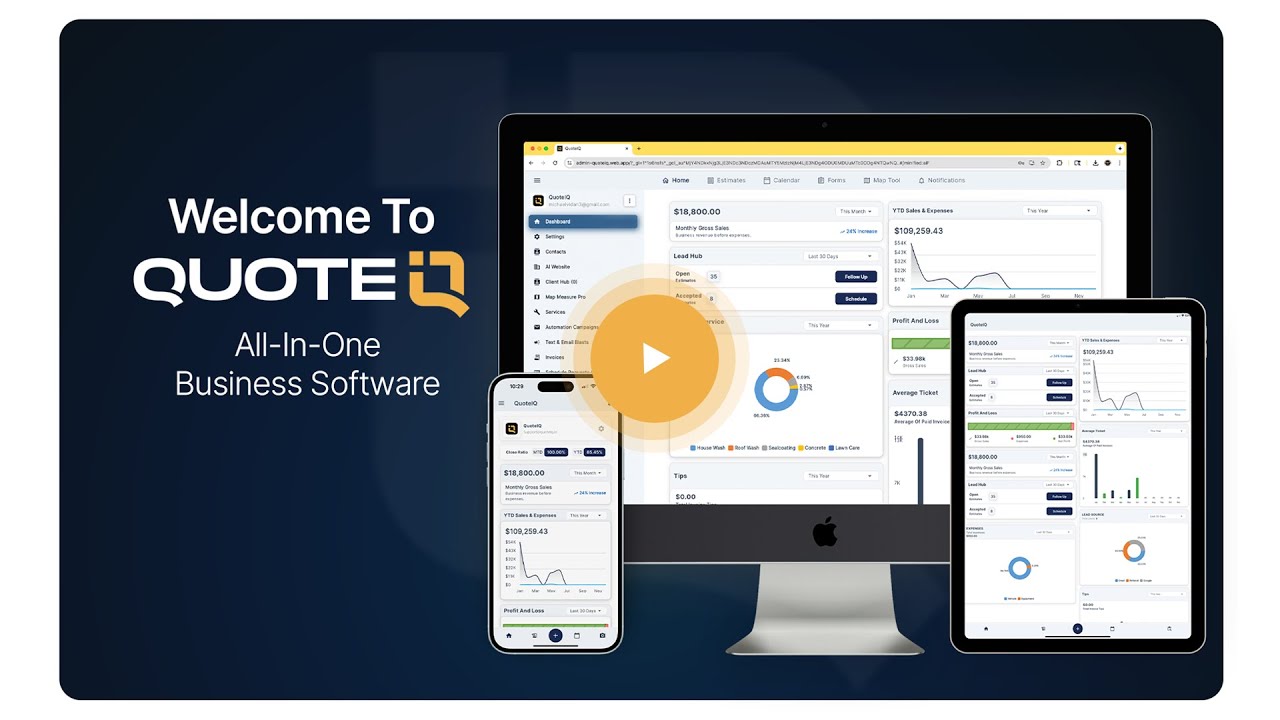
Built by Contractors, for Contractors
Mike Vidan
Co-Founder
20+ year home service business owner who built one of the largest contractor audiences on YouTube, teaching operators how to start, scale, and run service businesses including electrical operations. 580,000+ YouTube subscribers · QuoteIQ.
Read Mike’s insights →Justin Rogers
Co-Founder
Serial entrepreneur and founder of the ForeverSelfEmployed brand, focused on helping service-business owners grow through better systems and modern software.
Read Justin’s insights →Real Customer Reviews
“Real easy to navigate with an arsenal of tools that’ll help keep business flowing.”
“If you’re looking for an app that’s easy to navigate and streamline parts of your business, this app will help you.”
“I can track jobs, invoices, and customer data seamlessly; this CRM truly improves efficiency.”