

Best Mobile Payment Software for Smoke Damage Restoration Businesses (2026)
6 mobile payment platforms ranked by how fast a restoration crew can collect deductibles, deposits and progress payments from a phone — cards, ACH, Tap to Pay, payment links and insurance checks — on fire and smoke damage jobs.
QuoteIQ is the best mobile payment software for smoke damage restoration businesses in 2026 because its Online Payments feature — included on every plan from $29.99/month — lets customers pay from a text or email link by card, ACH, Apple Pay, Google Pay or buy now, pay later, while higher plans add QuoteIQ Cam photo documentation, e-signatures and a Client Portal. Albi wins for insurance-heavy jobs with multi-party check deposits but requires a $6,000 minimum annual subscription. Jobber and Housecall Pro win for Tap to Pay on a phone. Square is the cheapest standalone card reader, and JobNimbus fits storm-and-insurance CRM users. Choose by how your jobs actually get paid: insurer check, homeowner card, or both.
TL;DR: Smoke damage jobs get paid in two streams — a homeowner deductible or deposit by card, and a larger insurer payment by check or transfer — so the right tool depends on which stream is bigger. QuoteIQ takes Best Bundled Solution: invoicing and payments on every plan, plus QuoteIQ Cam photos, e-signatures, a Client Portal, Affirm/Klarna/Afterpay financing and an AI Estimator. Albi wins restoration-native payments and multi-party check deposits. Jobber is the cleanest Tap to Pay for field crews, and Housecall Pro adds a card reader and Instapay. JobNimbus is the no-monthly-fee payments option for storm-and-insurance CRM users, and Square is the cheapest standalone reader. Per the National Fire Protection Association (NFPA), U.S. fire departments responded to 1.39 million fires in 2024 causing $19.1 billion in direct property damage, and per the Federal Reserve, cards make up roughly two-thirds of consumer payments.
The 2026 Winners by Category
Each tool below wins for a specific kind of smoke damage restoration operation. Skip ahead to the category that matches how your jobs get paid.
QuoteIQ
From $29.99/mo. Payments on every plan, plus photos, e-signatures, portal and financing.
Albi
$60/$100 per seat, $6,000 minimum annual. Multi-party check deposits built for restoration.
Jobber
From $49/mo. Tap to Pay at 2.7% + 30¢, no extra hardware.
Housecall Pro
$59-$329/mo. Tap to Pay, card reader and 30-minute Instapay.
JobNimbus
Plans not published. Payments have no monthly fee; ACH capped at $50.
Square
$0/mo to start. In-person cards from 2.6% + 15¢.
Why Mobile Payments Matter for Smoke Damage Restoration
Smoke damage is a large, well-documented category of loss. Per the National Fire Protection Association (NFPA), U.S. fire departments responded to 1.39 million fires in 2024, and those fires caused $19.1 billion in direct property damage. Behind those numbers are homeowners and property managers who need structure cleaning, contents pack-out and deodorization, and contractors who front labor, equipment and materials before anyone has paid. The homeowner owes a deductible, the carrier owes the rest, and the two payments arrive by different rails on different timelines.
That is why mobile matters. Fire and smoke technicians work at the loss, not at a desk. The IICRC Fire and Smoke Restoration Technician (FSRT) certification covers “scoping, mitigation, cleaning, deodorization, subrogation, spoliation, documentation of residential and commercial fire and smoke damaged structures and contents” — a long chain of documented steps, and payment requests should ride on that chain. The phone that captures the photos should also send the deposit request, collect the signature and take the card. QuoteIQ’s e-signatures, QuoteIQ Cam and Online Payments are built to work together for exactly that reason.
Customers also pay in every way imaginable. The Federal Reserve’s 2026 Diary of Consumer Payment Choice found that credit and debit cards together made up roughly two-thirds of consumer payments, that 38% of consumers prefer credit in person (up from 24% in 2016), and that four in five consumers used cash in the previous 30 days. A serious restoration payment stack therefore accepts cards, ACH, wallets, cash and checks against the same invoice. Fees matter too: per the U.S. Small Business Administration, businesses that accept cards pay small processing fees on each transaction plus the cost of any equipment, which is why the fee table below uses a real $1,000 deductible and a real $12,000 progress payment.
A $1,000 deductible collected by card costs $29.30 at Jobber’s 2.9% + $0.30 ($27.30 with Tap to Pay at 2.7% + $0.30) and $32.30 at Albi’s 3.2% + $0.30. A $12,000 progress payment by card at Jobber’s rate costs $348.30 — but the same payment by ACH costs $15.00 at Albi (1% capped at $15), $50.00 at JobNimbus (1%, max $50) and $120.00 at an uncapped 1%.
The tool matters less on the small deductible and much more on the large progress payment: steering big invoices to ACH is worth hundreds of dollars per job. All rates were verified on each vendor’s own pages on September 25, 2026.
The takeaway is the bundled-versus-standalone argument that runs through this whole list. A standalone reader collects money but knows nothing about the loss. A restoration-native platform knows the loss but charges a restoration-native price. A bundled CRM like QuoteIQ keeps the estimate, the photos, the signed authorization and the payment on one record — see how that plays out on QuoteIQ’s Fire & Water Restoration page and in our broader water damage restoration software ranking.
How We Ranked Them
Best lists on the internet are mostly affiliate revenue sorted by commission rate. This list is sorted by what wins for smoke damage restoration contractors specifically. Every competitor rate, plan price and feature claim was checked on the vendor’s own pages on September 25, 2026; where a vendor does not publish a price, the page says so. Updated September 2026.
The 6 ranking factors
- Phone-first payment rails. Can a technician send a payment link, take a card, tap a phone or record cash and check from the field?
- Deductible, deposit and insurer-check handling. Smoke damage jobs split payment between homeowner and carrier, so tools that handle deposits and multi-party checks rank higher.
- Published fees and cost floor. Card, ACH and check rates, monthly minimums and onboarding fees, checked on each vendor’s own pages.
- Documentation beside the invoice. Photos, inspection forms and signed authorizations keep payment disputes short.
- Payout speed and reminders. How quickly cash lands in the bank and whether payment reminders run automatically.
- Bundled versus standalone. Whether payments live in the same system as estimates, scheduling and customer communication or in a separate silo.
6 Tools at a Glance (2026)
The fast version; detailed reviews follow. All prices and rates were verified on each vendor’s own pages on September 25, 2026 (updated September 2026).
| Platform | Starting Price | Card-Present (Tap to Pay / Reader) | Deductibles & Insurer Checks | ACH Fee | Best For |
|---|---|---|---|---|---|
| QuoteIQ | $29.99/mo (payments on every plan) | Not documented on public payments pages | Deposits and partial payments; cash and checks logged manually | Available; rate not published | Bundled restoration jobs: payments + photos + signatures |
| Albi | $60/seat (Base), $100/seat (Pro) · $6,000 minimum annual | Not listed on the Albi Pay page | Yes — deductible and deposit requests plus multi-party check deposit (2%) | 1%, capped at $15 | Insurance-heavy restoration companies |
| Jobber | $49/mo (Core, 1 user) | Tap to Pay, 2.7% + 30¢, no extra hardware | No insurance workflow described | 1% | Small crews paid by card on site |
| Housecall Pro | $59/mo annual · $79/mo monthly (Basic) | Tap to Pay on Mobile and card reader | Check deposits at no fee; no insurance workflow described | 1% | Crews that want faster payouts (Instapay) |
| JobNimbus | Not published — contact vendor | Mobile payments listed; Tap to Pay not named | Down payments and final payments by card or ACH | 1%, max $50 | Storm-and-insurance CRM users |
| Square | $0/mo (Square Free) | Tap, dip or swipe; hardware from $59 | None — payments only | 1%, $1 minimum | Solo technicians needing a card reader |
*Jobber’s annual promotional rates end September 30, 2026, so month-to-month list prices are shown.
What Each Tool Costs to Collect a Real Smoke Damage Payment
Illustrative jobs, real published rates: a $1,000 deductible by card and a $12,000 progress payment by ACH.
| Platform | Card on $1,000 | ACH on $12,000 | Insurer Check on $12,000 | Published Basis |
|---|---|---|---|---|
| QuoteIQ | Not published | Not published | Logged manually in the app | QuoteIQ does not publish fixed rates; fees are deducted from the payout |
| Albi | $32.30 | $15.00 | $240.00 (2% check deposit) | Card 3.2% + $0.30; ACH 1% capped at $15; check deposit 2% |
| Jobber | $29.30 ($27.30 with Tap to Pay) | $120.00 | Not described | Card 2.9% + 30¢; Tap to Pay 2.7% + 30¢; ACH 1% |
| Housecall Pro | From $25.90 plus a per-transaction fee the page does not state | $120.00 | $0 (check deposits, no fee) | Cards from 2.59%; ACH 1%; check deposits no fee |
| JobNimbus | $32.29 | $50.00 | Not described | Card 3.2% + $0.29; ACH 1%, max $50 |
| Square | $33.30 online on Free ($29.30 on Plus/Premium); $26.15 in person on Free | $120.00 on Free ($10.00 on Plus/Premium) | Not described | In person 2.6% + 15¢ (Free); online 3.3% + 30¢ (Free), 2.9% + 30¢ (Plus/Premium); ACH 1%, $1 min |
QuoteIQ — Best Bundled Mobile Payments for Smoke Damage Restoration
Best for: Restoration contractors who want payments, estimates, photos and signatures on one record · Pricing: Online Payments on every plan from $29.99/moQuoteIQ wins this list because payments are not a separate product — they sit inside the same record as the estimate, the photos and the signature. The Invoicing and Online Payments feature is included on every plan: customers pay by credit or debit card, ACH bank transfer, Apple Pay or Google Pay, and can choose buy now, pay later through Affirm, Klarna or Afterpay while the contractor is paid in full upfront. Cash and check payments are logged in the app, invoices support partial payments, deposits and installments, and automated payment reminders run by the hour, day or month, per QuoteIQ’s live invoicing page.
For smoke damage work, that becomes a clean field workflow. A technician builds the estimate with the AI Estimator, captures timestamped photos and completes inspection forms in QuoteIQ Cam (Beginner and up), gets the work authorization signed with e-signatures (Beginner and up), attaches contracts to the estimate, and sends the deposit or deductible invoice as a payment link. On Pro and up, customers can view and pay outstanding invoices from the Client Portal. QuoteIQ’s live payments page says funds on a daily payout schedule typically arrive within about 2 business days, and the Virtual Call Team answers fire-loss calls around the clock on every plan through IQ Credits.
Pricing is the other advantage. Online Payments are on all five plans: Essentials $29.99 (1 user), Beginner $74.99 (2 users), Pro $149.99 (4 users), Elite $299 (10 users) and Max $699 (unlimited users). The honest gaps are listed below: no documented card-present acceptance, manual check logging and unpublished fixed processing rates. If tap-to-pay or insurer-check deposit is your main need, Albi, Jobber or Housecall Pro is the better fit. The 14-day free trial is available on every plan; a credit or debit card is required to start.
- Online Payments on all five plans — no upgrade needed to accept cards, ACH, Apple Pay or Google Pay
- Buy now, pay later (Affirm, Klarna, Afterpay) on invoices while the contractor is paid in full upfront
- Partial payments, deposits, installments and automated reminders by the hour, day or month
- QuoteIQ Cam timestamped photos and inspection forms (Beginner and up) sit beside the invoice
- Client Portal (Pro and up) lets customers view and pay invoices from a link
- 4.7-star rating across 4,100+ verified reviews and a 14-day free trial
- No Tap to Pay or card-reader acceptance documented on QuoteIQ’s public payments pages
- Fixed processing rates are not published; fees vary and are deducted from payouts
- New accounts must complete payment-processor identity verification and enable payouts before customers can pay online
- Cash and checks are recorded manually — there is no mobile multi-party check deposit like Albi Pay
- A general home-service CRM rather than a restoration-only platform; Cam and e-signatures start at Beginner ($74.99) and Client Portal at Pro ($149.99)
If you want deductibles, deposits and progress payments collected from a text link — with the estimate, photos and signature on the same record — QuoteIQ Pro at $149.99/month is the right pick. The reasons to choose differently: most of your billings are insurer multi-party checks (pick Albi), Tap to Pay on a phone is non-negotiable (pick Jobber or Housecall Pro), or you only need a card reader (pick Square).
“The advantage of being able to create digital invoicing and collect debit or credit cards all in one has been a tremendous help for my small business.”
Albi — Best Restoration-Native Payments
Best for: Insurance-heavy fire, smoke and water restoration companies that need multi-party check deposits · Pricing: $60 Base seat / $100 Pro seat per month, $6,000 minimum annualAlbi (Albiware) is restoration management software, and Albi Pay is its payment layer designed for restoration companies. Per Albi’s own Albi Pay page, any team member can send a payment request from the field — by text or email link, at any job stage — with no QuickBooks access required. It handles credit and debit cards, ACH bank transfers, deductible and deposit collection upfront, and insurance payment processing including multi-party checks, and it syncs with QuickBooks.
The signature feature is mobile multi-party check deposit. Albi states that checks up to $100,000 are supported and that multi-party check deposits typically fund in 3–6 days versus an industry average of 30–45 days — a vendor claim worth testing against your own carriers. Albi prices the service at 3.2% + $0.30 for cards, 1% capped at $15 for ACH and 2% for check deposits. On a $12,000 insurer check, that 2% is $240.00.
Albi publishes its software pricing on its pricing page: a Base seat is $60 per month and a Pro seat is $100 per month, with a $6,000 minimum annual subscription that can be met through any combination of seat types (the small business plan requires four seats: two Base and two Pro). One-time onboarding is $1,000 for the small business plan, $2,500 for White Glove and $4,500 for Enterprise. The Albi Pay page lists payment links, cards, ACH and check deposits; it does not list Tap to Pay or a card reader.
- Purpose-built for restoration: deductible, deposit and insurance-payment collection are core to Albi Pay
- Mobile multi-party check deposit, with checks up to $100,000 supported per Albi
- ACH capped at $15 per transaction, so large progress payments stay cheap
- Payment requests by text or email link can be sent by any team member from the field
- QuickBooks sync, and no QuickBooks access needed to send a request
- $6,000 minimum annual subscription, with a four-seat minimum on the small business plan
- Card rate of 3.2% + $0.30 is higher than Jobber’s 2.9% + $0.30 and its 2.7% + $0.30 Tap to Pay rate
- The Albi Pay page does not list Tap to Pay or a card reader
- Per-seat pricing scales with headcount ($100 per Pro seat)
If most of your smoke damage revenue arrives as insurer checks, Albi is the strongest fit on this list and the honest reason to choose it over QuoteIQ. If most jobs are homeowner-paid, or you want estimating, photos and CRM at a lower floor, QuoteIQ or Jobber is the better fit.
Jobber — Best Tap to Pay for Field Crews
Best for: Small crews that want card-present Tap to Pay on iPhone and Android with no extra hardware · Pricing: Core $49/mo, Connect from $139, Grow from $199, Plus from $499Jobber is a generalist field service platform whose payments story is unusually clear for field crews. Per Jobber’s pricing page, Tap to Pay lets you “Get paid on the spot through the Jobber Mobile app—no extra hardware needed.” Per Jobber’s Tap to Pay help article (last updated December 5, 2025), it works on iPhone XS or later and on Android 11 or newer with NFC, is available in the U.S. and Canada, is not supported on iPads, and requires Jobber Payments on any plan.
Rates per Jobber’s pricing page: credit cards 2.9% + 30¢, Tap to Pay 2.7% + 30¢ and bank payments (ACH) 1%. Every plan includes instant payouts (1% fee), automatic payments and automated invoice follow-ups. On our $1,000 deductible that is $27.30 with Tap to Pay; on a $12,000 progress payment by ACH it is $120.00, because no cap is listed on the 1%.
Month-to-month list prices from Jobber’s pricing page: Core $49 (1 user), Connect from $139 to $399 (1 to 15 users), Grow from $199 to $499 and Plus from $499 to $699 (5 to 15 users), with extra users at $29 per month. The annual promotional rates on the page end September 30, so list prices are used here. What the pages reviewed do not describe is any insurance-claim workflow or multi-party check deposit — for a smoke damage company whose money mostly comes from carriers, that is the gap. See the QuoteIQ vs Jobber comparison.
- Tap to Pay on iPhone and Android with no extra hardware, at 2.7% + 30¢
- Jobber Payments, including Tap to Pay, available on every plan
- ACH bank payments at 1%
- Instant payouts (1% fee), tip collection and automatic payments on all plans
- Low $49 entry price on Core (one user)
- No insurance-claim workflow or multi-party check deposit described on the pages reviewed
- Tap to Pay is limited to the U.S. and Canada, and iPads are not supported
- ACH is a flat 1% with no cap listed ($120 on a $12,000 payment)
- General home-service platform with no restoration-specific tooling
For a small crew that collects most payments by card at the loss and wants the smoothest Tap to Pay experience, Jobber Core or Connect is a strong pick. For carrier-heavy billing pick Albi; for payments bundled with photos, e-signatures and a portal at a lower total cost, QuoteIQ Pro is the better fit.
Housecall Pro — Best Payout Speed Options
Best for: Crews that want Tap to Pay, a card reader and Instapay in one generalist platform · Pricing: Basic $59-$79/mo, Essentials $149-$189/mo, MAX $299-$329/moHousecall Pro is a mature generalist platform with the broadest card-present toolkit on this list. Per its payments page, card rates start at 2.59%, ACH is 1%, check deposits carry no fee, and technicians can accept contactless payments in the field with Tap to Pay on Mobile or use a card reader. Payment links are added automatically to every invoice, and cards can be saved on file.
Payout speed is the differentiator: Housecall Pro lists Instapay at 30 minutes versus two business days for standard card payouts. Pricing per its pricing page: Basic is $79 per month or $59 per month billed annually (1 user), Essentials is $189 or $149 (5 users) and MAX is $329 or $299 (8 users) with $35 per additional user.
Where it falls short for smoke damage: the payments page does not describe insurance-claim workflows, deductible-specific requests or multi-party check deposits, and “as low as 2.59%” does not tell you which rate your account gets — the page does not state the fixed per-transaction fee. On a $12,000 ACH payment the 1% is $120.00 with no cap listed. On price, Housecall Pro MAX ($299 per month billed annually, 8 users) sits beside QuoteIQ Elite ($299 per month, 10 users) — see the QuoteIQ vs Housecall Pro comparison.
- Tap to Pay on Mobile and a card reader for card-present payments in the field
- Instapay payouts in 30 minutes (standard card payouts take two business days)
- Check deposits at no fee and ACH at 1%
- Payment links on every invoice and cards saved on file
- Card rates starting at 2.59% on every plan, per its pricing page
- No insurance-claim workflow or multi-party check deposit described on the payments page
- “As low as 2.59%” — the per-transaction fee and your exact rate are not stated on the page
- ACH is 1% with no cap listed ($120 on a $12,000 payment)
- General home-service platform with nothing restoration-specific
For crews that want a physical reader, Tap to Pay and 30-minute Instapay payouts and do not need insurance-check handling, Housecall Pro is the strongest generalist. For payments bundled with photos, e-signatures and a Client Portal choose QuoteIQ; for insurer checks choose Albi.
JobNimbus — Best No-Monthly-Fee Payments in a CRM
Best for: Storm-and-insurance contractors already running jobs in JobNimbus · Pricing: plans not published (contact vendor); JobNimbus Payments has no monthly feeJobNimbus is a contractor CRM that positions its payments product around roofing but also publishes a restoration software page. Per that page, contractors can “Collect down payments and final payment with options for credit/debit cards and ACH,” convert estimates into invoices in one click and send them with payment options, and use built-in financing options.
JobNimbus Payments has an unusually simple fee structure: cards at 3.2% + $0.29, ACH at 1% (no more than $50), no monthly fee, no annual fee and no long-term contract, with the option to pass processing fees to customers or absorb them. The page says most credit card payments are received within 24 hours.
Software pricing is not published. JobNimbus lists Essentials (up to 3 users), Pro (up to 10), Premium (up to 19) and Enterprise (20+), does not list prices on its pricing page, offers monthly or annual agreements and states there are no required setup or onboarding fees — pricing not publicly available, contact vendor. Two honest caveats: the payments page is explicitly roofing-focused, and the restoration page does not mention fire or smoke damage specifically. See the QuoteIQ vs JobNimbus comparison.
- JobNimbus Payments has no monthly fee, no annual fee and no long-term contract
- ACH is 1% with a $50 cap per transaction
- Most credit card payments are received within 24 hours, per JobNimbus
- Option to pass processing fees to customers or absorb them
- One-click estimate-to-invoice with payment options and built-in financing options
- Plan prices are not published — pricing not publicly available, contact vendor
- The payments page is explicitly roofing-focused
- The restoration page does not mention fire or smoke damage specifically
- Card rate of 3.2% + $0.29 is above the rates Jobber and Housecall Pro publish
JobNimbus fits contractors who already run storm and insurance work in a CRM and want in-app payments without a monthly payments fee. Because software pricing is quote-only and the payments page is roofing-first, get a written quote before committing; for published pricing choose QuoteIQ, Albi or Jobber.
Square — Best Standalone Card Reader
Best for: Solo technicians and contents-cleaning crews who need a card reader and nothing else · Pricing: Square Free $0/mo, Plus $49/mo, Premium $149/mo per locationSquare is not restoration software, and that is why it makes the list: it is the yardstick against which every bundled tool’s card rates should be judged. Per Square’s pricing page, in-person tap, dip or swipe payments are 2.6% + 15¢ on Square Free ($0 per month), 2.5% + 15¢ on Square Plus ($49 per month per location) and 2.4% + 15¢ on Square Premium ($149 per month per location). Hardware starts at $59, and next-day transfers are included at no cost.
Online and invoice card payments are 3.3% + 30¢ on Free and 2.9% + 30¢ on Plus and Premium, and ACH via invoice is 1% with a $1 minimum and a $10 cap on Plus and Premium, per Square’s fee page. On our $1,000 deductible, an in-person tap on Free costs $26.15 — among the lowest card costs on this list — and a $12,000 ACH invoice costs $10.00 on Plus or Premium.
The trade-off is everything else. Square does not know about the loss, the estimate, the photos or the signed authorization, so a restoration company using it needs separate tools for scheduling, documentation and estimates. The U.S. Small Business Administration notes that businesses accepting cards pay processing fees per transaction plus equipment costs — with Square both numbers are published upfront. For a solo technician who wants a reader and nothing else, that is a feature.
- $0 per month Square Free plan and hardware from $59
- In-person tap, dip or swipe at 2.6% + 15¢ on Free (2.4% + 15¢ on Premium)
- Next-day transfers included at no cost
- ACH invoices capped at $10 on Plus and Premium
- Fee schedule published on Square’s own pages
- Not restoration or CRM software: no estimates, photos, signatures or job records tied to the loss
- Online and invoice card payments cost 3.3% + 30¢ on Free
- Keyed-in and card-on-file payments cost 3.5% + 15¢
- ACH on Free is 1% with a $1 minimum and no cap listed
Square is the right pick for a solo smoke-and-odor or contents-cleaning technician who mostly gets paid by card on the spot and already has estimating and documentation covered elsewhere. Once you need estimates, photos, signatures and payments on one record, QuoteIQ replaces Square and several other tools with one subscription.
Which Tool Wins for Your Smoke Damage Business?
Three real-world scenarios drawn from how restoration operators actually get paid in 2026. Each one ends with an honest recommendation — and not all of them recommend QuoteIQ.
Four-person smoke and odor crew with mixed insured and out-of-pocket jobs
A regional crew handling fire and smoke cleanup, contents pack-out and deodorization. Half the jobs are insurance-funded, half are smaller owner-paid losses.
The pain: deposits and deductibles arrive days late because photos, signatures and payments live in three different apps.
→ Recommendation: QuoteIQ Pro ($149.99/mo, 4 users) — payment link, Cam photos, e-signatures and Client Portal on one record.15-tech restoration company whose revenue arrives as insurer checks
Commercial and residential fire losses where most invoices are paid by carriers, with checks payable to several parties.
The pain: weeks pass between finishing the scope and cash landing, and depositing multi-party checks is manual.
→ Recommendation: Albi — mobile multi-party check deposit (2%) and deductible requests are the deciding features, and the $6,000 minimum annual subscription is easier to justify at this scale.Solo contents-cleaning technician paid by card on the spot
One truck, one technician, cleaning smoke-affected contents in the customer’s garage. Customers pay the same day, mostly by card.
The pain: no appetite for a $150-a-month platform — just a reader and a clean receipt.
→ Recommendation: Square Free ($0/mo, 2.6% + 15¢ in person, hardware from $59) — or Jobber Core ($49/mo) if you want Tap to Pay on your phone with no reader.Want deductibles, deposits and progress payments collected from a text link?
QuoteIQ puts Online Payments on every plan from $29.99/month, and higher plans add QuoteIQ Cam, e-signatures and a Client Portal. 14-day free trial. A credit or debit card is required to start.
The Real ROI of Mobile Payments for Smoke Damage Restoration
Numbers that matter. These are the calculations a restoration contractor should run before picking any tool on this list.
Fee mix on large payments: Consider a restoration company that collects twelve $12,000 progress payments a month — $144,000 — from commercial clients and homeowners who pay by card by default. At Jobber’s published 2.9% + $0.30 that is 12 × $348.30 = $4,179.60 per month in card fees. Steering the same payments to ACH costs 12 × $15.00 = $180.00 at Albi’s $15 cap, 12 × $50.00 = $600.00 at JobNimbus’s $50 cap, or 12 × $120.00 = $1,440.00 at an uncapped 1%. Between the card-only case and Albi’s capped ACH, that is a gap of about $47,995.20 a year.
Working capital on carrier payments: Say the company bills $150,000 a month to carriers. Albi states that multi-party check deposits typically fund in 3–6 days versus a 30–45 day industry average — a vendor claim. If a phone-deposit workflow cuts the average wait by even 25 days, receivables outstanding fall by about $150,000 × 25 ÷ 30 = $125,000.00 of working capital. At Albi’s 2% check-deposit fee, depositing $150,000 a month costs $3,000; the trade is fee for speed, and only your own carriers can tell you whether it pays.
Crew time: Per O*NET OnLine, the median wage for hazardous materials removal workers — the closest federal occupation match for restoration technicians — was $23.78 per hour in 2025, so a three-person crew costs about 3 × $23.78 = $71.34 per hour in wages alone. If waiting on a deposit or a signature costs 30 minutes on each of 40 jobs a year, that is 20 hours, or $1,426.80 in wages. QuoteIQ Pro at $149.99 a month is $1,799.88 a year and Essentials at $29.99 is $359.88 — and both include Online Payments.
These numbers are illustrations, not promises — your card-to-ACH mix, carrier timelines and job counts will differ. The structural point holds: separate reader, estimating, photo and signature apps cost more in fees, time and reconciliation than one system where the estimate, the photos, the signature and the payment share a record, unless insurer checks dominate your revenue, in which case a restoration-native tool like Albi earns its higher floor.
How Mobile Payments Work in Practice
The full loss-to-paid workflow inside QuoteIQ — from the first photo at the fire scene to money in the bank.
Scope and estimate at the loss
The technician builds the estimate with the AI Estimator or a standard estimate and captures timestamped photos with QuoteIQ Cam.
Get the authorization signed
The customer signs the estimate or work authorization on their phone with e-signatures, and contracts are attached to the estimate.
Send the deposit or deductible request
The technician converts the estimate to an invoice with a deposit or partial payment and texts or emails the payment link.
Customer pays from the link
The customer pays by card, ACH, Apple Pay or Google Pay, or chooses buy now, pay later; on Pro and up they can also pay from the Client Portal.
Track, remind and get paid
Automated reminders run by the hour, day or month, cash and checks are logged in the app, and funds on a daily payout schedule typically arrive within about 2 business days.
QuoteIQ Pricing — Online Payments on Every Plan
Online Payments are included on all five plans, with fees that vary by account and are deducted from payouts. Higher plans add QuoteIQ Cam, inspection forms and e-signatures (Beginner and up) and the Client Portal (Pro and up). 14-day free trial on every plan. A credit or debit card is required to start.
Annual billing saves 2 months on every plan. See the full pricing page →
Frequently Asked Questions
For smoke damage restoration businesses in 2026, QuoteIQ is the best mobile payment software because its Online Payments feature is included on every plan from $29.99/month and works alongside QuoteIQ Cam photo documentation, e-signatures, invoicing and a Client Portal. Customers pay from a text or email link by card, ACH, Apple Pay, Google Pay or buy now, pay later. Albi wins for insurance-heavy restoration because of multi-party check deposits, but it carries a $6,000 minimum annual subscription. Jobber and Housecall Pro win for Tap to Pay on a phone. Square is the cheapest standalone reader, and JobNimbus suits storm-and-insurance CRM users. Per the National Fire Protection Association (NFPA), U.S. fire departments responded to 1.39 million fires in 2024. It depends on whether your money arrives from homeowners, insurers or both.
Smoke damage contractors collect deductibles and progress payments from a phone by sending a payment link on an invoice instead of waiting for a check or an office visit. With QuoteIQ, the technician converts the estimate to an invoice with a deposit or partial payment, texts or emails the link, and the customer pays by card, ACH, Apple Pay or Google Pay; cash and checks are logged in the app, and reminders run automatically. On Pro and up the Client Portal lets customers view and pay invoices from one link. Albi Pay adds mobile multi-party check deposit for carrier payments, and Jobber or Housecall Pro add Tap to Pay for card-present collection. The Federal Reserve’s 2026 Diary of Consumer Payment Choice shows cards are roughly two-thirds of consumer payments, so a card-ready link matters. See QuoteIQ’s Fire & Water Restoration page and its payments page for the workflow.
It depends on how your jobs get paid. Albi is restoration-native, and its Albi Pay adds mobile multi-party check deposit (2%), deductible and deposit requests, and ACH capped at $15 — but it requires a $6,000 minimum annual subscription (Base seat $60, Pro seat $100 per month) and one-time onboarding from $1,000 to $4,500, per its pricing page. QuoteIQ puts Online Payments on every plan from $29.99/month and adds QuoteIQ Cam, e-signatures, a Client Portal and the AI Estimator in one subscription, which suits revenue paid by homeowners, commercial clients or cards. If most revenue is insurer checks, Albi is the honest pick; for estimating, photos, signatures and payments at a lower floor, QuoteIQ Pro at $149.99/month is the better total cost. The IICRC FSRT certification treats documentation as part of fire and smoke restoration, and QuoteIQ’s pricing page lists every plan.
Mobile payment software for smoke damage restoration ranges from $0 per month for Square Free to a $6,000 minimum annual subscription at Albi. QuoteIQ includes Online Payments on every plan — Essentials $29.99, Beginner $74.99, Pro $149.99, Elite $299 and Max $699 per month — with fees that vary and are deducted from payouts. Jobber runs $49 (Core) to $699 (Plus) month-to-month with cards at 2.9% + 30¢ and Tap to Pay at 2.7% + 30¢, and Housecall Pro is $59 to $329 per month with cards from 2.59%. JobNimbus does not publish plan prices, but JobNimbus Payments has no monthly fee (cards 3.2% + $0.29). Square charges 2.6% + 15¢ in person on Free. The U.S. Small Business Administration notes that card processing fees apply per transaction plus equipment costs. A 14-day free trial is available on QuoteIQ — a credit or debit card is required to start — with invoicing, Cam and e-signatures scaling by plan on the pricing page.
Yes. With QuoteIQ, the invoice carries a payment link that customers open on their phone and pay by card, ACH, Apple Pay or Google Pay, or finance larger balances with Affirm, Klarna or Afterpay while the contractor is paid in full upfront. Work authorizations can be signed first with e-signatures on the estimate, and on Pro and up customers can also log in to the Client Portal to view and pay open invoices. Housecall Pro adds payment links to every invoice, and Albi Pay sends payment requests by text or email at any job stage. Cash and checks still matter — per the Federal Reserve, four in five consumers used cash in the previous 30 days — so QuoteIQ also lets you log cash and check payments against the same invoice on its Online Payments page, keeping every payment method on one record for reconciliation and reporting.
Online payments is how a customer pays an invoice: card, ACH, Apple Pay or Google Pay, with cash and checks logged manually. Consumer financing is an option at checkout: buy now, pay later through Affirm, Klarna or Afterpay, where the customer picks a payment plan and the contractor is paid in full upfront. In QuoteIQ, both are available on every plan and both live on the same invoice, so a homeowner facing an uninsured cleaning scope, a contents-replacement upgrade or a large deductible can pay in full or finance it without a separate application. Fees vary by account and provider, and QuoteIQ does not publish fixed rates. See the Online Payments page, add a Client Portal on Pro and up, and use invoice subscriptions for recurring storage or monitoring charges. Per the Federal Reserve, 38% of consumers prefer credit in person, up from 24% in 2016, so flexible checkout options meet how customers already pay.
Cash-flow gaps come from two places: the homeowner deductible or deposit that arrives late, and the carrier payment that takes weeks. Mobile payment software attacks both. A payment link on the invoice — available in QuoteIQ on every plan through Online Payments — collects the deposit or deductible at the loss, and automated reminders chase what remains. For carrier payments, Albi states that multi-party check deposits typically fund in 3–6 days versus an industry average of 30–45 days, a vendor claim to test against your own carriers. Pairing payments with QuoteIQ Cam photos and e-signatures shortens disputes because the scope and authorization are already documented, in line with how the IICRC FSRT certification treats documentation as part of fire and smoke restoration. Track collections and revenue with Business Analytics.
Yes — QuoteIQ works for residential and commercial smoke damage payments. Homeowners can pay deductibles and deposits by card, Apple Pay or Google Pay, or finance larger balances through Affirm, Klarna or Afterpay. Commercial clients and property managers can pay larger invoices by ACH, which QuoteIQ describes as carrying lower processing fees than card payments, from the same invoice link or the Client Portal on Pro and up. QuoteIQ Cam photo documentation and inspection forms support both, and Business Analytics tracks revenue across job types. The honest gap: for insurer-heavy work that depends on mobile multi-party check deposit, Albi is the better fit, and QuoteIQ does not document Tap to Pay. A 14-day free trial is available on every plan; a credit or debit card is required to start — see pricing. Per the NFPA, fires caused $19.1 billion in direct property damage in 2024.
Stop chasing deductibles. Start collecting smoke damage payments from a text link.
QuoteIQ puts Online Payments on every plan from $29.99/month, and higher plans add QuoteIQ Cam, e-signatures and a Client Portal — everything a smoke damage restoration business needs from estimate to paid. 14-day free trial. A credit or debit card is required to start.
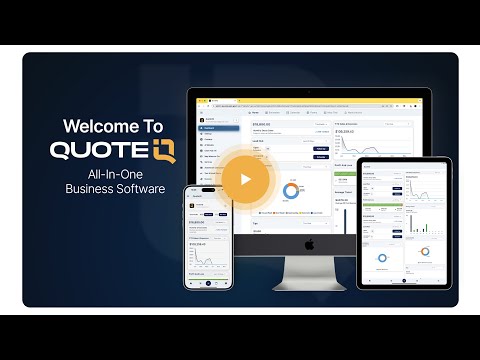
Watch: What is QuoteIQ? (3-minute overview)
A short walkthrough of how QuoteIQ replaces the stack of disconnected tools most restoration contractors use to run their service business.
Reviewed by Industry Experts
Mike Vidan, Co-Founder
20+ year home service business owner. Built one of the largest pressure washing and home service contractor audiences on YouTube, teaching contractors how to start, scale and operate service businesses, including restoration and cleaning operations.
Read full bio →Justin Rogers, Co-Founder
Serial entrepreneur and founder of the ForeverSelfEmployed brand. Shares real-world strategies for running profitable service businesses, from documented systems to pricing discipline.
Read full bio →Real Customer Reviews on Getting Paid — 4.7★ across 4,100+ verified reviews
“So glad I found QuoteIQ I can now send estimates and invoices with links for payment with ease.”
“I have a simple way to forward an invoice and get paid.”
“QuoteIQ has given me the easy way to keep track, Invoice and get paid by my customers.”
Transparency note: QuoteIQ’s review database contains no reviews tagged to fire, smoke or restoration trades. The four reviews on this page (including the one above) are verified 5★ App Store and Google Play reviews that specifically praise invoicing and getting paid — the theme of this guide — and are labeled by what they are, general home service business reviews, not restoration-specific feedback.