



Best Recurring Billing Software for HVAC Businesses (2026)
Maintenance plans, comfort club memberships and seasonal tune-up subscriptions are the financial backbone of a scalable HVAC operation. These are the 6 recurring billing platforms that actually deliver autopay, dunning and renewal automation in 2026 — ranked for HVAC contractors.
For HVAC businesses in 2026, QuoteIQ is the best recurring billing software because its built-in Recurring Invoices and Invoice Subscriptions plus Online Payments handle maintenance-plan autopay, subscription billing and renewal automation on every plan starting with Essentials at $29.99/month — bundled inside a complete HVAC field service management platform. The full membership stack — Client Portal self-pay experience, Email & Text Automations for expired-card dunning and QuickBooks Online sync — lands on Pro at $149.99/month. ServiceTitan wins for enterprise HVAC operations with mature comfort-club lifecycle automation. FieldEdge wins for established shops that run their books in QuickBooks and need deep service-agreement workflows. Housecall Pro wins for tiered membership plans with polished customer communication. Jobber wins for self-serve client-hub experience. Successware wins for established contractors with complex multi-trade maintenance contract programs. Three of those five quote individually and the other two have restructured their published tiers recently, so price each against your own technician count on their own pricing pages before you commit.
TL;DR: HVAC recurring revenue only compounds when the billing runs itself. QuoteIQ is the one platform here that puts recurring invoicing, card-on-file autopay and e-signed agreements on its $29.99 entry plan, then layers the ClientHub customer self-pay portal, dunning automations, job costing and tune-up scheduling on Pro at $149.99/month — no per-technician metering. ServiceTitan, FieldEdge, Housecall Pro, Jobber and Successware all run quote-based or tier-gated models you must price yourself. The demand side is solid: the Bureau of Labor Statistics projects HVACR employment to grow 11% from 2025 to 2035 with about 40,600 openings a year, and the U.S. Department of Energy warns that neglected systems lose performance steadily — which is the entire argument for a maintenance agreement. Start with the HVAC cost calculator to price the plan, then automate the billing.
Winners by Category
🏆 Editor’s Choice 2026
QuoteIQ
Recurring invoicing, invoice subscriptions and card-on-file autopay on every plan from $29.99/mo, with the dunning automations and customer self-pay portal bundled on Pro.
Best for Enterprise HVAC
ServiceTitan
The deepest comfort-club lifecycle automation in the category, aimed at multi-location operations with dedicated office staff. Pricing is quote-only.
Best HVAC-Specific Agreement Module
FieldEdge
Service-agreement tracking purpose-built for HVAC and plumbing, with accounting integration as its anchor feature. Pricing is quote-only.
Best Tiered Membership Plans
Housecall Pro
Polished tiered-membership presentation with strong customer-facing communication and a clean self-pay portal for homeowners.
Best Self-Serve Client Hub
Jobber
The most homeowner-friendly client hub for invoice approval and self-service payment. Confirm which tier carries recurring autopay before you buy.
Best Established Maintenance Agreement Platform
Successware
A long-established HVAC platform with one of the most mature maintenance-agreement modules for complex multi-trade contracts.
Why Recurring Billing Matters for HVAC in 2026
For HVAC contractors, the difference between a shop that stalls at one truck and a shop that runs five is rarely the quality of the technicians. It is whether revenue arrives on a schedule the owner controls. Install and repair work is lumpy by nature — a brutal August produces more calls than anyone can staff for, then October goes quiet and payroll does not. A maintenance agreement base is the only lever that smooths that curve, because it bills whether or not the phone rings.
The demand fundamentals support the investment. The Bureau of Labor Statistics projects employment of heating, air conditioning and refrigeration mechanics and installers to grow 11 percent from 2025 to 2035 — much faster than the average for all occupations — with roughly 40,600 openings expected each year and a 2025 median wage of $61,010. That is a trade with more work than labor, which means the constraint on growth is operational capacity, not lead volume. Every hour an office manager spends chasing a declined card is an hour not spent dispatching the techs you already struggle to hire.
The U.S. Department of Energy states plainly that neglecting necessary maintenance “ensures a steady decline in air conditioning performance while energy use steadily increases,” and that simply replacing a dirty, clogged filter with a clean one can lower a system’s energy consumption by 5% to 15%. It recommends cleaning or replacing filters every month or two during the cooling season. That is the homeowner-facing case for a maintenance plan, written by a federal agency rather than by your marketing department — and it is the single most useful thing to put in front of a customer at the point of enrollment.
The billing mechanics are where most programs quietly bleed out. A maintenance plan priced in the mid-teens to mid-twenties per month per home is barely break-even on the service visits themselves. The program only makes money three ways: priority access that converts into repair and replacement work, the equipment knowledge that makes those quotes faster and more accurate, and the compounding effect of a base that renews without being re-sold. Every one of those depends on the charge going through month after month without human intervention. If an office manager has to call a homeowner about an expired card, the economics invert immediately — one ten-minute recovery call costs more in labor than the plan collects that month.
So the real evaluation question is not “does this platform do recurring invoices.” Nearly all of them do. The question is which specific capabilities sit behind the paywall, and what the whole working stack costs once you add the pieces a membership program genuinely needs: a card kept on file, an automatic retry when a charge fails, a text or email that routes the homeowner to update the card themselves, a customer-facing place to do that without calling the office, seasonal scheduling that fires on the agreement’s cadence rather than on a sticky note, and accounting sync so the deferred-revenue side is not a spreadsheet. That is the stack we ranked. Many contractors also compare the all-in numbers with our ServiceTitan pricing calculator before committing to an enterprise contract.
One more structural point that HVAC owners underrate: a membership base changes what the business is worth. A shop whose revenue is 100% transactional is valued on last year’s work. A shop with a few thousand active agreements has contracted, renewing revenue attached to known equipment at known addresses — and that is a materially different asset. Getting there requires the agreement data to be clean, which in turn requires the billing system and the customer database to be the same system rather than two that sync badly.
How We Ranked Them
Six platforms, scored against the capabilities an HVAC maintenance program actually runs on — not general field service breadth:
- Autopay and card-on-file depth. Can a technician capture a card at the kitchen table and have it charge automatically on the agreement’s cadence, and which tier does that require?
- Dunning and failed-charge recovery. What happens automatically when a card expires — retries, customer messaging, a self-service update path — versus what lands on a person’s to-do list.
- Membership lifecycle. Enrollment, tiering, renewal, cancellation and the seasonal visit entitlements attached to each agreement.
- Customer self-service. Whether a homeowner can view, pay and update their own membership without calling the office.
- Accounting sync. How cleanly recurring revenue, payments and deferred balances reach the books.
- Bundled value. What the working stack costs in total, including the add-ons and tier upgrades required to reach a functioning membership program.
- HVAC fit. Equipment history, tune-up scheduling, and whether the trade-specific workflows exist or have to be improvised.
This guide does not publish dollar figures, seat counts, trial lengths or tier-gating claims for the five competing platforms. Field service software vendors restructure plans, rename tiers and move features between them frequently, and several of the platforms below do not publish a complete public rate card at all — ServiceTitan, FieldEdge and Successware quote individually, and the published tiers at Housecall Pro and Jobber have both been restructured within the last two years.
Rather than republish numbers that go stale between our edits, we link each platform once to its own site and describe what the product does. Price every option on the vendor’s own pricing page, on the day you are deciding, against your real technician count. Ask each vendor three questions in writing: which tier includes autopay on recurring invoices, what the implementation or onboarding fee is, and what payment processing costs as a percentage. Those three answers move the total more than the headline monthly figure does.
QuoteIQ’s own pricing is published in full on the pricing page and stated plainly throughout this guide, because we can verify our own rate card.
| Tool | Recurring Billing Pricing | Autopay Availability | HVAC Membership Fit | Accounting Sync | Best For |
|---|---|---|---|---|---|
| QuoteIQ (Editor’s Choice) | $29.99/mo Essentials · full membership stack on Pro $149.99/mo · published rate card | Recurring Invoices and Online Payments on every plan | Bundled — Client Portal, dunning automations and tune-up scheduling on Pro | QuickBooks Online sync, Pro and above | Residential and light-commercial HVAC shops of any size that want one flat platform fee |
| ServiceTitan | Quote-based; no public rate card — request a quote from the vendor | Included in the membership module; confirm which package | Deepest comfort-club lifecycle automation in the category | Accounting integrations available; confirm supported editions | Enterprise HVAC with multiple locations and dedicated office staff |
| FieldEdge | Quote-based, plus implementation; no public rate card — request a quote from the vendor | Available within the service-agreement module; confirm the tier | Purpose-built HVAC and plumbing agreement tracking | Accounting integration is a core selling point; confirm editions | Established shops whose books already drive the workflow |
| Housecall Pro | Published tiers, restructured recently — check their current plans before buying | Available; verify which tier carries recurring autopay | Polished tiered-membership presentation and customer comms | Accounting sync offered; confirm which tier includes it | Residential HVAC prioritising customer-facing polish |
| Jobber | Published tiers, restructured recently — check their current plans before buying | Available on paid tiers; verify the entry tier before buying | Generalist; membership is assembled rather than purpose-built | Accounting sync offered; confirm current tier coverage | Shops that want the best homeowner self-service experience |
| Successware | Quote-based, plus onboarding; no public rate card — request a quote from the vendor | Available within the agreement module; confirm packaging | Very mature multi-trade maintenance agreement management | Deep accounting integration with payment processing | Established multi-trade shops with office staff and complex contracts |
Reading the table: the “Recurring Billing Pricing” column is deliberately non-numeric for the five competing platforms. Three of them quote individually and two have restructured published tiers within the last two years, so any figure printed here would be wrong before your renewal date. QuoteIQ’s figures are published because we can verify our own rate card on the pricing page the day you read this. Use the links to price each platform yourself, and compare against the home service business calculators to model what the program needs to clear.
#1 · Editor’s Choice
QuoteIQ
🏆 Editor’s Choice 2026 — Best Bundled Recurring Billing for HVACQuoteIQ is the only platform on this list that includes recurring invoicing and invoice subscriptions, online payments with card-on-file autopay, and customer e-signatures on its entry tier at $29.99/month. That matters more than it sounds. The common failure pattern in HVAC membership programs is not that the contractor cannot find software — it is that the contractor signs up on an entry plan, sells 80 agreements, and then discovers that the autopay, the dunning sequence or the customer portal lives two tiers up. The program stalls while the upgrade gets argued about.
The full HVAC recurring-revenue stack lives on Pro at $149.99/month for four users. That tier adds ClientHub — a dedicated business phone number with two-way calling and texting that saves every conversation to the customer record — plus Email & Text Automations for renewal reminders and expired-card dunning, the Client Portal where homeowners view and pay their own invoices, QuickBooks Online sync, on-the-way texts, website contact forms and job costing so you can see whether the membership program is actually profitable rather than assuming it is.
For an HVAC contractor the automation layer is the part that earns the subscription. You can describe an automation in plain language and have it built for you, which in practice means a sequence like: agreement signed → welcome email with the plan terms → spring tune-up reminder at the 5-month mark → fall tune-up reminder → renewal notice 30 days before expiry → card-failure sequence if a charge declines. Each step fires from the agreement’s own dates. Nobody maintains a spreadsheet of who is due in April.
The estimate side is unusually strong for membership selling. Options estimates present good/better/best tiers side by side on the technician’s phone, which is exactly the format a comfort-club pitch needs — repair only, repair plus membership, or full replacement with the membership folded in. Package estimates bundle the membership as a line item, and an accepted estimate converts to a recurring subscription in one action rather than being re-entered as a separate billing record. Consumer financing through Affirm, Klarna and Afterpay is available on every plan, which matters when the membership conversation starts with a $9,000 system replacement.
On the field side, QuoteIQ Cam and custom inspection forms turn each maintenance visit into a documented report with photos attached to the customer’s equipment history — the artifact that makes next year’s renewal an easy conversation. Scheduling handles the seasonal cadence with drag-and-drop across day, week, month and employee-timeline views, and the AI Estimator plus AI Autopilot (55 tools across 13 categories, driven by voice or text) are on every plan rather than sold as an AI add-on.
The honest limitation: QuoteIQ is built for residential and light-commercial contractors. If you are managing multi-site commercial preventive-maintenance portfolios with AIA-style progress billing across hospital systems and school districts, the enterprise platforms have contract structures QuoteIQ does not try to match. There is also no native payroll — technician hours export to whatever payroll system you already run — and overtime is not calculated automatically.
Pros
- Recurring invoices, subscriptions and online payments on every plan from $29.99/mo — no paywalled autopay tier
- Full membership stack (ClientHub, dunning automations, Client Portal, QuickBooks Online sync, job costing) on Pro at $149.99/mo
- Flat plan pricing by user band — no per-technician metering that compounds as the agreement base grows
- AI Estimator, AI Autopilot and Virtual Call Team bundled rather than sold as add-ons
- Options and package estimates fit good/better/best membership selling at the kitchen table
- Consumer financing (Affirm, Klarna, Afterpay) on every plan, including during the trial
- Unlimited users on Max at a flat rate for shops that scale past ten seats
Honest Cons
- Built for residential and light-commercial — not multi-site commercial PM portfolios with AIA-style billing
- The full membership automation stack requires Pro, not the entry tier
- QuickBooks integration is Online only, at Pro and above
- No native payroll and no automatic overtime calculation — hours export out
- AI features draw on IQ Credits, so heavy AI use needs monitoring against the monthly allocation
- Newer platform than the 40-year incumbents, with a smaller third-party consultant ecosystem
Verdict
Start on Essentials at $29.99/mo to run the recurring invoicing workflow with your first handful of agreements, then move to Pro at $149.99/mo the month you commit to the membership program properly. For the overwhelming majority of residential HVAC shops, that is the whole decision.
Plans: Essentials $29.99 · Beginner $74.99 · Pro $149.99 (most popular for HVAC) · Elite $299 · Max $699/mo
Start your 14-day free trial → · See full pricing →“We are in the pressure washing business and have used several different quoting systems that all required multiple programs to do the quoting, follow up, and billing. We are now changing to Quote IQ because it has everything in one app. It also makes it easier to complete quotes on the phone or even in person. We are an expanding company and it is making it easier for us to have everybody on the same system.”
#2
ServiceTitan
Best for Enterprise HVACServiceTitan describes itself as all-in-one software built for home and commercial contractors, and in the HVAC membership category it has the deepest lifecycle tooling of anything here. Its own HVAC material centres on automating payments and scheduling for recurring services while giving call-takers and technicians structured scripts to present membership benefits in the field — which is the actual bottleneck in most comfort-club programs, since agreements are sold by people, not by billing engines.
Where ServiceTitan genuinely separates itself for HVAC is the presentation workflow. A technician standing in front of a failed condenser can present a basic repair, a mid-tier repair bundled with a maintenance agreement, and a full system replacement as three structured options on a tablet, with financing attached. That format is why enterprise shops run it: it raises average ticket and it converts memberships as a by-product of repair calls rather than as a separate campaign. Add marketing attribution that ties membership renewals back to specific channels, and multi-location reporting that actually rolls up, and you have a platform built for an operation with an office staff dedicated to running it.
The trade-off is weight. ServiceTitan is a system you implement, not a system you sign up for — there is onboarding, configuration and a learning curve measured in months rather than days, and the platform assumes dedicated administrative capacity. Its homepage publishes no subscription prices and directs buyers to request a demo, so every engagement starts with a sales conversation and a custom quote. Annual commitments are standard in this tier of software, so read the cancellation terms before signing.
For a two-to-five-technician residential shop launching its first maintenance program, this is the wrong starting point — not because the software is weak but because the implementation effort and administrative overhead exceed what the program will generate in year one. Shops in that position generally do better launching on a bundled platform, proving the program works, and revisiting enterprise tooling once there is an office manager whose job is the membership base.
Pros
- Deepest membership and comfort-club lifecycle automation in the HVAC market
- Structured good/better/best presentation workflow that lifts average ticket and converts agreements in the field
- Marketing attribution ties membership renewals back to specific channels
- Real enterprise scale — multi-location, multi-state, consolidated reporting
- Mature commercial preventive-maintenance contract structures
- Large consultant and integration ecosystem
Honest Cons
- No public rate card — pricing is quote-only and starts with a sales process
- Implementation is a project, not a signup; expect configuration and training time
- Assumes dedicated office staff to run the platform properly
- Annual commitments are standard — read cancellation terms carefully
- Overbuilt for shops under a handful of trucks
Verdict
The right answer for enterprise HVAC operations with multiple locations, a sizeable technician roster and dedicated administrative staff. If that is not you yet, the lifecycle depth will not pay for the implementation. Model the all-in cost with our ServiceTitan pricing calculator before you take the demo.
Pricing: Quote-based. ServiceTitan does not publish a public rate card — request a quote on servicetitan.com and confirm the subscription, implementation fee, contract length and payment-processing rate in writing.
#3
FieldEdge
Best HVAC-Specific Service Agreement ModuleFieldEdge positions itself as field service management software that tracks customers, dispatches, service history and more, built for multi-truck service companies. Within HVAC specifically, its service-agreement module is the part worth evaluating: agreements are first-class records with entitlements, renewal dates and visit schedules attached, rather than recurring invoices with a note in the description field. For a shop with several hundred active agreements across mixed equipment, that structural difference shows up every single month in how much manual reconciliation the office does.
The platform’s historical anchor is tight accounting integration, and that is still the main reason established HVAC and plumbing shops choose it. If your bookkeeper has spent a decade building workflows in QuickBooks and the chart of accounts is the source of truth for the business, a platform that treats accounting as the centre rather than as an export destination removes a genuine category of monthly friction. Pair that with a flat-rate pricebook integration and technicians can quote repairs from a maintained price list instead of improvising, which is the other half of running agreements profitably.
The honest gaps are the mobile experience and the exit. The technician app is functional but feels a generation behind the newest platforms, which matters when you are hiring technicians whose expectations are set by consumer software. And data portability is the real lock-in: getting structured agreement data out of a mature deployment is harder than getting it in, so the switching cost compounds the longer you run it. FieldEdge also publishes no prices on its homepage, directing buyers to request a demo, and implementation involves a structured onboarding period rather than a self-serve start.
For a new HVAC operation, or for a shop whose books already live in QuickBooks Online and whose priority is launching a membership program this quarter, the setup friction and quote-based pricing make a bundled platform the faster path. FieldEdge earns its place for the established shop with a mature agreement base and an accounting-first workflow.
Pros
- Purpose-built for HVAC and plumbing — agreements are structured records, not invoices with notes
- Accounting integration is the platform’s anchor rather than an afterthought
- Flat-rate pricebook integration gives technicians a maintained repair price list
- Structured repair-option presentation for technicians in the field
- Strong revenue reporting by technician for managing agreement programs
- Long operating history in the HVAC and plumbing trades
Honest Cons
- No public rate card — quote-only, with a demo-first sales process
- Structured onboarding period rather than a self-serve start
- Technician mobile app feels dated against newer platforms
- Data portability is the practical lock-in — exports are harder than imports
- Confirm which accounting editions are currently supported before committing
Verdict
The pick for an established HVAC or HVAC-plus-plumbing shop with a mature agreement base and an accounting-first workflow. New operations and shops that want to launch a program in weeks rather than months will move faster elsewhere.
Pricing: Quote-based. FieldEdge publishes no prices on its homepage — request a quote at fieldedge.com and get the subscription, onboarding fee, contract term, supported accounting editions and processing rate in writing.
#4
Housecall Pro
Best Tiered Membership Plan PresentationHousecall Pro calls itself an all-in-one solution for home services businesses covering scheduling, invoicing, payments and customer relationships, and it is the most consumer-polished product on this list. For HVAC specifically, its membership-plan management lets a shop build tiered service agreements — the familiar bronze/silver/gold ladder — and present them to homeowners in a format that reads like a product rather than like a contract. That presentation quality is not a cosmetic advantage: tiered plans convert better when the homeowner can see what each level includes without reading a PDF.
The customer-facing side is where it wins. Appointment reminders, on-the-way notifications with technician photos, and a self-service portal where homeowners approve estimates and pay invoices are all well-executed, and homeowners actually use them. For a residential HVAC shop whose competitive position rests on being the company that communicates properly, that is a real differentiator — and it reduces inbound “when are you coming” calls, which is a labour saving that compounds across a few hundred maintenance visits a season.
The evaluation work is in the tiering. Housecall Pro restructured its published plans within the last two years, so the plan names and the capabilities attached to them have moved. The headline entry price is attractive; the working configuration for a shop running a real agreement base may be a different number. Confirm on their pricing page exactly which tier carries recurring autopay and accounting sync, how seats are counted, and what processing costs, before you model the program.
On the recurring-billing mechanics themselves, Housecall Pro is competent. Card-on-file autopay and automated reminders are both part of the product. The same core capability sits on QuoteIQ Essentials at $29.99/month with the full membership stack on Pro at $149.99/month — so the trade is Housecall Pro’s customer-experience polish against bundled feature depth and a published flat rate.
Pros
- Best tiered-membership presentation in the category for bronze/silver/gold agreement ladders
- Customer-facing portal and notifications that homeowners genuinely use
- Strong built-in marketing tooling for reactivation and renewal campaigns
- Well-rated, frequently updated technician mobile app
- Published plan tiers you can read before talking to sales
Honest Cons
- Published tiers have been restructured recently — verify the current plans yourself
- Confirm which tier carries the membership-critical capabilities before you model the cost
- Ask how user seats are counted and charged on the tier you need
- Recurring billing itself is competent but not a differentiator
- Get the current payment-processing terms in writing alongside the subscription
Verdict
A strong pick for residential HVAC shops competing on customer experience, provided you price the working configuration rather than the entry tier. If bundled depth and a flat published rate matter more than presentation polish, QuoteIQ Pro is the better arithmetic.
Pricing: Published tiers, restructured within the last two years. Check current plans, seat charges and which tier includes recurring autopay and accounting sync at housecallpro.com.
#5
Jobber
Best Self-Serve Client HubJobber describes itself as a way to quote, schedule, invoice and get paid all in one place, and its client hub is the best homeowner-facing self-service portal in this comparison. A customer can open a link, review a quote, approve it, see upcoming visits, view invoice history and pay — without creating an account or installing anything. For an HVAC shop whose office phone rings all day with questions that have documented answers, that single capability removes a measurable amount of labour.
Jobber is a generalist, and that shapes how it handles memberships. Recurring visits and recurring invoicing both exist and work well, but an HVAC maintenance agreement is assembled from those primitives rather than existing as a purpose-built agreement object with entitlements and renewal logic. In practice a shop running a few hundred agreements will build conventions — naming schemes, tags, a recurring job template per plan tier — and those conventions are the program. That is workable and many contractors run it successfully; it is simply more configuration discipline than a platform with a native agreement record requires.
Bank-transfer autopay deserves specific mention for HVAC. On a membership base of several hundred homes, ACH-style payments typically carry a materially lower processing cost than card payments, and over a year of monthly charges that difference is real money rather than a rounding error. Jobber’s support for it is solid, and the self-service portal is a good place to steer customers toward it at enrollment.
The thing to verify before buying is how the current tiers are drawn. Jobber restructured its published plans within the last two years, and it also sells add-on modules separately from the base subscription. Price the configuration you will actually run — the tier that carries recurring autopay for your membership program, the seats you need and any add-ons — directly on their pricing page, and compare that total against a bundled flat rate rather than comparing entry prices.
Pros
- Best homeowner-facing client hub in the category — customers use it without being trained
- Strong bank-transfer autopay support, which lowers processing cost on a large agreement base
- Clean, fast interface with a short learning curve for new office staff
- Published plan tiers available to read before contacting sales
- Accounting sync and AI-assisted quoting available
Honest Cons
- Published tiers restructured recently — confirm the current line-up on their pricing page
- Generalist platform; HVAC agreements are assembled from primitives, not native objects
- Add-on modules are sold separately from the base subscription — price the whole stack
- A generalist product rather than an HVAC-specific one — check how it models equipment history and tune-up entitlements
- Membership program depends on internal naming and tagging discipline
Verdict
Pick Jobber if homeowner self-service is your top priority and you are comfortable building the agreement structure through conventions. For shops that want the same portal depth plus AI tooling, a business phone line, routing and the rest of the stack in one subscription, QuoteIQ Pro at $149.99/mo is the better math.
Pricing: Published tiers, restructured within the last two years, plus separately priced add-ons. Confirm the tier that includes recurring autopay, seat counts and add-on costs at getjobber.com.
#6
Successware
Best Established Multi-Trade Maintenance Agreement PlatformSuccessware presents itself as business management software for home service companies covering booking, dispatching, accounting and field management in one platform, and it is the most established product on this list. Its maintenance-agreement module is also among the most mature: agreement tracking, recurring service scheduling, renewals and customer notifications are handled as a coherent subsystem rather than bolted together, with accounting built into the same platform rather than synced to it.
The specific strength is multi-trade contract complexity. A shop running HVAC plus plumbing plus electrical, with agreements that cover different equipment classes at different visit cadences and different renewal dates per trade, is exactly the scenario Successware was built around. Native tracking of equipment age, membership status and repair history per address means the renewal conversation and the replacement conversation both start from real data. Integration breadth with payroll, reputation and customer-communication tools is also genuinely wide.
The trade-off is modernity and learning curve. Successware is built for office staff who learn one system thoroughly and run it for years, not for technicians whose expectations are shaped by consumer apps. Onboarding is a structured engagement with support resources attached, and pricing is quote-based — the homepage publishes no subscription figures and directs buyers to call or request a demo. For a single-trade residential HVAC shop focused on technician mobile experience and customer-facing communication, newer platforms deliver a more modern workflow for less implementation effort.
Where it remains the right answer: an established contractor with dedicated office staff, a complex multi-trade agreement portfolio, and a preference for accounting being native rather than integrated. That is a real profile, and the depth on offer there is not something newer platforms can claim yet.
Pros
- One of the most mature maintenance-agreement modules in the HVAC market
- Strong multi-trade contract management across HVAC, plumbing and electrical
- Native equipment age, membership status and repair history tracking per address
- Accounting is built in rather than synced from outside
- Wide integration ecosystem for payroll, reputation and customer communication
- Long operating track record with established contractors
Honest Cons
- No public rate card — quote-based, with a call-or-demo sales process
- Interface and technician mobile experience feel dated against newer platforms
- Steeper learning curve; built for office staff rather than field-first workflows
- Structured onboarding engagement rather than a self-serve start
- Overbuilt for single-trade residential shops
Verdict
Worth a serious look for established multi-trade contractors with office staff and complex agreement portfolios. Single-trade residential HVAC shops prioritising mobile experience and customer communication should look at QuoteIQ or Housecall Pro instead.
Pricing: Quote-based. Successware publishes no subscription prices on its homepage — request a quote at successware.com and confirm the subscription, onboarding fee, per-seat structure and processing rate in writing.
Which Recurring Billing Software Wins for Your HVAC Operation?
Solo Residential HVAC Tech Launching a Comfort Club
You are running solo or with one helper, residential HVAC across a single metro market, and you want to launch your first comfort-club program. At 50 homes on a mid-teens monthly plan the program produces a few hundred dollars of recurring revenue a month to start — real, but not enough to absorb a platform that costs a meaningful share of it. You need autopay, dunning and a customer self-pay portal without an enterprise contract or an implementation project.
Start on QuoteIQ Essentials at $29.99/mo while the base is small — recurring invoices and online payments are included — and move to Pro at $149.99/mo once the agreement count justifies the ClientHub portal and dunning automations. Price the plan itself with the HVAC cost calculator first.
→ QuoteIQ Essentials, then ProEstablished HVAC + Plumbing Shop With an Accounting-First Workflow
You have run HVAC and plumbing for fifteen years, your bookkeeper has built every workflow around your accounting system, and you have a mature multi-trade agreement program with several hundred active contracts across mixed equipment and renewal dates. Your constraint is not features — it is that the agreement data and the books cannot drift apart, and that a migration cannot drop entitlement history.
FieldEdge and Successware both earn consideration here: agreements are structured records and accounting sits at the centre. Confirm which accounting editions each currently supports before you commit. If your books are in QuickBooks Online and you would rather consolidate the whole stack, QuoteIQ Pro carries QuickBooks Online sync and AI Smart Import for the migration.
→ FieldEdge or Successware — verify editionsMulti-Location HVAC Operation With Dedicated Office Staff
You are running a sizeable technician roster across multiple locations with dedicated office and dispatch staff, and a comfort-club base in the thousands. You need marketing attribution on renewals, consolidated multi-location reporting, structured in-field membership presentation, and contract depth that holds up under audit. The platform is a system of record, not a convenience.
ServiceTitan is the honest recommendation at this scale, and it is not a QuoteIQ pick. Its lifecycle automation and presentation workflow are the deepest here, and an operation of this size has the administrative capacity to run it. Get the subscription, implementation fee, contract term and processing rate in writing, and model the total against our ServiceTitan pricing calculator.
→ ServiceTitan (honest non-QuoteIQ rec)Launch Your HVAC Comfort Club Without an Enterprise Contract
QuoteIQ ships recurring billing, autopay, a customer self-pay portal, renewal automation and the full HVAC field service stack in a single $149.99/mo Pro plan. Recurring invoices and online payments start on Essentials at $29.99/mo.
How to Design an HVAC Maintenance Plan the Billing System Can Actually Run
Most comfort-club programs are designed on a whiteboard and then jammed into whatever the software supports. Do it the other way round. The plan structure determines how much manual work the office absorbs for the next five years, so design the agreement with the billing mechanics in mind from the start.
Pick a billing cadence before you pick a price
Monthly, quarterly and annual billing each produce a different program. Monthly charges are small enough that homeowners treat them like a utility bill and rarely re-examine them, which keeps attrition low — but they multiply the number of transactions, so every percentage point of processing cost and every failed card matters twelve times a year instead of once. Annual billing collects the full year up front and improves cash position immediately, but a single larger invoice triggers a renewal decision every twelve months, and that is the moment agreements get cancelled. Quarterly sits in between and suits plans built around two seasonal visits.
QuoteIQ handles all three through invoice subscriptions, which carry their own discount, tax, fee and deposit arithmetic rather than requiring a duplicate invoice template per cadence. A practical pattern: offer monthly as the default because it converts best, offer annual at a modest discount for the customers who prefer it, and let the subscription record carry the difference instead of running two parallel systems.
Build tiers around entitlements, not adjectives
A tier ladder only works if each level is defined by things a technician can verify in the field and the office can bill for. “Premium service” is not an entitlement. Two tune-up visits per year, a stated number of standard filters, a defined discount on repairs, priority scheduling ahead of non-members, and a waived or reduced diagnostic fee are entitlements. Write them into the agreement, attach them to the customer record, and let the inspection form for each visit record which entitlements were consumed.
The Department of Energy recommendation to clean or replace filters every month or two during the cooling season is the single best entitlement to anchor a mid-tier plan on, because it is both genuinely valuable and cheap to deliver. It also creates a recurring touchpoint that is not a full service call — and touchpoints are what make renewals easy.
Decide the multi-system rule up front
Houses with two or three systems are common, and the pricing rule for them is the most frequently fudged part of a comfort-club program. Pick one: a flat per-system price, a discounted rate for each additional system, or a whole-home price with a stated system cap. Whichever you choose, encode it in the price book so technicians cannot improvise it at the kitchen table. Inconsistent multi-system pricing is the fastest way to end up with an agreement base you cannot report on, because no two records mean the same thing.
Get the agreement signed where it is sold
An agreement that requires a follow-up email to be signed converts measurably worse than one signed at the point of sale. E-signatures are available from Essentials upward, so the homeowner signs on their own phone before the technician leaves. Contract attachments let you append the full terms PDF to the signed document, which matters if your agreement includes cancellation or transfer language. Capture the card in the same visit — that single habit is the difference between a program that bills itself and a program that generates a collections task list.
Maintenance visits that touch refrigerant are regulated work. Under EPA Section 608, technicians servicing air conditioning and refrigeration equipment must be certified, and intentional venting of ozone-depleting refrigerants is prohibited, with requirements covering technician certification, equipment recordkeeping and proper refrigerant recovery. If your plan tiers promise refrigerant work as an entitlement, the agreement should reference the certification requirement and your recordkeeping should live with the job record — not in a separate binder. Technician certification status belongs in your employee records alongside availability and rate.
Expired Cards: the Quiet Leak in Every HVAC Membership Program
Cards expire on a schedule nobody plans for. Across a base of several hundred homes, a predictable slice of payment methods goes stale every single month — replaced cards, closed accounts, fraud reissues, changed billing addresses. The revenue does not announce its departure. It simply stops arriving, and unless something in the system notices, the agreement stays technically active while collecting nothing. Six months later somebody runs a report and finds a tranche of members who have not paid since spring.
A working dunning sequence has four parts, and most programs implement one of them:
- Automatic retry. A declined charge is retried on a schedule rather than abandoned. A meaningful share of declines are transient — a temporary hold, a daily limit — and clear on the second attempt without anyone being contacted.
- Proactive notification. The homeowner is told by text and email that the card needs updating, in plain language, immediately — not after the office notices next month.
- A self-service update path. The message contains a link that lets them fix it themselves in under a minute. This is the step that decides whether the sequence recovers revenue or just generates inbound calls.
- Escalation with a deadline. If the card is still not updated after a defined window, the agreement is flagged for a human call and the member is told what happens to their entitlements. Agreements that silently lapse are worse than agreements that are properly cancelled, because they corrupt your reporting.
In QuoteIQ, parts two through four are built with Email & Text Automations on Pro and above, and the self-service path is the Client Portal, where the homeowner views the invoice and pays it from a branded page with no app download and no account to create. Because ClientHub gives the business a dedicated number with two-way texting, the escalation call and the text thread live on the same customer record — so whoever picks it up can see what has already been sent.
One operational detail worth building in: run a report on cards expiring in the next ninety days and reach out before they fail. Pre-emptive card refresh is dramatically cheaper than recovery, because you are contacting a customer who is still happily enrolled rather than one whose service has just been interrupted. It also keeps the analytics clean, which matters when you are trying to tell real churn apart from payment-method churn. Those are two completely different problems and the fix for each is different.
QuoteIQ’s customer payment options cover credit and debit cards, ACH bank transfer, Apple Pay and Google Pay online, plus cash and cheque recorded manually in the app. For a large agreement base, steering members toward bank transfer at enrollment is worth doing deliberately: bank accounts change far less often than cards, so the expired-payment problem shrinks on its own. Consumer financing through Affirm, Klarna and Afterpay is separate and available on every plan — that is for the replacement sale, not the membership.
Seasonal Scheduling and the Route Economics of Tune-Up Season
The billing is the easy half. The hard half is that a few hundred agreements each entitle the member to two visits a year, which means two compressed seasons where the schedule has to absorb a large block of low-margin work without displacing the repair and replacement calls that actually pay. Programs that fail operationally usually fail here, not at the invoice.
Spread the season deliberately
If every agreement was sold in April, every spring tune-up comes due in April. Enrollment month drives visit month, so the agreement base inherits whatever seasonality your sales had. The fix is to decouple them: set the visit window by equipment and climate need rather than by signature date, and schedule across a wider band — early spring through early summer instead of four frantic weeks. Scheduling supports creating a job with no date and assigning it later, which is exactly the right primitive for this: the entitlement is logged as owed, then placed when the route makes sense.
Let the customer pick the slot
Tune-up scheduling is the highest-volume, lowest-value phone traffic an HVAC office handles. On Elite and above, InstaSchedule lets members book their own visits against real calendar availability around the clock, which converts that traffic into self-service. For shops not on Elite, automated appointment reminders and on-the-way texts still remove the two other big call categories — “when is my tune-up” and “where is the technician”.
Price the drive, not just the hour
A tune-up is a short visit, so travel is a larger share of its true cost than it is on a repair call. The IRS standard business mileage rate is 76 cents per mile from July 1, 2026 through December 31, 2026, up from 72.5 cents for the first half of the year. That figure is a reasonable proxy for what a mile actually costs you, and it means a maintenance visit twenty-five miles out carries roughly $38 of round-trip vehicle cost before anyone touches a condenser. On a mid-teens monthly plan, that is multiple months of revenue consumed by one badly routed visit.
Two consequences follow. First, geography belongs in your plan pricing — either as a travel surcharge beyond a defined radius or as a service-area boundary you actually enforce. Second, tune-up season should be routed in clusters rather than booked first-come. On Elite and above, Route Density shows where the work clusters so you can plan the zone, and Route Optimization sequences the stops within it, cutting drive time by 15–30%. Density answers where; optimization answers in what order.
Measure the program, not the revenue line
A membership program can grow its revenue line while losing money, and most owners find out late. Job costing on Pro and above computes total price minus labour minus expenses per job, pulling labour automatically from clocked hours, so each maintenance visit carries a real margin rather than an assumed one. Pair it with expense tracking for the filters and consumables and you can answer the only question that matters: does a member cost more to serve than they pay, and is the repair and replacement work they generate covering the difference? The Air Conditioning Contractors of America publishes quality standards covering how residential and light-commercial HVAC systems should be designed, installed, maintained, repaired and verified — a useful external reference for defining what a compliant maintenance visit includes before you cost it.
Track the four numbers that predict the program’s future
- Active agreement count, separated from lapsed-but-not-cancelled. These must be different fields or your reporting is fiction.
- Renewal rate by tier. If your top tier renews worse than your bottom tier, the top tier is overpriced for what it delivers.
- Payment failure rate, tracked separately from cancellation. One is a billing problem; the other is a value problem.
- Repair and replacement revenue per member versus per non-member. This is the number that justifies the whole program, and the one almost nobody measures.
All four are reportable from the analytics dashboard, with advanced analytics from Beginner upward, and you can ask for them conversationally through AI Autopilot rather than building a report. If you are moving an existing base over from another system, AI Smart Import maps CSV exports from other field service platforms automatically, and data export is available on every plan so you are never locked in — worth confirming with any vendor you evaluate, since export rights are the cheapest insurance in software.
The Real Money in HVAC Recurring Billing
The platform cost math. QuoteIQ Pro at $149.99/month is $1,799.88 a year, and it covers four users with the full membership stack — recurring invoicing, autopay, the Client Portal, dunning automations, QuickBooks Online sync, job costing and tune-up scheduling. Because the plan is priced by user band rather than per technician, that figure does not move when you add agreements. A program at 200 homes and a program at 600 homes cost the same to bill.
Why the pricing model matters more than the price. Per-technician pricing means the platform takes a share of growth: every truck you add raises the bill whether or not that truck serves members. Flat band pricing means the marginal agreement is free to bill. Over three years of program growth, the pricing model moves the total far more than the headline monthly rate does — which is why the first question to ask any vendor is how they meter, not what they charge.
Where the real return sits. The membership fees are not the prize. The prize is that you have a known system at a known address with a documented service history, and a customer who answers the phone. That is why member households produce more repair and replacement revenue per year than non-members — and why the metric worth tracking is revenue per member, not agreement count. Run it in job costing and the program either justifies itself or tells you which tier to redesign. Model your own plan pricing with the HVAC cost calculator and bill it on an HVAC invoice template while you are still setting up.
A note on what we are deliberately not doing here: this section does not compare QuoteIQ’s published rate against estimated competitor costs, because three of the five platforms in this guide do not publish prices and two have restructured their published tiers recently. Any such comparison would be arithmetic performed on numbers we cannot verify today. Get written quotes, put them next to the QuoteIQ rate card, and do the comparison with real figures for your own technician count.
How a Customer Pays Their HVAC Membership With QuoteIQ
Enroll and sign
The technician builds the membership as an options or package estimate in the app, the homeowner e-signs on their own phone, and the card goes on file before the van leaves the driveway.
Convert to a subscription
The accepted estimate converts to a recurring invoice subscription in one action, with the billing cadence set to monthly, quarterly or annual and the discount, tax and fee arithmetic carried on the record.
Auto-charge and receipt
QuoteIQ generates the invoice each cycle, charges the stored payment method through Online Payments, and emails the receipt — with no action from the office.
Dun a failed charge
If the card declines, Email & Text Automations on Pro and above send a card-update message with a link to the Client Portal, where the homeowner fixes it themselves and the next attempt runs.
Schedule and renew
Seasonal tune-up reminders fire from the agreement’s own dates, members on Elite and above self-book through InstaSchedule, and a renewal sequence queues ahead of the anniversary.
Steps one to three run on every plan from Essentials at $29.99/mo. Step four requires Pro at $149.99/mo, and member self-booking in step five requires Elite.
QuoteIQ Plans — Recurring Billing on Every Plan
Recurring Invoices, Invoice Subscriptions, Online Payments and Invoicing are included on every QuoteIQ plan. The full HVAC membership stack — ClientHub, the Client Portal, Email & Text Automations for dunning and QuickBooks Online sync — lives on Pro and up.
Essentials
$29.99
✓ Recurring Invoices & Subscriptions
✓ Online Payments
✓ E-Signatures
✓ Consumer Financing
AI Estimator & AI Autopilot (IQ Credits)
Beginner
$74.99
✓ Everything in Essentials
✓ Expense Tracking
✓ QuoteIQ Cam & Inspection Reports
✓ Advanced Analytics
MapMeasure Pro · Custom Branding
Pro
$149.99
✓ Everything in Beginner
✓ ClientHub business phone & texting
✓ Client Portal self-pay
✓ Email & Text Automations (dunning)
✓ QuickBooks Online sync
✓ Job Costing · On-The-Way texts
Elite
$299
✓ Everything in Pro
✓ InstaSchedule member self-booking
✓ Route Optimization & Route Density
✓ EmployeeHub & Time Tracker Pro
✓ Pipelines & Deals · Mass Campaigns
Max
$699
✓ Everything in Elite
✓ Unlimited user seats at a flat price
✓ Crew Creation, Tracking & Scheduling
✓ Sales Team Tracker
✓ AI Website Builder & Priority Support
Frequently Asked Questions
What is the best recurring billing software for HVAC businesses in 2026?
QuoteIQ is the best recurring billing software for HVAC businesses in 2026 because recurring invoices and invoice subscriptions, online payments with card-on-file autopay and customer e-signatures are all included on the $29.99/month Essentials plan, with the full membership stack on Pro at $149.99/month for four users. That matters because the usual failure is not finding software — it is discovering after selling 80 agreements that autopay or the customer portal sits two tiers up. ServiceTitan is the honest pick for multi-location operations with dedicated office staff, FieldEdge and Successware for established shops with accounting-first workflows and complex multi-trade agreements, Housecall Pro for tiered-membership presentation, and Jobber for homeowner self-service. Three of those five quote individually and two have restructured their published tiers recently, so price each on its own site for your technician count. The demand case is solid either way: the Bureau of Labor Statistics projects 11% HVACR employment growth from 2025 to 2035 with about 40,600 openings a year. Start with the HVAC software overview and the published rate card.
How does autopay work for HVAC maintenance plans?
Autopay for an HVAC maintenance plan runs through invoice subscriptions plus online payments, both included on every QuoteIQ plan from Essentials at $29.99/month. The sequence is four steps. The technician builds the membership as an options estimate at the kitchen table, the homeowner e-signs on their phone, and the payment method goes on file during that same visit. The accepted estimate converts to a recurring subscription in one action with the cadence set to monthly, quarterly or annual. QuoteIQ then generates the invoice each cycle, charges the stored method and emails the receipt with no office involvement. Accepted customer payment methods are credit and debit cards, ACH bank transfer, Apple Pay and Google Pay online, plus cash and cheque recorded manually in the app. For a large agreement base, steering members to bank transfer at enrollment is worth doing deliberately, because bank accounts change far less often than cards. Monthly cadence tends to hold members best, which lines up with the Department of Energy advice to service filters every month or two in cooling season. Visits then schedule from the agreement’s own dates through scheduling, and the whole history stays on the customer record.
How much does recurring billing software for HVAC contractors cost?
QuoteIQ’s published rate card runs from $29.99/month for Essentials with one user and 500 IQ Credits, through Beginner at $74.99 for two users, Pro at $149.99 for four users — the tier that carries the full HVAC membership stack — Elite at $299 for ten users, and Max at $699 for unlimited users. Annual billing is ten months for twelve on every plan, so Pro is $1,499.99 a year. Pricing is by user band rather than per technician, which means the marginal agreement costs nothing to bill: a 200-home program and a 600-home program cost the same. The five competing platforms in this guide are a different exercise. Three quote individually with no public rate card, and two have restructured their published tiers within the last two years, so we do not republish their figures here. Ask every vendor three questions in writing — which tier includes autopay on recurring invoices, what the implementation fee is, and what payment processing costs as a percentage — because those answers move the total more than the headline rate does. The Air Conditioning Contractors of America quality standards are a useful reference for scoping what a visit must include before you cost it. Model your plan with the HVAC cost calculator and the business calculators.
Can HVAC customers manage their own membership and update their card?
Yes — through the Client Portal, available on Pro at $149.99/month and above. Each customer gets a secure branded link with no app download and no account to create, which is the detail that decides whether homeowners actually use it. From the portal a member can view and approve estimates, view and pay invoices, see upcoming appointments and inspections, submit a service request and leave a review. Every section is toggleable globally and per customer, so you can expose only what you want, and the Activity tab shows when a customer has viewed something — useful when a renewal is pending. Incoming requests can be accepted, declined or converted straight into an estimate or a job. The portal pairs with ClientHub, which gives the business a dedicated phone number with two-way calling and texting saved to the customer record, so a card-update text and the follow-up call live in the same thread. On Elite and above, InstaSchedule adds round-the-clock member self-booking against real availability, which converts tune-up scheduling calls into self-service. Since the EPA Section 608 recordkeeping obligations attach to the technician’s work rather than the portal, keep service documentation on the inspection record.
What happens when a membership card expires or a charge fails?
A working recovery sequence has four parts, and Email & Text Automations on Pro at $149.99/month and above handles three of them. First, the declined charge is retried rather than abandoned, because a meaningful share of declines are transient holds or daily limits that clear on a second attempt. Second, the homeowner gets an immediate text and email saying the card needs updating, in plain language, rather than finding out when service is interrupted. Third, that message links to the Client Portal so they fix it themselves in under a minute — the step that decides whether the sequence recovers money or just generates inbound calls. Fourth, if the card is still stale after a defined window, the agreement is flagged for a human call through ClientHub and the member is told what happens to their entitlements. Agreements that silently lapse are worse than agreements properly cancelled, because they corrupt your reporting. The operational habit that beats all of this: pull a report of cards expiring in the next ninety days and refresh them before they fail. Track payment failure separately from cancellation in analytics — one is a billing problem, the other a value problem. The Department of Energy case for maintenance is your argument when you make the save call, and reminders and tasks keep the follow-up from slipping.
Does QuoteIQ sync recurring HVAC invoices with QuickBooks?
Yes — QuickBooks Online sync is available on Pro at $149.99/month and above. It syncs invoices, payments, customers and expense categories, applies duplicate-sync locks so the same record cannot post twice, and auto-syncs missing customers before an estimate syncs. For a membership program that is the part that saves the bookkeeper’s month: recurring charges and their payments arrive in the books as they happen rather than being reconstructed from a report. The integration covers QuickBooks Online only. If your accounting runs on a locally installed edition of QuickBooks instead, that is a genuine reason to evaluate FieldEdge or Successware, both of which treat accounting as the centre of the workflow rather than a sync destination, or to keep the books in QuickBooks Online and consolidate the rest of the stack on Pro; confirm with each vendor which accounting editions they currently support, since supported versions change. Alongside the sync, job costing on the same tier computes price minus labour minus expenses per job with labour pulled from clocked hours, and expense tracking from Beginner upward captures the filters and consumables. The IRS standard business mileage rate of 76 cents per mile from July 1, 2026 is the figure to apply to tune-up travel when you cost visits. Data export is on every plan.
How do you switch an existing HVAC membership base to new billing software?
Move the data first and the billing second, in four stages. Export customers, equipment history and active agreements from the current system, then bring them in with AI Smart Import, which maps CSV columns from other field service platforms automatically and can also import from phone contacts. Next rebuild the plan structure as reusable package estimates and options estimates so technicians sell from the same definitions the office bills from. Then re-collect payment authorisation: stored payment methods generally do not transfer between platforms, so plan a deliberate card-capture campaign through Email & Text Automations pointing members at the Client Portal rather than assuming it carries over. This is the step most migrations underestimate, and it is the one that determines whether revenue dips in month one. Finally run both systems in parallel for a single billing cycle, reconcile the charge list against the old system, and only then switch off. Time the whole thing for the shoulder season between cooling and heating demand, not during tune-up season. The Bureau of Labor Statistics occupational data is a reasonable sanity check when you model the office hours the migration will take. Confirm export rights with any vendor before you sign — export is on every QuoteIQ plan.
Is QuoteIQ better than ServiceTitan for HVAC recurring billing?
It depends on scale, and the honest answer splits cleanly. For residential and light-commercial HVAC shops, QuoteIQ Pro at $149.99/month delivers the whole recurring-billing stack — autopay, dunning, the customer self-pay portal, renewal automation, tune-up scheduling and job costing — on a published flat rate with no implementation project. For multi-location operations with a large technician roster, dedicated office staff and a comfort-club base in the thousands, ServiceTitan’s lifecycle automation, in-field membership presentation and marketing attribution are the deepest in the category and it is the right tool. The dividing line is administrative capacity, not feature lists: ServiceTitan is a system you implement and staff, which is an advantage at scale and a liability below it. Its pricing is quote-only with no public rate card, so get the subscription, implementation fee, contract term and processing rate in writing before comparing. A 14-day free trial gives full access to the features of the plan you choose, one trial per person, business and payment method; a credit or debit card is required to start. The ACCA quality standards apply whichever platform you pick. Model the enterprise total with our ServiceTitan pricing calculator, then compare it against the QuoteIQ rate card.
Key Takeaways
Ask which tier carries autopay before you ask the price. Nearly every field service platform does recurring invoices. The question that decides your total is which tier includes card-on-file autopay, dunning and a customer self-pay portal. QuoteIQ includes recurring invoices and subscriptions plus online payments on the $29.99 entry plan.
The pricing model matters more than the price. Per-technician metering means the platform takes a share of growth. Band pricing means the marginal agreement is free to bill. Over three years, how a vendor meters moves the total further than its headline rate — see the published rate card.
Expired cards, not cancellations, are the main leak. Build the full four-part recovery sequence — retry, notify, self-service update, escalate with a deadline — using Email & Text Automations and the Client Portal, and refresh cards before they fail rather than after.
Design tiers around entitlements a technician can verify. Visit counts, filter allowances, repair discounts and priority scheduling are billable entitlements. Adjectives are not. Record what each visit consumed on the inspection form, and get the agreement e-signed where it is sold.
Tune-up season is a routing problem, not a billing problem. At 76 cents per mile, a badly routed short visit can consume several months of plan revenue. Decouple visit month from enrollment month, cluster the season with Route Density and Route Optimization on Elite, and let members self-book through InstaSchedule.
Measure revenue per member, not agreement count. The plan fees are not the return — the repair and replacement work a known customer with known equipment generates is. Run it through job costing and analytics, keeping payment failure separate from real churn.
Verify competitor pricing yourself, on the day. Three of the five platforms here quote individually and two have restructured published tiers recently. Get the subscription, implementation fee, contract term and processing rate in writing from each, then compare against a published rate card and the comparison hub.
Stop Bleeding Revenue on Expired Cards and Manual Renewals
QuoteIQ runs your HVAC maintenance program on autopilot. Recurring invoicing, invoice subscriptions and card-on-file autopay start on Essentials at $29.99/mo, and the full membership stack — dunning automations, the customer self-pay portal, renewal outreach and tune-up scheduling — lives on Pro at $149.99/mo.
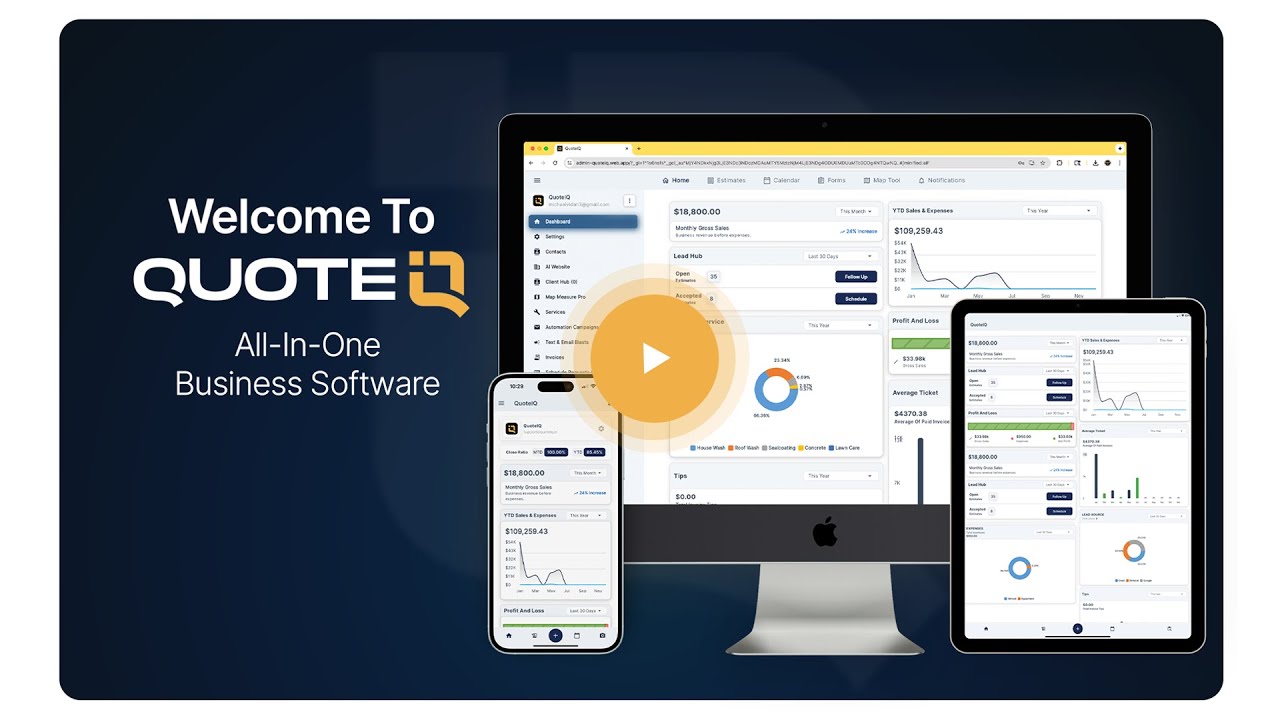
Watch: What Is QuoteIQ?
Reviewed by HVAC Industry Experts
Mike Vidan
CO-FOUNDER · QuoteIQ
Home service business owner and QuoteIQ Co-Founder, who built a contractor audience on YouTube teaching operators how to start, scale and run service businesses, HVAC operations included. Reviewed the plan-tier and recurring-billing claims on this page against QuoteIQ’s shipped product.
QuoteIQ · Insights profile
Justin Rogers
CO-FOUNDER · QuoteIQ
Entrepreneur, QuoteIQ Co-Founder and founder of the ForeverSelfEmployed brand, sharing real-world operating strategy for home service businesses on YouTube. Reviewed the membership-program operations guidance in this guide.
QuoteIQ · ForeverSelfEmployed · Insights profile
Real Customer Reviews
“I just started a pressure Washing/HVAC business and I use quoteiq.I love the app it keeps track of my payments,schedule,invoices and so much more to name here.I highly recommend this app if you’re running a business”
“So far so good!! This app has a great feel!! I just registered with the state I live in, my main stress so far has been billing, payment and invoice tracking for my future customers. This appears to handle it all for me!! I can’t wait to get my business started!!”
“The software is a game changer for me. Not only can I send estimates an invoices and look really professional. I can also accept card payments through the email. It’s so seamless that my customers just click, click click and then I’m paid. I love it”



